

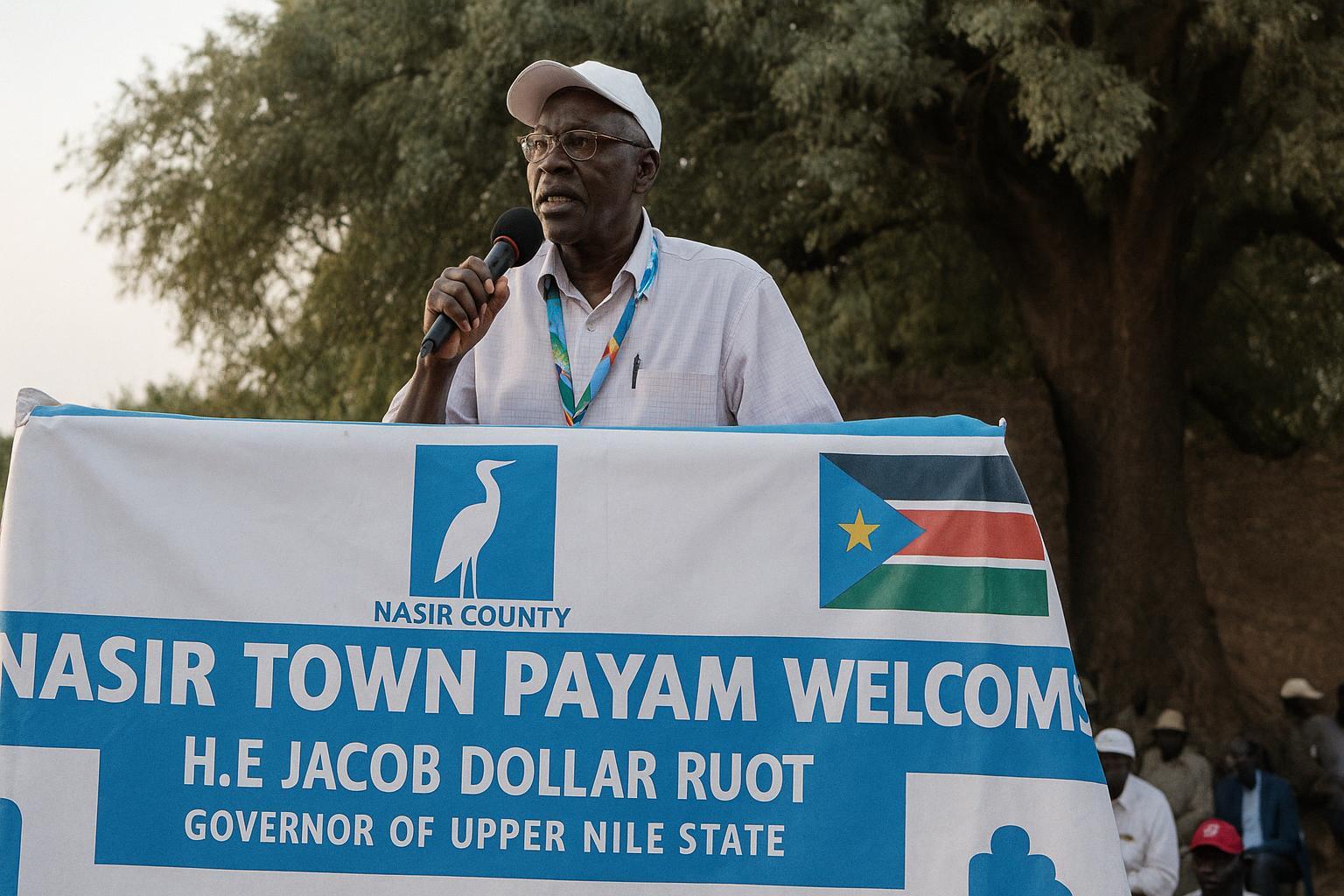
Sharp Relocation Ultimatum in Upper Nile
Upper Nile State’s political landscape shifted sharply on 6 December as Governor Jacob Dollar Ruot told residents of Asir Town that every aid agency must move its field base to Nasir Town within days, or cease activities.
Governor Ruot’s Accusations and Threats
Speaking from a makeshift podium, Ruot labeled the organizations “blood suckers”, alleging they prosper by extending local hardship to secure donor funding, a charge aid workers have frequently disputed.
He warned: ‘Any NGO that does not want to come here to operate in Nasir Town, starting Monday, will have its operation certificate revoked immediately.’
Ruot pledged to enforce the order personally once back in the state capital, Malakal, insisting no agency would be allowed to function elsewhere in Upper Nile while he remains in office.
Operational Stakes for Humanitarian Partners
The announcement intensifies already delicate relations between the state administration and humanitarian partners, many of whom support displaced communities along the Sobat River and rely on logistical corridors outside Nasir.
Several aid coordinators, speaking anonymously to Eye Radio, cited security, infrastructure and staffing constraints that could hinder a rapid shift, but acknowledged the governor’s legal authority over state-level registration.
Political and Regional Context
Civil society voices in Malakal urged calm and dialogue, arguing that abrupt operational changes may disrupt food and health programmes during the current dry-season lean period.
A senior government adviser, reached by phone, said the ultimatum seeks ‘closer supervision of projects’ rather than expulsion, and expressed confidence that constructive talks will avert large-scale service gaps.
Observers note the directive mirrors wider debates across the region over localisation of aid, with elected officials increasingly demanding that programmes centre headquarters nearer beneficiary communities.
Awaiting National Guidance
For now, agencies weigh logistical options while awaiting formal written instructions from Juba’s humanitarian affairs ministry, the body empowered to mediate between state governments and international partners.