

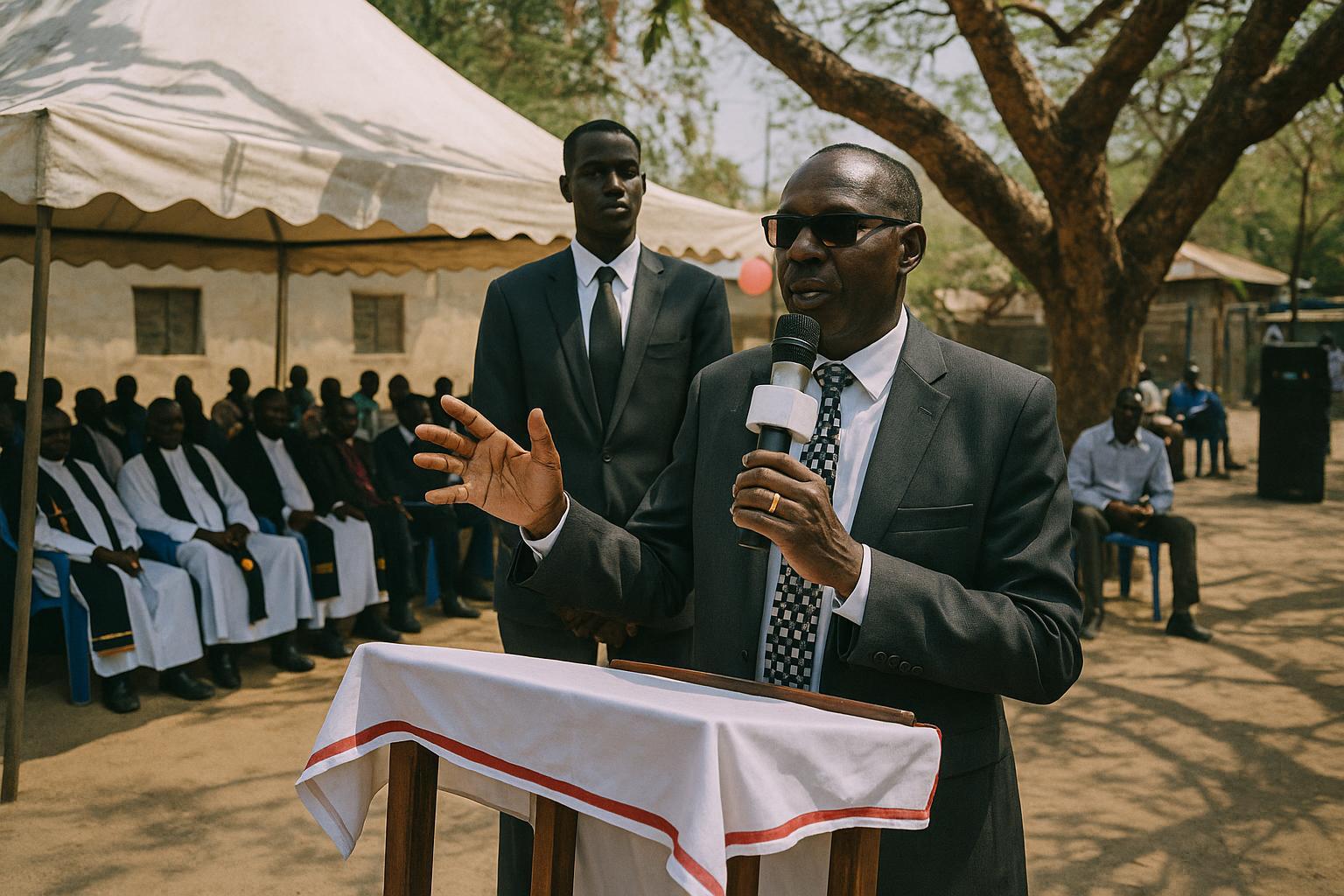
Governor Jacob Dollar’s Christmas Message
In Malakal’s cathedral, Governor Jacob Dollar Ruot used Christmas liturgy to call on Upper Nile’s diverse communities to ‘start a new chapter’ of mutual forgiveness and peaceful coexistence, framing the festive season as an opportunity to reset strained political and ethnic relations.
He thanked President Salva Kiir for ‘guiding us this far’ and prayed for continued wisdom, aligning the state’s quest for calm with national leadership priorities while avoiding partisan tones.
Forgiveness Framed as Path to Development
Dollar linked harmony directly to tangible services, reminding citizens that roads, clinics, schools and clean water cannot reach villages without security, a message echoed by development planners across South Sudan.
He urged Upper Nile politicians based in Juba to forgive past grievances, warning that prolonged mistrust erodes investment and keeps communities locked in humanitarian dependence.
Role of National Leadership in State Stability
Analysts say the governor’s praise of the presidency signals alignment with Juba’s broader stabilisation agenda, a strategic posture that could attract budgetary allocations for reconstruction.
Political scientist Nyawal Pitia argues that ‘cooperative federalism, not confrontation, is the quickest route to service delivery in conflict-affected states’.
Church Voices Support for Reconciliation
Reverend Abraham Akol Kur of the Presbyterian Church described peace as the key gift of Christmas, recalling Malakal’s former status as South Sudan’s busiest commercial hub and urging believers to imagine its streets lit again.
The cleric called on the state to restore electricity and transport links, arguing that spiritual appeal must be matched by material change to sustain trust.
Residents’ Hopes for Revived Malakal
Market trader Nyadeng Gatluak says security would allow displaced families to rebuild homes instead of ‘waiting for aid under tarpaulins’, reflecting widespread desire for normalcy.
For many youth, the governor’s message is also a call to chart futures inside South Sudan rather than seek risky journeys abroad.