

Fragile Health Facilities in Magwi County
Obbo Primary Health Care Centre in Eastern Equatoria shows the strain facing South Sudan’s public clinics. Mattresses thin, beds rusting, and patients purchasing their own gloves typify conditions reported across Magwi County.
Government allocation to health remains under two percent of the national budget, leaving only 1.4 facilities and 7.6 workers for every 10,000 residents, according to UNFPA estimates.
The Community Safety Net of TBAs
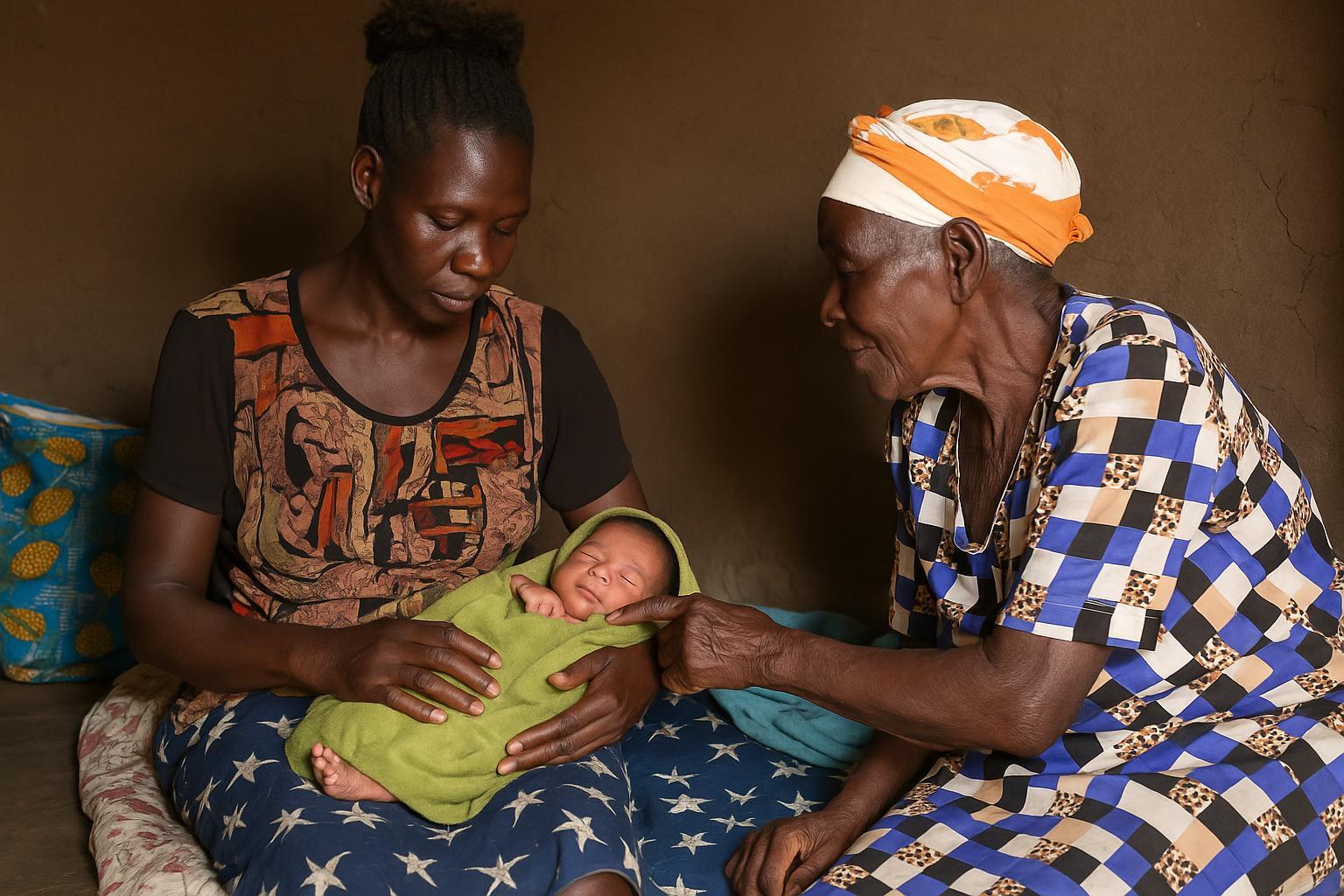
Traditional Birth Attendants such as 67-year-old Akello Lina still answer urgent calls despite official discouragement. Trained in the 1980s and during exile in Uganda, she now serves without pay, carrying gloves and referral notes instead of delivering babies outright.
Her network in Obbo Payam has shrunk from ten attendants in 2008 to four today, yet their influence persists because they reassure families and organise transport to clinics when contractions strike unexpectedly.
Midwives at Obbo PHCC Holding the Line
Registered midwife Anyek Florence Ben and two colleagues manage maternity services for thousands. The national guideline mandates four midwives, yet Obbo operates with three, each juggling deliveries, antenatal checks and emergency referrals.
Since January, the team has recorded over 200 safe births, with fewer than ten roadside deliveries, a performance Ben credits to ‘our sisters in the villages pushing mothers here’.
Partnership Driving Safer Deliveries
Midwives supply clinical expertise, drugs and immunisation, while TBAs provide first aid, local knowledge and community trust. This unofficial alliance has become the hinge between policy and practice.
Expectant mother Alonyo Hellen notes both groups ‘are doing their best, but gloves matter for safety’. Her sentiment underscores a collaboration flourishing despite material scarcity.
Systemic Gaps and Grassroots Solutions
Obbo PHCC exhausted its quarterly medical package in June; staff have since improvised with polythene bags when gloves ran out. Only one ambulance covers the county, so motorcycles carry critical patients along rough tracks.
The World Bank–backed Health Sector Transformation Project boosted staff from 14 to 21 and prevented maternal deaths this year, yet only half the county’s facilities receive its support, officials acknowledge.
Path Forward for Maternal Health in South Sudan
Until consistent supplies roll in, the pragmatic partnership between Traditional Birth Attendants and midwives remains the first line of defence for mothers like Joska. Their everyday commitment illustrates the resilience underpinning South Sudan’s long journey toward universal, safe maternal care.