

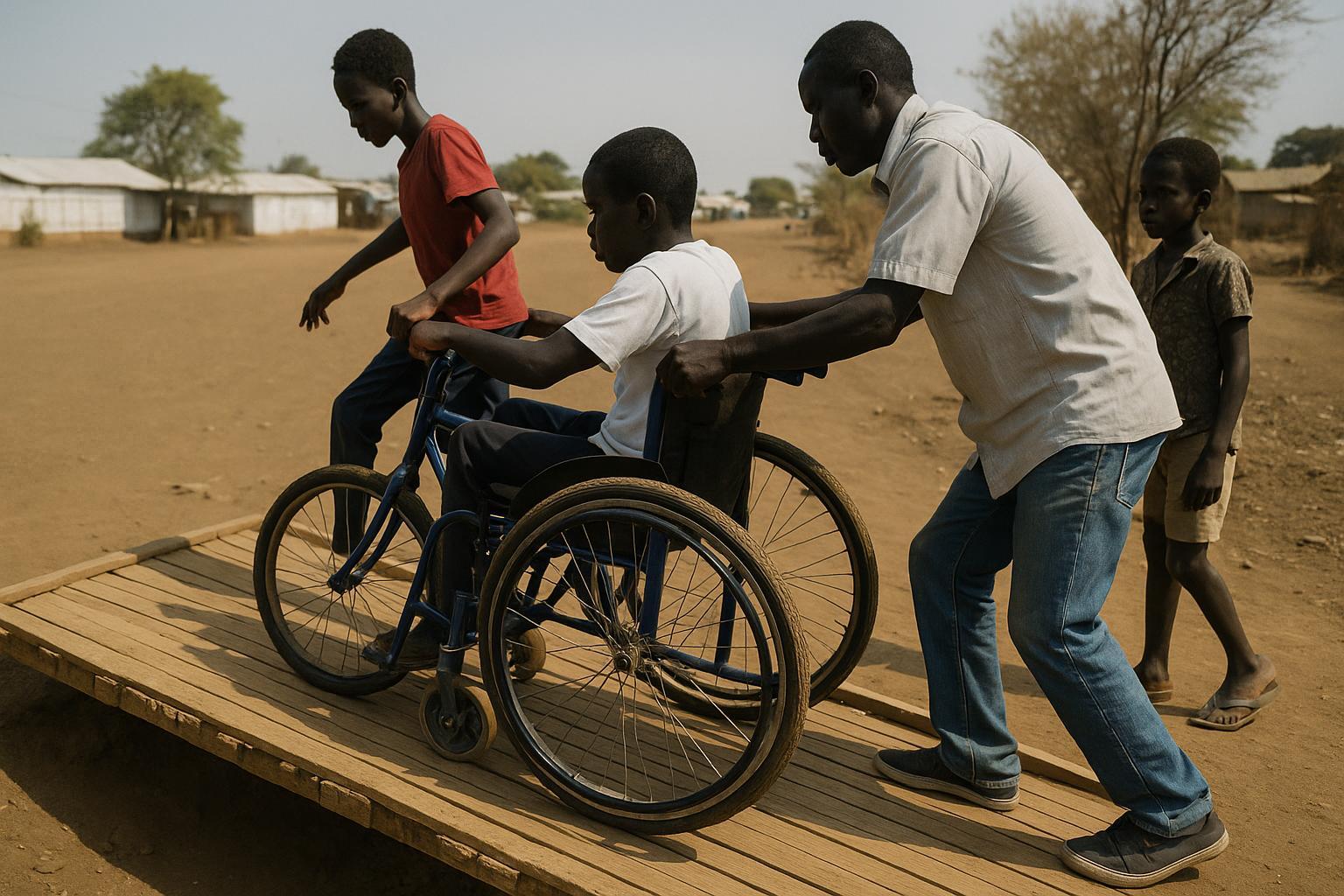
Daily Hurdles on Juba Streets
People with disabilities in South Sudan say everyday travel can feel hazardous, citing potholes, faded signs and vehicles occupying sidewalks.
Limited public awareness of disability rights, advocates warn, turns ordinary trips to school, clinics or offices into tests of courage.
Voices from Physical Disability Community
Seme Lado Michael from the Union of Physical Disability Centre recalls a wheelchair user struck while crawling across a busy lane, the driver initially denying the victim’s humanity.
He argues that traffic regulations omit disability clauses; cooperation with the police, he insists, could save lives by restoring clear signage and disciplined driving.
White Cane Awareness Gap
Issa Khamis Mursal of the visually impaired association notes that parked cars often block the very sidewalks blind citizens rely on, forcing them into unpredictable traffic.
Many motorists, he adds, do not recognise the white cane signal, leading to collisions that International White Cane Day campaigns hope to prevent through legal recognition.
Silent Struggle of Deaf Pedestrians
Chairperson Kachinga Peter explains that deaf pedestrians walk facing oncoming traffic because rear-approaching dangers are inaudible.
Communication with officers is limited; few understand sign language, so reporting accidents or hazards becomes an extra hurdle beyond the road itself.
Toward Inclusive Traffic Policy
Disability organisations urge brighter signs, trained officers and stronger enforcement, framing safe mobility as a matter of dignity and economic participation.
Talks on embedding white cane rules in national law fuel cautious optimism that South Sudan can build streets welcoming every citizen.