

Battle Lines Redrawn in Unity State
Unity State has resurfaced as the epicentre of South Sudan’s newest hostilities, where command chains rely more on personal networks than on decrees from Juba. Field commanders dictate realities on the ground, reviving patterns familiar from earlier phases of the civil war.
Government ranks draw mainly from Bul Nuer fighters, whereas opposition units lean on Leek, Jikany, Dok and Nyuong ties. These alignments stem from recruitment routes and shared histories rather than ideology, rendering alliance maps fluid and locally driven.
Urban Strongholds Under Government Umbrella
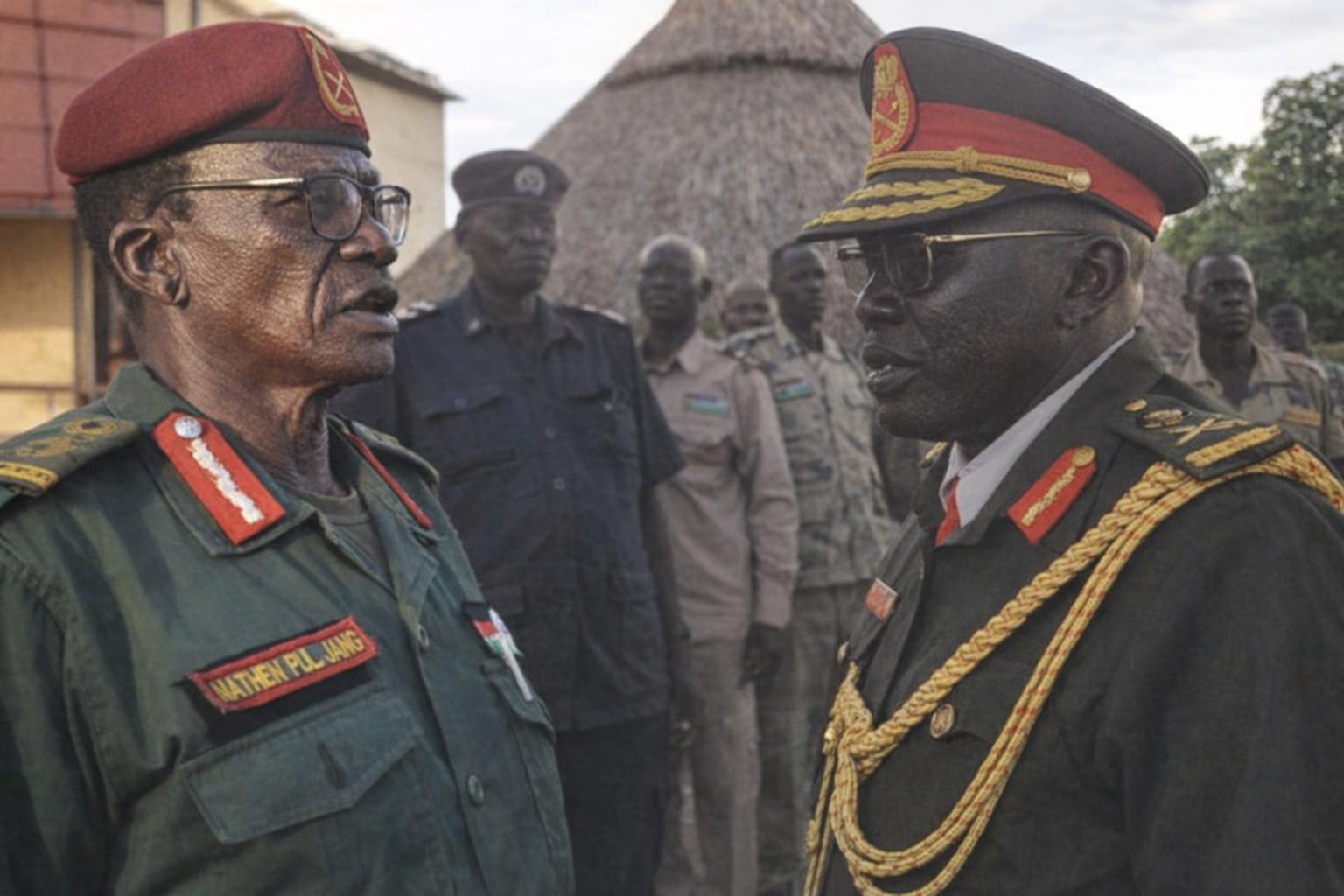
Bentiu, Rubkona and Guit remain under the South Sudan People’s Defence Forces Fourth Infantry Division. Authority flows straight from Lieutenant General Mathew Puljang Top, making the divisional headquarters the state’s crucial nerve centre.
Control of the Bentiu-Heglig road secures oil revenues and obstructs rebel resupply corridors from Sudan. As one logistics officer noted, ‘If that road is open, the division breathes; if it shuts, everybody gasps’.
Rural Heartland and SPLA-IO Strategy
Beyond town limits, the Sudan People’s Liberation Army in Opposition, Sector Two, exploits swamps and villages west and south of Rubkona. Major General John Turuk Khor Kuai’s units employ mobility rather than fixed positions to harass convoys and tax cattle routes.
Sector Two occasionally coordinates with the Gojam militia, a community defence grouping embedded in Leek and Jikany lands. A security analyst in Juba argued the partnership ‘gives the opposition depth that formal battalions alone could never supply’.
Community Militias: The Wild Card
Outside both chains of command, Ter Chuong fighters loyal to Puljang Top mount ad-hoc offensives that blur the line between state operation and village feud. Their actions complicate cease-fire monitoring and often ignite retaliation deep inside flooded wetlands.
Community leaders voice frustration that promises in the 2018 revitalised agreement lack reach on the ground. ‘We signed paper in Juba, but guns answer here,’ lamented a Dok elder sheltering near Leer.
Civilians Facing Floods and Fire
Three years of extreme flooding have transformed displacement from temporary shock into permanent reality. Vast croplands lie underwater, while oil-linked pollution seeps into fishing pools, forcing residents to ration both clean water and protein.
With Sudan’s border closed by its own conflict, escape routes have vanished. Many families cluster in Bentiu’s protection site, reliant on aid trucks that themselves depend on the same contested highway.
Diplomatic Lens on Future Stability
Regional mediators, backed by the Intergovernmental Authority on Development, urge parties to revive joint security mechanisms. Yet progress hinges on commanders surrendering unilateral control of corridors that bankroll both payrolls and prestige.
Observers caution that any settlement must reconcile the urban-rural divide. ‘A deal focusing on town garrisons but ignoring swamp villages will fail again,’ warned researcher Nyadol Bol during a recent policy forum in Nairobi.