

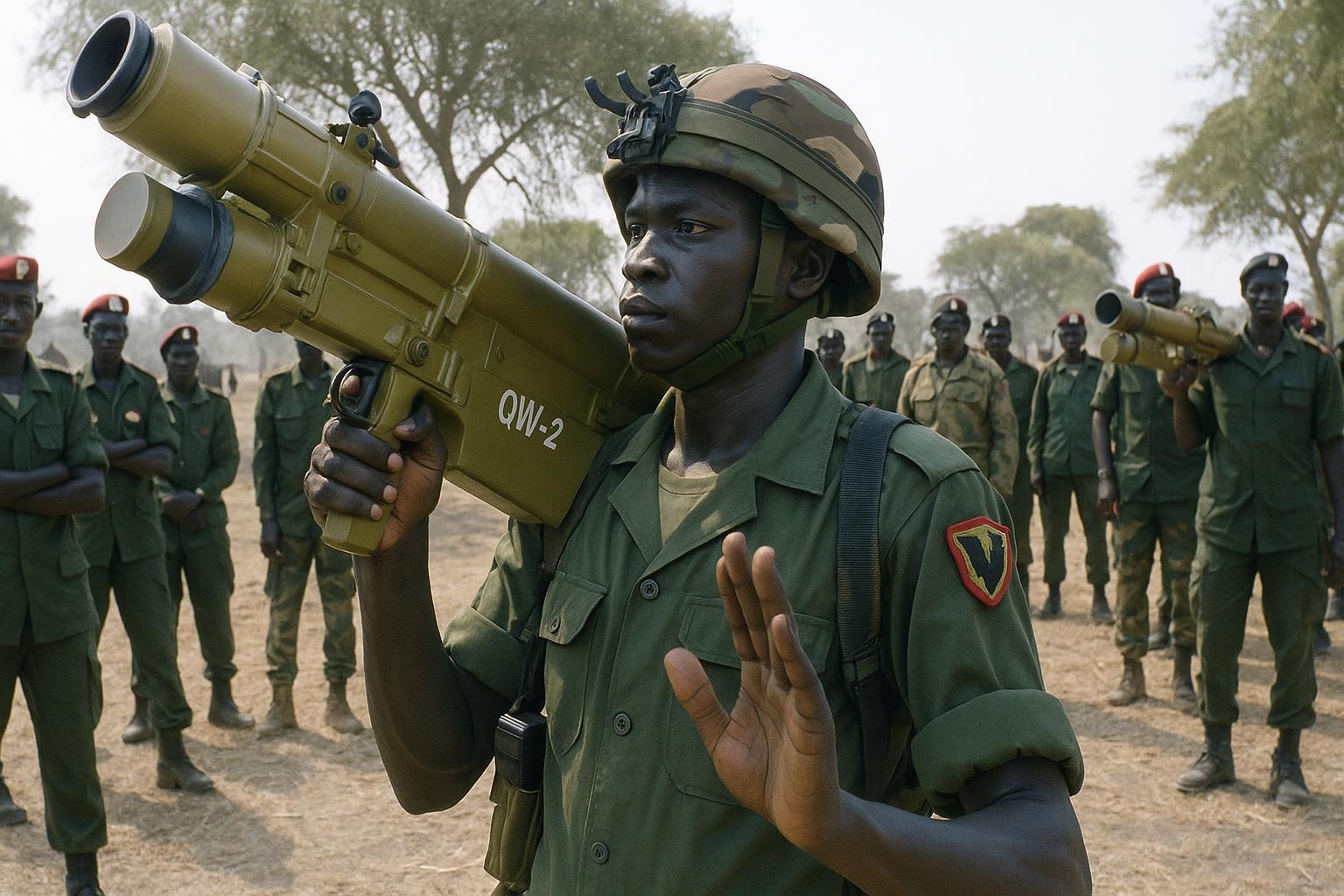
Rising Tensions Across South Sudan
The opposition Sudan People’s Liberation Army-in-Opposition, SPLA-IO, issued a communiqué on 4 January 2026 announcing an “active defence” campaign against government forces in Juba, deepening a security climate already strained by months of sporadic clashes.
Lt. Gen. Peter Thok Chuol, acting chief of staff, framed the operation as a necessary pressure tool to stop “the suffering of citizens,” while spokesman Col. Lam Paul Gabriel insisted the campaign is strictly military and rejects any narrative inflaming ethnic divisions.
Opposition’s Military Strategy and Messaging
The SPLA-IO warned civilians to avoid barracks, checkpoints and convoys, declaring these assets “legitimate targets” once hostilities resume. Police units and other organised forces risk being treated as combatants if deployed against the movement, the statement added.
Opposition commanders ordered all sectors to remain on standby, promising rapid reinforcement across state lines. They simultaneously appealed to “patriotic” soldiers within the South Sudan People’s Defence Forces to defect or demobilise, portraying the conflict as a stand against a “dictatorial and corrupt” administration.
Implications for Civilians and Aid Agencies
While urging the public to “remain calm,” SPLA-IO leaders cautioned citizens to keep a safe radius from all military infrastructure. Travellers were specifically asked not to join armed convoys, a practice the group described as an unnecessary exposure to crossfire.
Non-governmental organisations and UN agencies received a request for prior movement notifications between states and counties. According to the statement, such coordination would minimise accidental collisions with roving units and preserve humanitarian access in a landscape of rapidly shifting front lines.
Government Response and Regional Context
Officials from the Sudan People’s Liberation Movement-in-Government had not issued a formal rebuttal at the time of writing. Previous communiqués from Juba, however, have often accused the opposition of violating cease-fire arrangements, a claim the SPLA-IO consistently denies.
Observers warn that fresh clashes could inflame the already deteriorating security situation highlighted in recent government and opposition briefings. Any escalation, they say, would quickly ripple through states where tense inter-communal relations intersect with military deployments.
Prospects for De-escalation
The SPLA-IO’s closing appeal urged disparate opposition factions to “join hands” against what it terms entrenched misrule in Juba. Whether that call translates into coordinated battlefield action or renewed bargaining tables will shape South Sudan’s immediate security trajectory.