

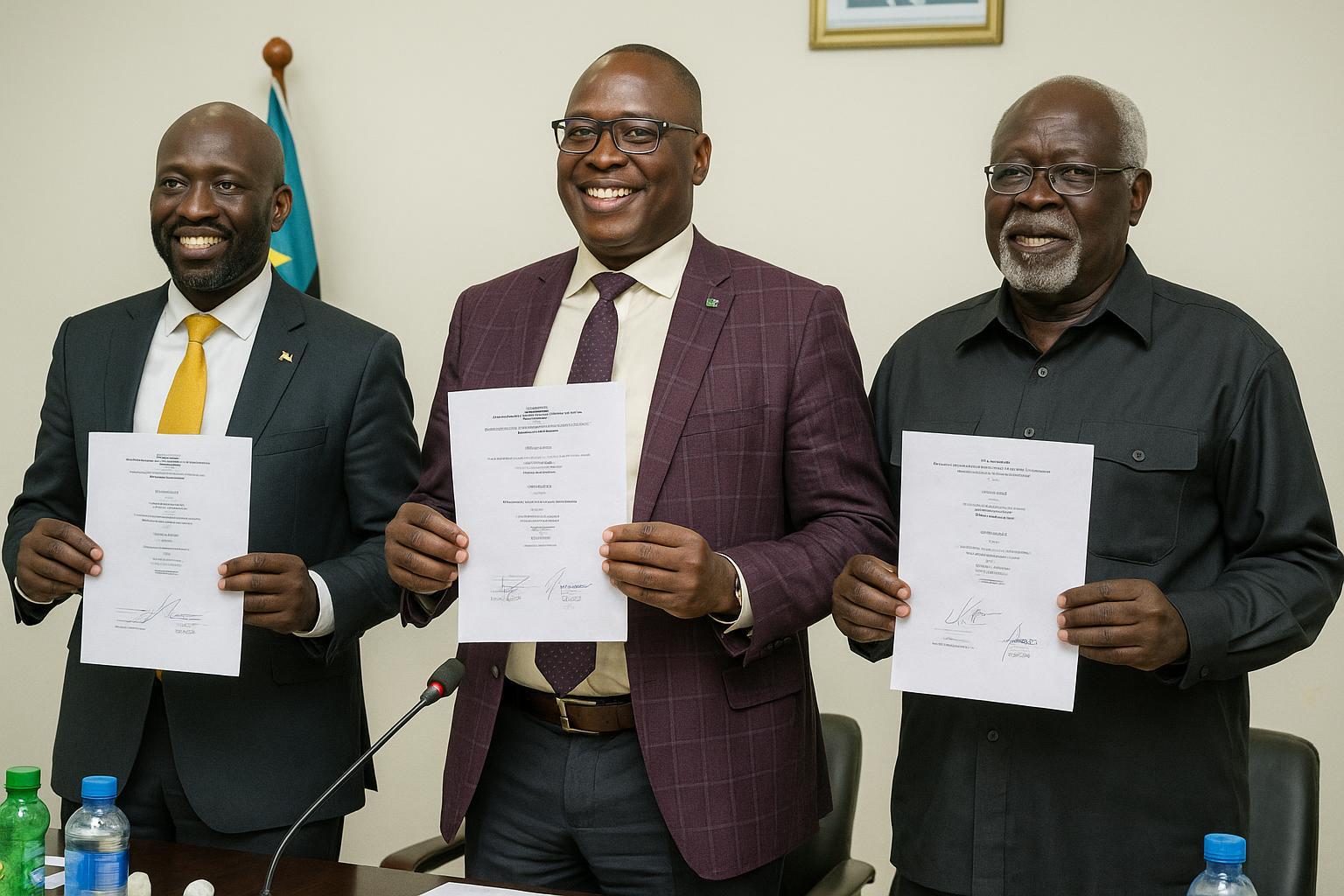
Governors seal historic accord
Governors of Central Equatoria and Jonglei, alongside the Chief Administrator of Greater Pibor, met in Juba and signed a thirteen-point communiqué designed to stem cattle raids, child abductions and deadly ambushes along the Juba-Bor highway.
Expanded regional framework
They invited Eastern Equatoria to join future deliberations, creating a four-corner framework meant to improve intelligence sharing, coordinate patrols and ensure that security forces respond simultaneously on both sides of porous state lines.
Mechanisms for joint action include quarterly rotating meetings, a permanent high-level committee of the four top leaders, and a crisis management team that gathers security advisers, law-enforcement chiefs and peace-building ministers under one operational chain.
Quotes underscore commitment
Governor Emmanuel Adil said, “Collaboration is the only path to taming insecurity along the Juba–Bor corridor.” His Jonglei counterpart, Riek Gai Kok, promised to table the pact in Bor “so that it is owned by our people”.
Gola Boyoi Gola of Pibor added that organised forces will deploy at hotspots to guarantee free movement of traders and herders, stressing that the communiqué must be “implemented in letter and spirit”.
Socio-economic pillars of peace
Beyond security, the agreement pushes for youth skills training, regional trade corridors and rehabilitation of feeder roads, arguing that jobs and markets are as vital as patrols in drying the roots of violence.
Next steps on the timeline
The first rotating security conference is slated for early next quarter, giving committees seven weeks to prepare disarmament plans, mobilise funding for road repair and launch civic education campaigns that explain why coexistence benefits every village.
Cautious optimism on stability
Analysts in Juba describe the pact as the clearest sign of political will since South Sudan’s 2018 peace deal, yet caution that success will depend on sustained funding and community buy-in, not just signatures on paper.