

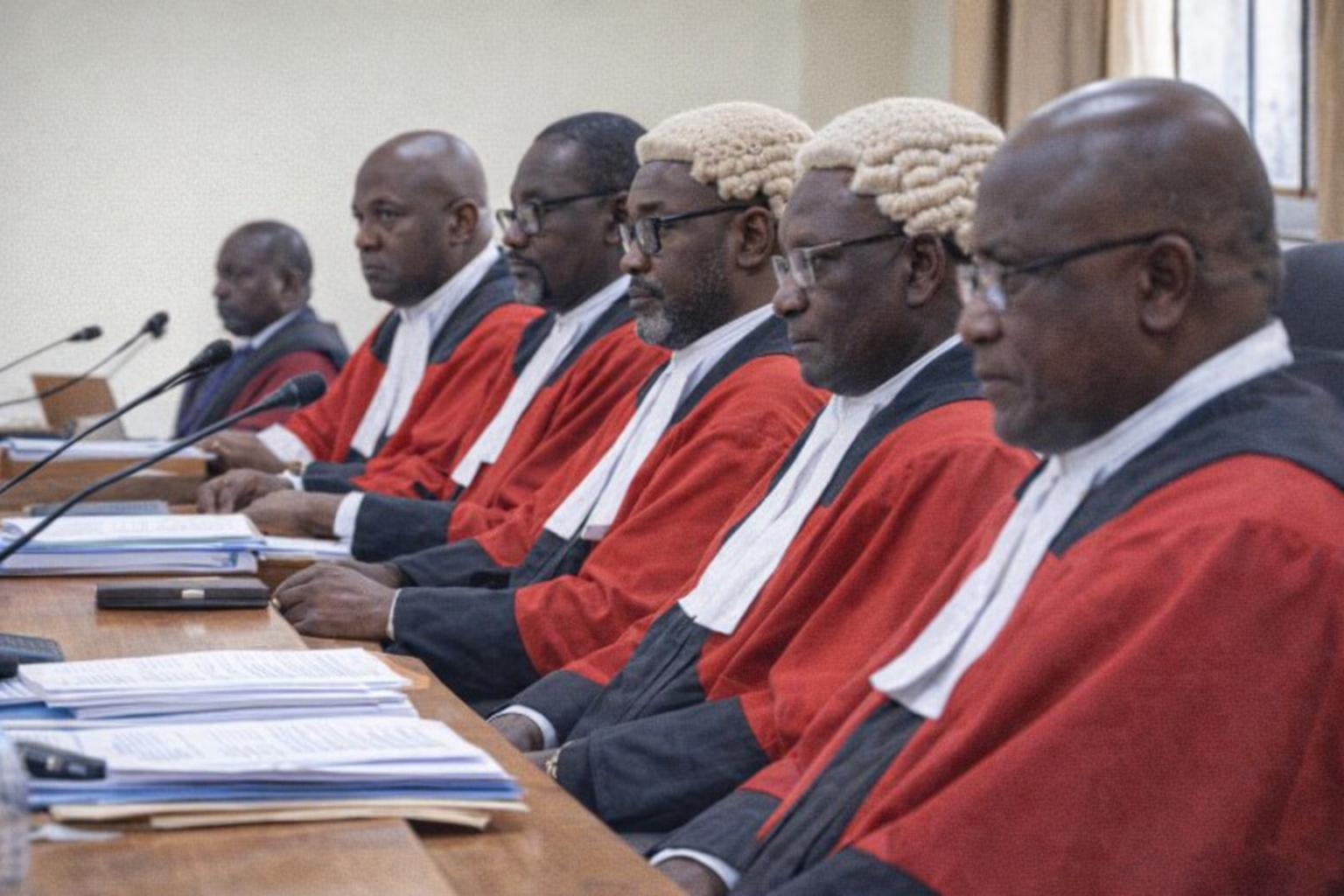
EACJ hearing set for South Sudan election law dispute
The East African Court of Justice (EACJ) is due to hear a legal challenge to a provision in South Sudan’s election law that allows a president-elect to appoint lawmakers to parliament. Critics say the clause could affect constitutional accountability and the balance of institutions.
A court notice reported by Radio Tamazuj schedules the hearing for March 11, 2026, before a five-judge panel of the EACJ First Instance Division in Arusha, Tanzania (Radio Tamazuj).
Section 60(4) of the National Election Act under scrutiny
The case, Wani Santino Jada v. The Attorney General of the Republic of South Sudan (Application No. 17 of 2025), challenges Section 60(4) of the National Election Act 2012, as amended in 2023 (Radio Tamazuj).
According to the filing, the contested section authorises the president-elect to appoint five percent of the National Legislative Assembly, described as 17 members. The applicant argues this authority is not grounded in South Sudan’s Transitional Constitution (Radio Tamazuj).
Constitutional arguments on elections and representation
The application states that legislators should be chosen through free and fair elections by secret ballot. It argues the appointment power conflicts with constitutional provisions that place legislative authority in representatives selected by the public (Radio Tamazuj).
The filing cites Article 56(1)(a) as central to the dispute. In the applicant’s view, introducing executive appointments into parliament risks weakening the separation of powers and the legislature’s ability to oversee the presidency (Radio Tamazuj).
Legitimacy debate over a legislature extended since 2011
The challenge also points to wider questions about institutional legitimacy. The filing notes South Sudan’s legislature has not been elected since independence in 2011, and that its mandate has been extended through peace agreements (Radio Tamazuj).
“The applicant contends that laws passed by an unelected or partially appointed parliament lack democratic legitimacy and constitutional authority,” the filing states (Radio Tamazuj).
Government rationale and the question of minority inclusion
The government has reportedly defended Section 60(4) as a mechanism to ensure representation for minority groups, trade unions and persons with disabilities (Radio Tamazuj).
The applicant, however, argues the text of the law does not specifically name such constituencies. The filing says the clause instead grants the president broad discretion over appointments, a design the applicant considers constitutionally problematic (Radio Tamazuj).
East African Community treaty obligations and possible impact
The application also invokes obligations under the Treaty for the Establishment of the East African Community, referencing commitments to democracy, the rule of law and good governance. It argues Section 60(4) is incompatible with those regional commitments (Radio Tamazuj).
Legal analysts cited by Radio Tamazuj say the ruling could influence South Sudan’s electoral framework and establish a precedent for constitutional challenges during the transition. If the clause is rejected, amendments to the election law could be required (Radio Tamazuj).
December 2026 elections: high stakes for the transition
The case was filed by South Sudanese advocate Wani Santino Jada. Under its founding treaty, the EACJ has jurisdiction to interpret and apply East African Community law (Radio Tamazuj).
South Sudan’s elections are scheduled for December 2026, which would be the first national vote since independence in 2011. The polls have been repeatedly delayed amid political deadlock, violence and disputes over power-sharing arrangements (Radio Tamazuj).