

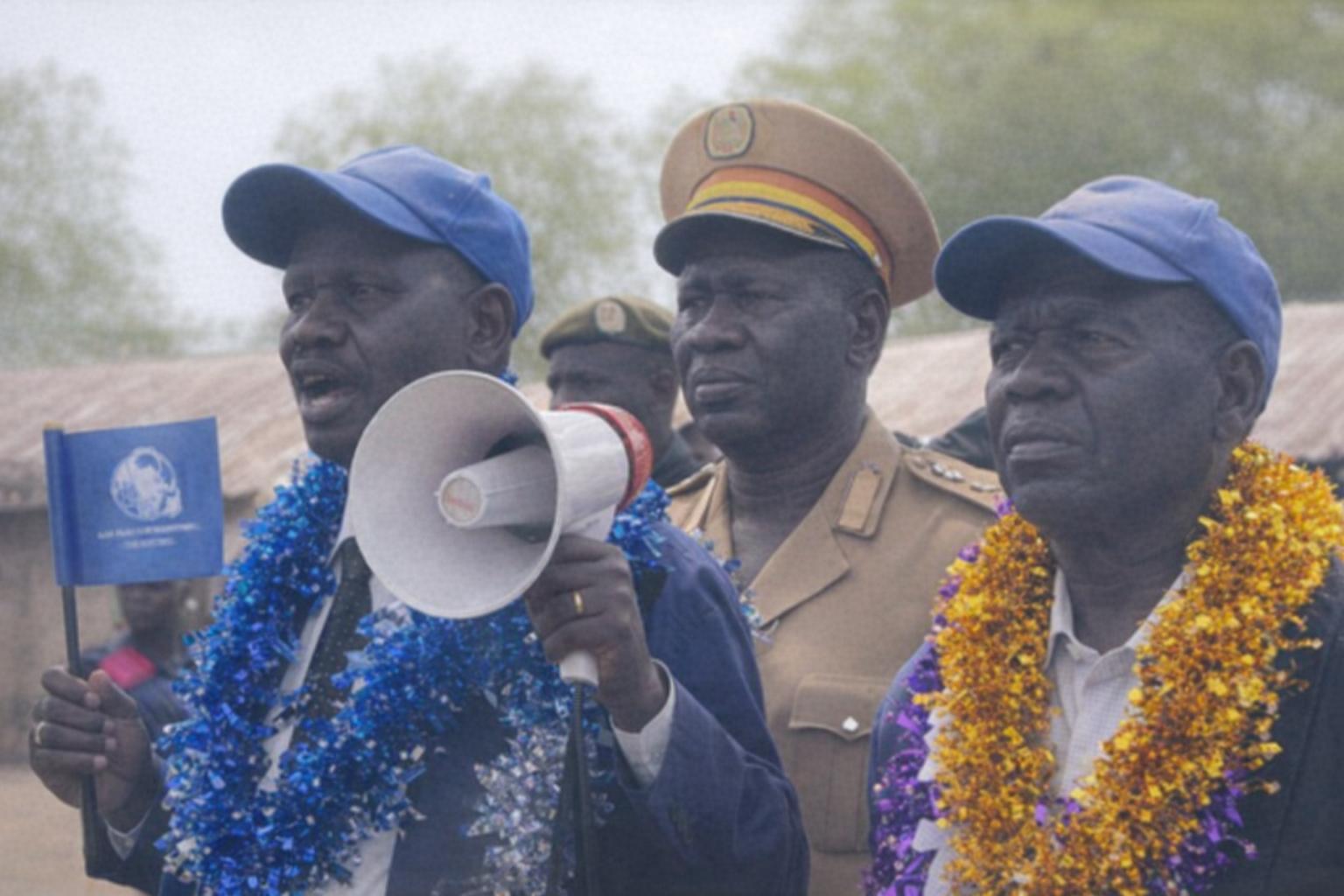
Akobo speech puts unity at the centre of SPLM-IO messaging
AKOBO – A newly appointed opposition official in South Sudan’s restive Jonglei State has called for a broad cross-tribal alliance against the government, urging supporters to resist ethnic divisions. The appeal comes as observers report growing signs of tribal mobilisation across the region.
John Wiyual Lul takes office as Akobo County commissioner
John Wiyual Lul, appointed last week as commissioner of Akobo County, addressed a large crowd at the county headquarters on Thursday. He was named by Nathaniel Oyet, the acting leader of the Sudan People’s Liberation Movement in Opposition (SPLM-IO).
Opposition frames the conflict as political, not ethnic
In his first major public address since assuming the post, Wiyual argued that the confrontation should be understood as a political struggle rather than an extension of the ethnic hostility that has marked South Sudan since 2013.
“The war we are fighting is not a war against the Dinka community. We are fighting a government that has oppressed the citizens for many years,” Wiyual told the gathering.
Message reaches beyond ethnic lines, including Dinka critics
Wiyual said the opposition’s grievances are not limited to any single community. He claimed that some members of President Salva Kiir’s Dinka ethnic group also oppose the authorities, “fighting in the battlefield” and on social media because, he said, “they are not happy within the government.”
Observers warn of tribal recruitment in Jonglei and Upper Nile
The commissioner’s unity appeal comes as international observers and rights groups raise concerns about renewed ethnic-based recruitment. In recent weeks, commanders aligned with both the government and opposition in Jonglei and Upper Nile states have mobilised youth militias along tribal lines.
That dynamic, according to the warnings, risks a return to the large-scale communal violence associated with the early stages of the civil war.
State delivery and independence dividends cited as core issue
Wiyual maintained that the violence stems from government failure to deliver the expected dividends of independence. He portrayed South Sudan’s development trajectory since the 2011 split from Sudan as falling short of public expectations after a 21-year liberation struggle against northern Sudan.
“Our country doesn’t look like an independent country now… There are no schools. There are no roads. There are no hospitals,” he said, as the crowd applauded.
Basic services, livelihoods and security pressures highlighted
He added that access to clean drinking water and food remains a challenge for many citizens. Wiyual also claimed the army has gone unpaid for years, presenting this as part of wider institutional strain.
“People are dying overnight, and people are killing each other,” he said, attributing instability to state failure rather than communal hatred.
Akobo’s strategic role in SPLM-IO politics and local control
Akobo, near the Ethiopian border, has long been seen as an SPLM-IO stronghold and a centre of resistance. Analysts cited in local discussions view Wiyual’s appointment by Oyet as a bid to consolidate political control in the area amid escalating military tensions with Juba.