

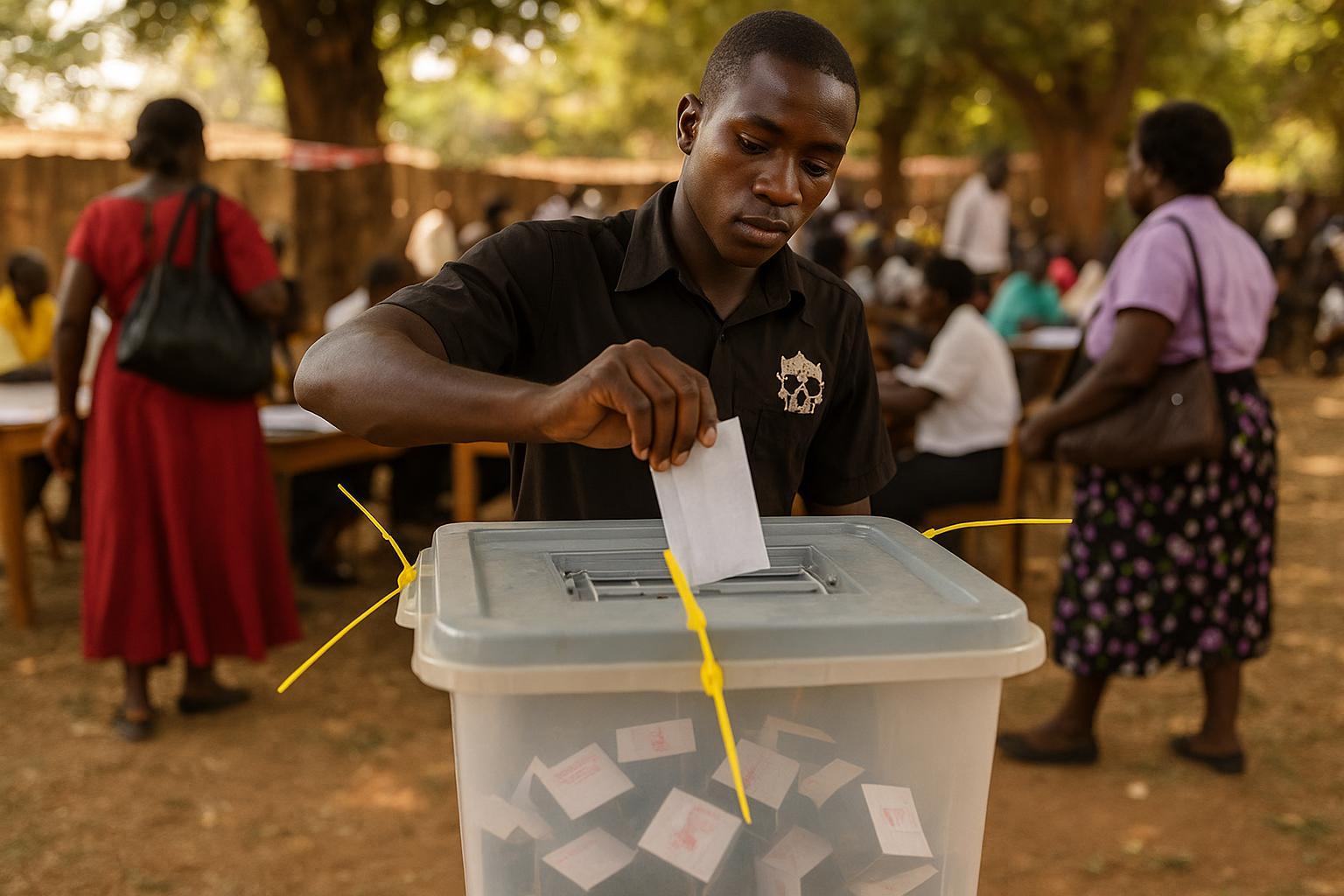
Background to the 2026 Election Date
South Sudan’s political calendar again pivots around a single date: December 2026, the timetable set for long-awaited national elections.
In a widely read commentary, scholar Dr. Luka Biong asked whether that vote can realistically occur, mapping legal deadlines and institutional gaps (Radio Tamazuj, 12 Dec 2025).
Legal Constraints or Political Choices?
Observers agree that statutes alone do not stall ballots; rather, the ruling coalition’s calculations decide how fast laws are amended.
Parliament has demonstrated swift unanimity when budgets or cabinet reshuffles demanded urgency, revealing that procedural congestion is selective, not structural.
Dr. Luka’s emphasis on constitutional timelines therefore risks treating symptoms while obscuring the deeper strategy of postponement politics that has defined the transition.
Shrinking Political Space
A credible poll requires contested leaderships to campaign freely, yet key opposition figure Dr. Riek Machar remains under restricted movement, and several SPLM-IO officials face trial or exile.
Civil-society leaders report increased surveillance of town-hall meetings, while journalists recount licence suspensions, casting doubt on the openness vital for any democratic contest.
If participation shrinks, elections degrade into administrative rituals, not expressions of popular sovereignty.
Public Sentiment and Legitimation Risk
Frustration resonates far beyond Juba’s political salons; market vendors and university students increasingly equate delays with a denial of agency.
Opinion surveys from domestic think tanks show trust in public institutions dipping below 20 percent, a stark warning that legitimacy is eroding faster than revenue streams.
Each postponement, critics argue, transforms peace accords into moving goalposts, breeding cynicism that may one day spill onto streets.
Activating the Revitalised Agreement
Within the 2018 Revitalised Agreement, mechanisms already exist to amend electoral clauses, deploy observers, and reopen civic space; what remains uncertain is the political appetite to activate them.
Several diplomats suggest sequencing peace and polls concurrently, rather than serially, to minimise stalling incentives.
The calendar alone will not guarantee a vote; only transparent guarantees of safety, financing, and fair competition can convert December 2026 from deadline to democratic milestone.