

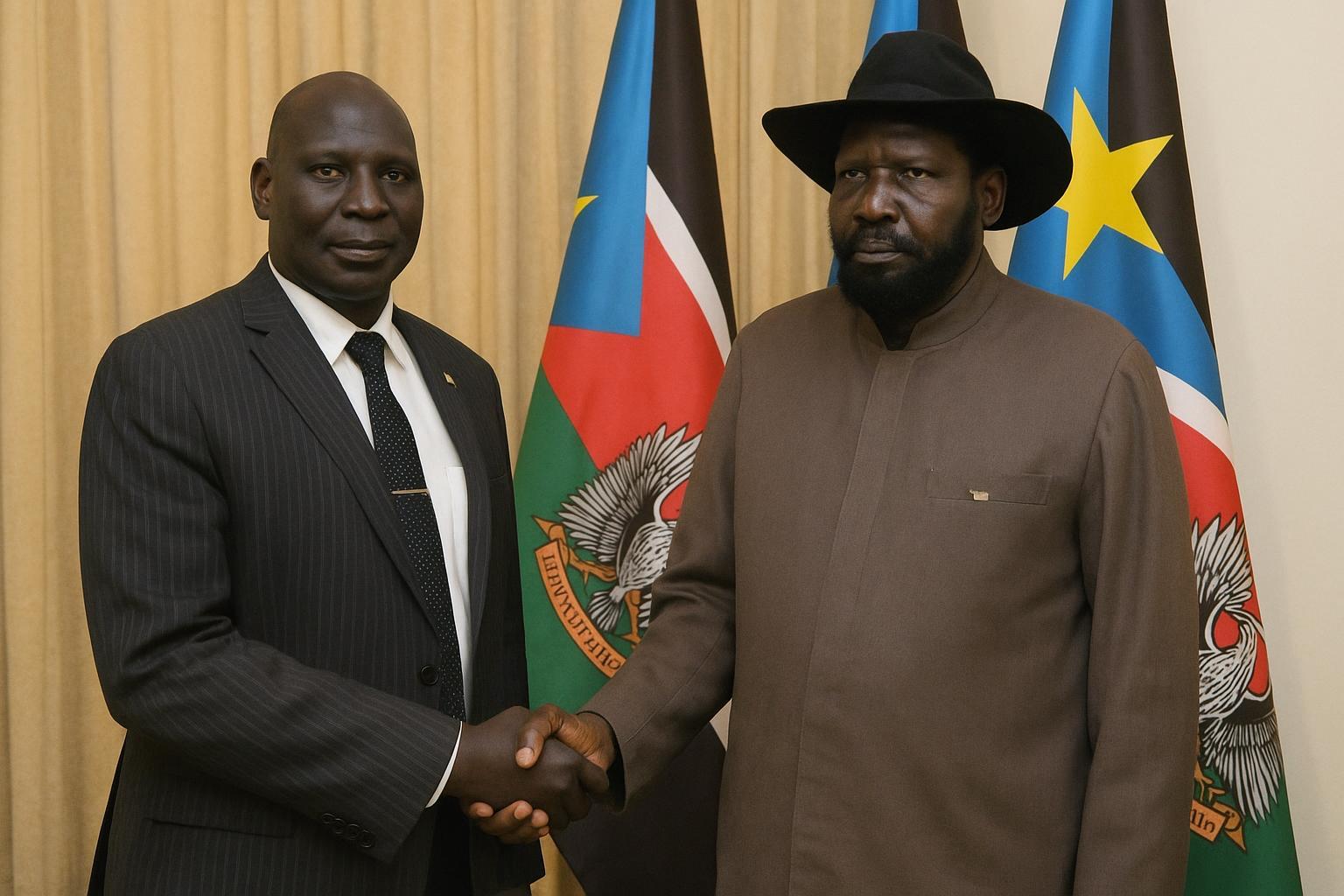
Military Rise of Wilson Deng
Wilson Deng Kuoirot joined the Sudan People’s Liberation Army during the liberation war and advanced rapidly.
By independence in 2011 he was Deputy Chief of General Staff for Operations, coordinating security at a volatile time.
Sports Diplomacy Legacy
In 2015 Deng surprised many by founding South Sudan’s National Olympic Committee, arguing that sport could unify a fractured nation.
His committee secured International Olympic Committee recognition the same year, enabling the country’s first Olympic team to march in Rio 2016.
Ambassadorial Tenure in South Africa
Appointed ambassador to South Africa in 2020, Deng cultivated diaspora ties and lobbied for investment until his recall in 2023.
Launch of the National Uprising Movement
On 28 December 2025 the retired general announced the National Uprising Movement and its army, calling the current transitional government “expired”.
His statement blames economic collapse, unpaid salaries and communal violence on what he labels systemic governance failure and ignored reform clauses in the 2018 peace deal.
Deng urges President Salva Kiir and First Vice-President Riek Machar to step aside, warning of a nationwide ‘armed Intifadha’ if demands are unmet.
Reactions Inside South Sudan
Juba officials brand the manifesto treasonous yet promise dialogue, echoing past reactions to splinter movements.
Civil society voices welcome calls for accountability but fear another armed cycle could worsen humanitarian conditions already strained by floods and inflation.
Regional Implications for East Africa
Neighbouring states watch closely; renewed conflict might disrupt oil exports that transit Sudan and complicate regional security initiatives.
Observers note that Deng’s prior diplomatic links could attract external sympathy, though sanctions risk remains if fighting erupts.
Future Outlook
Whether the uprising gains traction depends on military defections, regional mediation and economic pressures; for now, Deng’s pivot from Olympian-in-chief to rebel leader reopens debates on governance and legitimacy in the world’s youngest nation.