

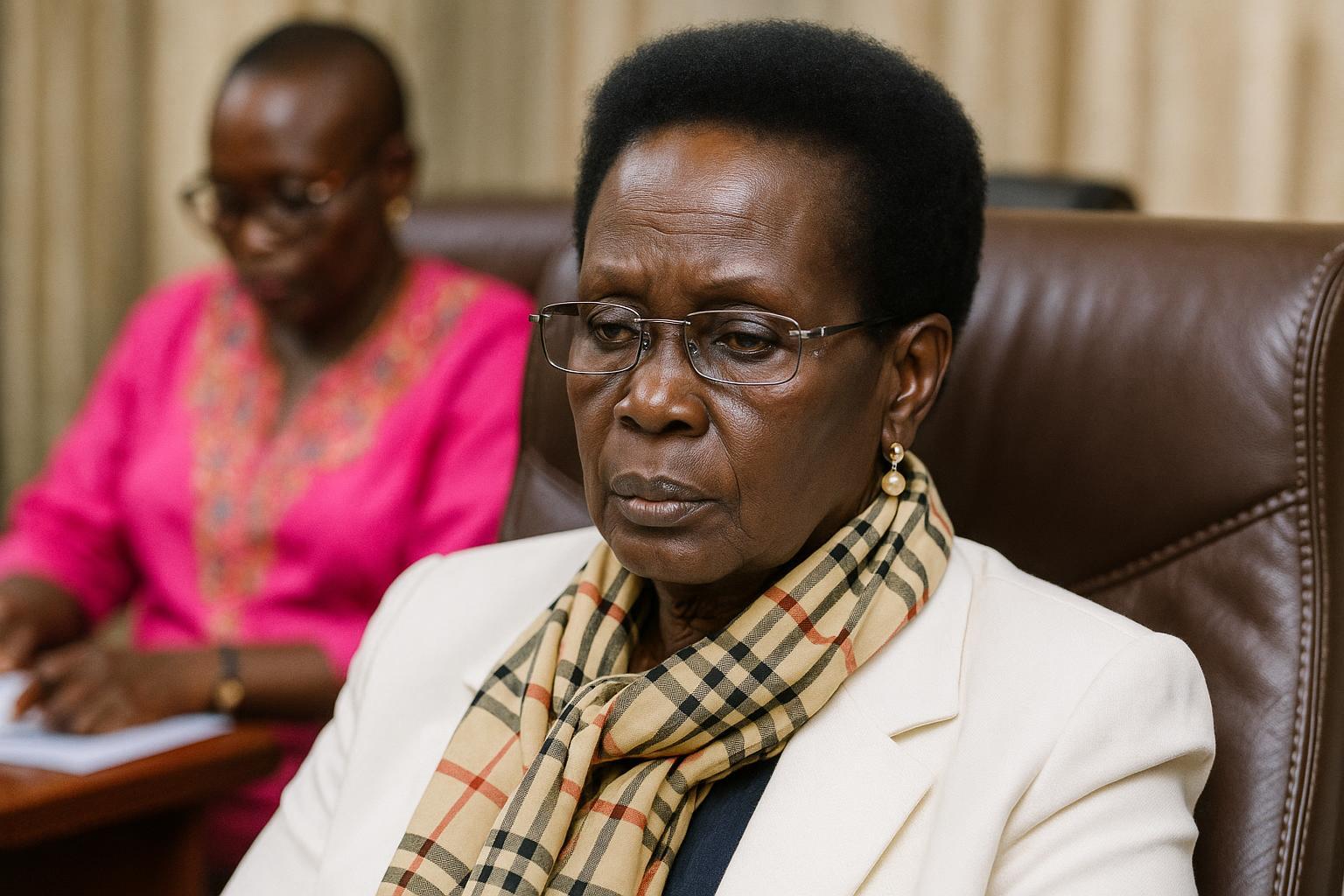
Cabinet moves to fill leadership gap
Juba’s cabinet has temporarily tapped Vice-President Rebecca Nyandeng de Mabior to steer the strategic governance cluster while First Vice-President Riek Machar defends himself in court.
The decision, endorsed at an extraordinary meeting chaired by President Salva Kiir, aims to avoid a leadership vacuum without infringing on the delicate power-sharing formula signed in 2018.
Power-sharing deal under microscope
Chapter I of the Revitalized Agreement assigns the First Vice-President slot to the SPLM-IO, linking the seat to the party rather than the individual.
Analysts say any permanent shift would require either a fresh SPLM-IO nomination or a formal amendment, both politically arduous in the run-up to planned elections.
High-stakes court case
Machar stands trial on murder, treason and crimes against humanity charges linked to the 2025 Nasir garrison incident; the court has sat 34 times and reconvenes on 5 January 2026.
Until a verdict is reached, officials insist the suspension remains an administrative measure and not a political purge.
Mandate of the governance cluster
The governance cluster coordinates institutional reforms, constitutional drafting, public-service overhaul and the unification of rival forces—tasks considered prerequisites for a credible vote.
Nyandeng already heads the Gender and Youth Cluster; Cabinet Affairs Minister Martin Elia Lomuro says her dual oversight will be buttressed by his office’s technical teams.
Stakeholder reactions
SPLM-IO spokespersons have not rejected the interim arrangement but warn that prolonged sidelining could erode trust between signatories.
Civil-society groups urge all parties to keep dialogue channels open, stressing that deadlines for security reforms and census preparations are already slipping.
Prospects before elections
With elections pencilled in for late 2026, maintaining momentum on peace-roadmap benchmarks is viewed as crucial to donor confidence and regional stability.
Whether Nyandeng’s stewardship becomes a mere footnote or a precedent will hinge on the court’s timeline and the parties’ willingness to compromise.