

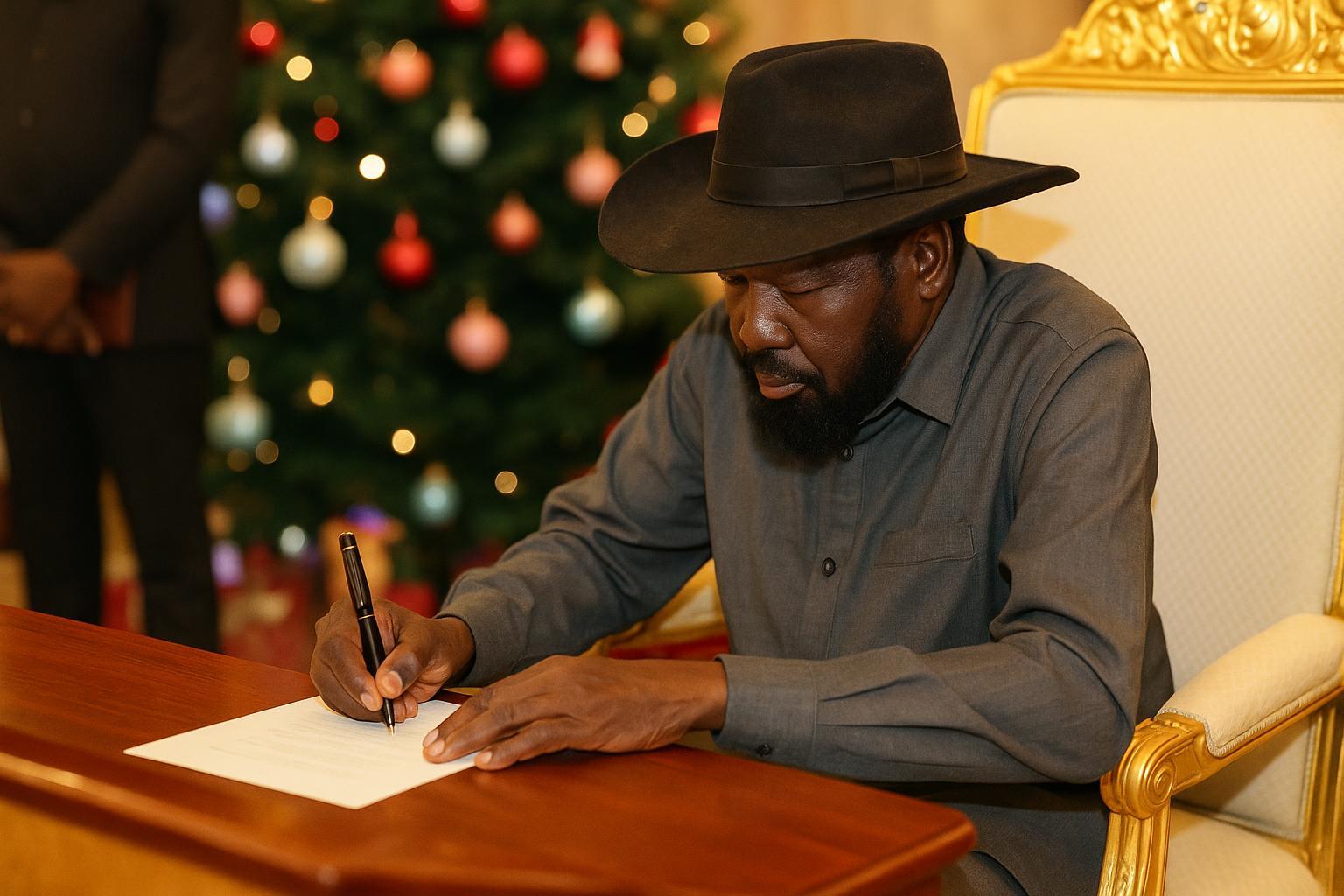
Presidential Assent Signals Fiscal Reform
President Salva Kiir Mayardit inked the Fiscal, Financial Allocation and Monitoring Commission Act 2025 at Juba’s State House on Thursday, turning a long-discussed reform clause into enforceable law.
Speaker Jemma Nunu Kumba handed the document to the president, a ceremony observers say underscores legislative-executive cooperation amid South Sudan’s transition.
Scope of the Fiscal Monitoring Act 2025
The Act constitutes an autonomous Commission empowered to review every budget line, track collections and verify that spending matches the annual Appropriation Act.
Its mandate also includes guiding the fair transfer of revenue from national coffers to states, counties and administrative areas, a major demand from local leaders seeking predictable funding.
Transparency and Accountability Goals
Legislative experts interviewed by Eye Radio describe the statute as “a critical tool for promoting transparency in the management of public funds,” arguing it could reduce leakages that have dogged previous budgets.
Budgetary control, equitable allocation and independent oversight form what analysts label the law’s three pillars, replacing ad-hoc monitoring with codified procedures and routine public reporting.
Parliamentary and Public Expectations
“We expect communities to feel the impact when health centres, schools and roads receive timely disbursements,” Speaker Kumba told journalists, noting that strengthened auditing should help restore citizen trust.
Next Steps and Regional Impact
Implementation now shifts to staffing the Commission, drafting internal regulations and securing digital tools able to trace every South Sudanese pound from collection point to beneficiary program.
Regional economists say the initiative may inspire similar watchdog frameworks across East Africa, aligning with wider continental calls for prudent resource management.