

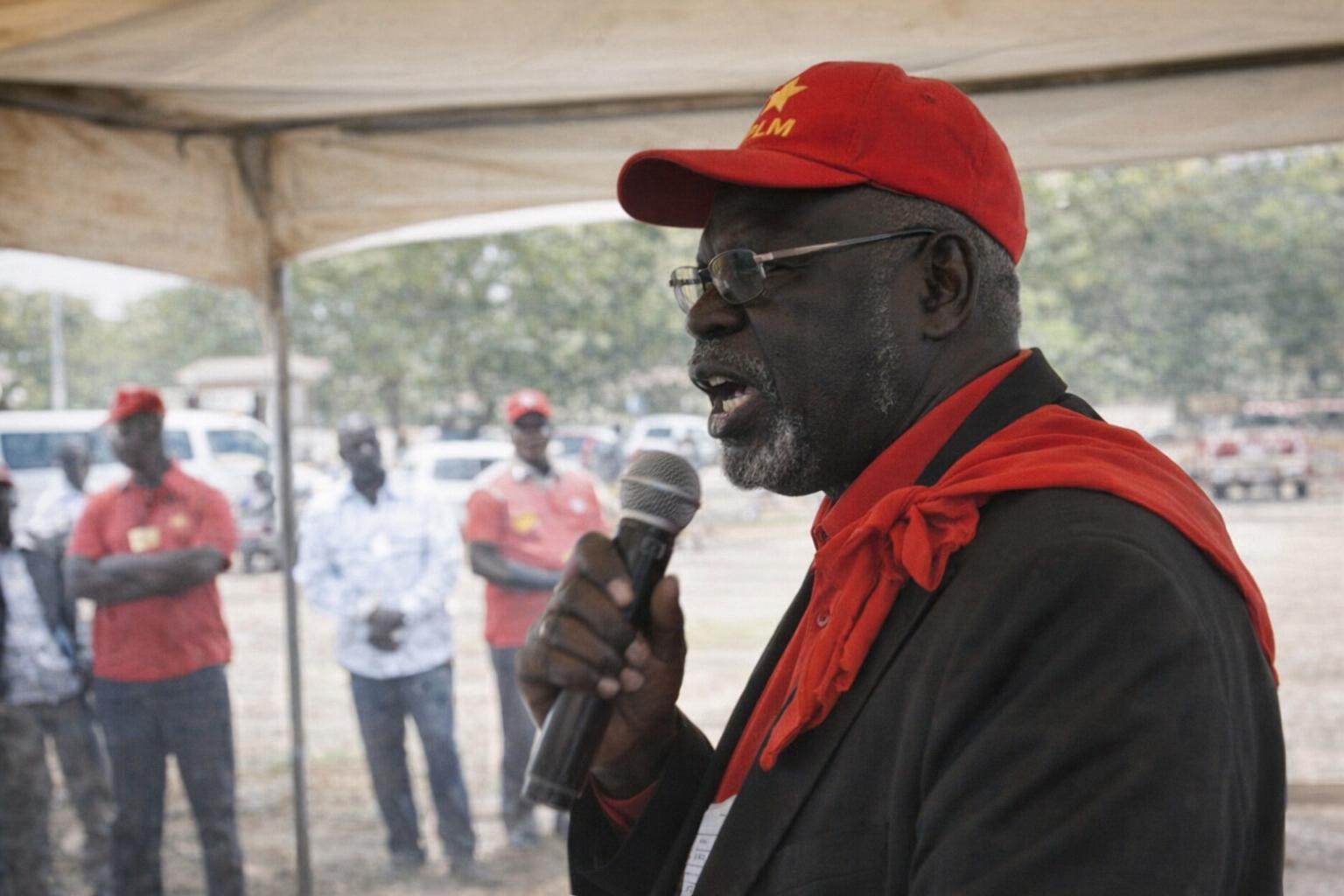
Jonglei governor’s warning on political messaging
JUBA — Jonglei State Governor Riak Gai Kok has accused First Vice President Riek Machar of presenting a reform-focused profile in the capital while, in his view, amplifying ethnic narratives in rural areas. He argued the approach risks reopening grievances tied to South Sudan’s most violent episodes.
Poktap address highlights split narratives
Speaking on Wednesday in Poktap, the administrative capital of Duk County, Gai said Machar tailors his political language to different audiences. Gai, an ethnic Nuer from Greater Akobo, told residents the contrast is visible between Juba and Greater Lou-Nuer.
“When he is in Juba, he claims [his war] is not between the Nuer and the Dinka… But when he is in Greater Lou-Nuer he says, ‘there is a problem between the Dinka and the Nuer,’” Gai said.
1991 grievances and the 2013 civil war legacy
Gai said ethnic fault lines linked to Machar’s 1991 split from the liberation movement were never fully addressed and later resurfaced during the civil war that began in December 2013. He claimed those earlier divisions remained politically potent.
“The [ethnic] strife Riek Machar created in 1991 was still strong,” Gai said, adding that Machar “divided South Sudan into Dinka and Nuer.”
Security context around Duk County and Bor corridor
Gai’s visit came shortly before a key development on the Bor axis. Poktap is about 40 km southwest of Pajut, a strategic town north of Bor, which Machar’s main armed opposition, the SPLA-IO, captured two days after the governor’s appearance.
Talks with Makuach Tut and shifting local alliances
During the trip, Gai met Makuach Tut, a prominent Nuer spiritual figure described as influential over the “White Army” youth militia during the 2013–2018 conflict. Gai said Makuach has since aligned with President Salva Kiir’s side.
Gai presented the shift as a sign that some communities are attempting to move beyond entrenched divisions, even as national-level rivalries continue to shape local perceptions.
Contested memories of the 1991 Bor violence
Gai also challenged widely held accounts of the 1991 violence, questioning the role of the Dinka Bor community. He asserted that people in Bor fled before fighting reached the town, and that resistance was borne elsewhere, particularly in Duk County.
“The whole problem was here,” Gai said, referring to Duk County. “If you ask someone in Bor, no single person was killed because as you were fighting here, the Bor people already fled.”
What records and rights groups say about 1991
Gai’s framing contrasts with historical records and rights groups that have documented mass killings of civilians during the 1991 attack on Bor. The violence followed a split within the SPLM, when Machar and allies formed the Nasir faction.
For many South Sudanese, the Bor attack remains a defining grievance. It involved fighters aligned with the Nasir faction, including the White Army, a militia largely drawn from Lou and Gawaar Nuer youth.
Machar’s denials, apology, and political dispute today
Machar has repeatedly denied ordering the Bor attack, saying the fighters acted outside his command. He issued a public apology to the Dinka Bor community in 2011, but political opponents, including Kiir, argue ethnic mobilization still underpins his base.
Gai’s comments echoed that broader critique, while focusing on how rhetoric at community level can harden perceptions and complicate reconciliation efforts.
Community cooperation cited as an alternative path
Gai pointed to local solidarity in Poktap as evidence that hostility is not inevitable. He said Nyarweng Dinka residents were sheltering Nuer civilians who fled hunger and insecurity in neighboring Uror County.
“If they consider the Dinka as their enemy, they would not have come here,” Gai said. “Now you have received them… It is Nyarweng [Dinka] that is giving them food.”