

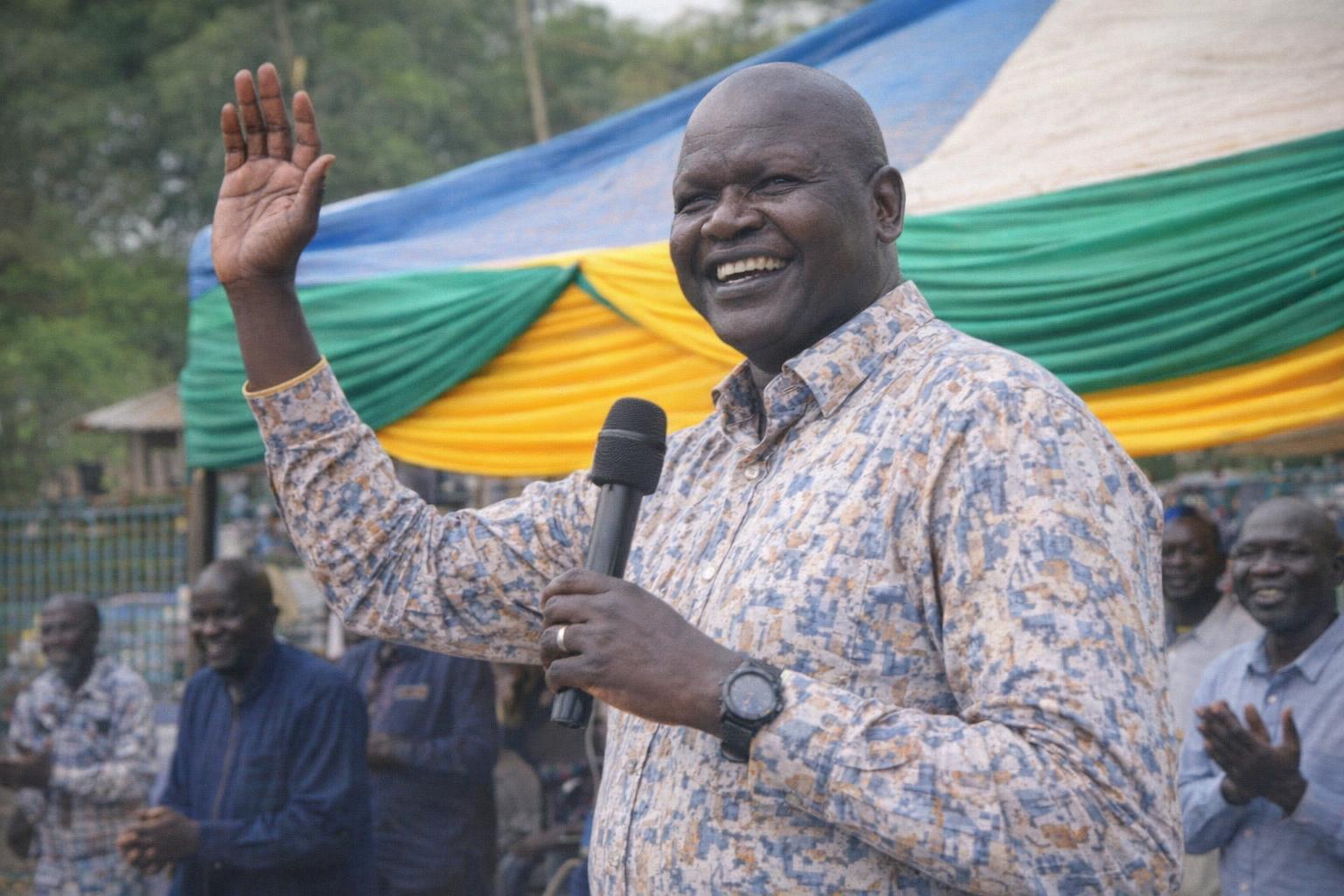
South Sudan Reshuffle Removes Lakes State Governor
President Salva Kiir Mayardit has issued a presidential decree relieving Lieutenant General Rin Tueny Mabor Deng of his duties as Governor of Lakes State. The announcement came late at night and formed part of a broader government reshuffle with multiple dismissals and reassignments.
Rin Tueny had led Lakes State since 8 June 2021. His exit after nearly five years has immediately triggered speculation among citizens and commentators about where he may be deployed next within South Sudan’s political and security architecture.
Rin Tueny’s Mandate: Stabilising a Volatile Lakes State
When President Kiir appointed Rin Tueny, Lakes State was widely described as among South Sudan’s most turbulent areas. Inter-communal violence, revenge killings, cattle raids and persistent insecurity were frequently cited as drivers of displacement and economic disruption.
Civil groups and some civic organisations have credited his administration with improving the security climate, including actions presented as disarmament of peace disruptors and efforts to restore normalcy across towns and rural communities.
Awards and Governance Reforms Cited by Supporters
In 2022, the Community Empowerment for Progress Organization (CEPO) named Rin Tueny “State Governor of the Year 2022”. The recognition referred to his role in curbing deadly violence and overseeing a state law prohibiting child and forced marriage, a measure that attracted national-level approval (CEPO).
“Lakes State is now peaceful. People are moving freely, children are back to school, local businesses and agricultural productivity have improved,” Rin said while receiving peace and governance awards in 2022, linking security gains to social and economic recovery.
In January 2023, Rin Tueny and Eastern Equatoria Governor Hon. Lobong Lojore were also recognised by LEADS Africa and the South Sudan General Students Union for contributions to institutional development, peace, security and education (LEADS Africa; South Sudan General Students Union).
Community Reconciliation and Social Cohesion Efforts
Supporters point to reconciliation initiatives as a key feature of the Lakes State approach. Rin Tueny presided over community conferences, including the Agaar Community Conference, which was described as helping reintegrate historically isolated clans and strengthening a shared sense of identity within the state.
Analysts quoted in the report argue that blending security operations with community engagement and legislative measures offered a governance template that appeared to reduce violence where older approaches had struggled.
Public Reaction and National Role Speculation Ahead of 2026 Polls
Reactions in Lakes State and in major cities have been pronounced, with some grassroots groups urging that Rin Tueny be considered for a national leadership role. Proposals circulated by residents and activists range from senior SPLM responsibilities to prominent defence or security postings.
A resident of Rumbek told The City Review that Rin’s leadership had “brought peace where conflict once reigned” and said “his experience in security and governance is exactly what the national government needs as South Sudan prepares for the December 2026 general elections” (The City Review).
A civil-society activist framed his record as proof that “where there is political will, peace can prevail even in the most difficult environments,” while political observers described him as combining military discipline with political judgment, shaping his reputation nationally.
Criticism, Rule of Law Debates, and Human Rights Concerns
The same record has also drawn criticism. Some human-rights advocates raised concerns about alleged heavy-handed tactics, including claims of political detentions and high-handedness during security operations, illustrating wider national debates on balancing enforcement with rights protections.
A frequently cited example in the report is the March 2025 closure of the Lakes State opposition party SPLM-IO office, following the arrest of party officials by the National Security Service (NSS). Critics view such incidents as tests of rule-of-law standards during stabilisation efforts.
What Rin Tueny’s Exit Means for South Sudan Politics
Commentators differ on how to weigh the trade-offs in Lakes State: supporters foreground reduced violence and the return of everyday activity, while critics emphasise rights concerns and political space. Even so, several observers acknowledge that a firm security posture coincided with a measurable shift in public order.
With national elections scheduled for December 2026, attention is likely to remain on the next assignment for Rin Tueny and on how the reshuffle reshapes governance priorities. For many, his Lakes State tenure remains a notable case study in South Sudan’s search for stability.