

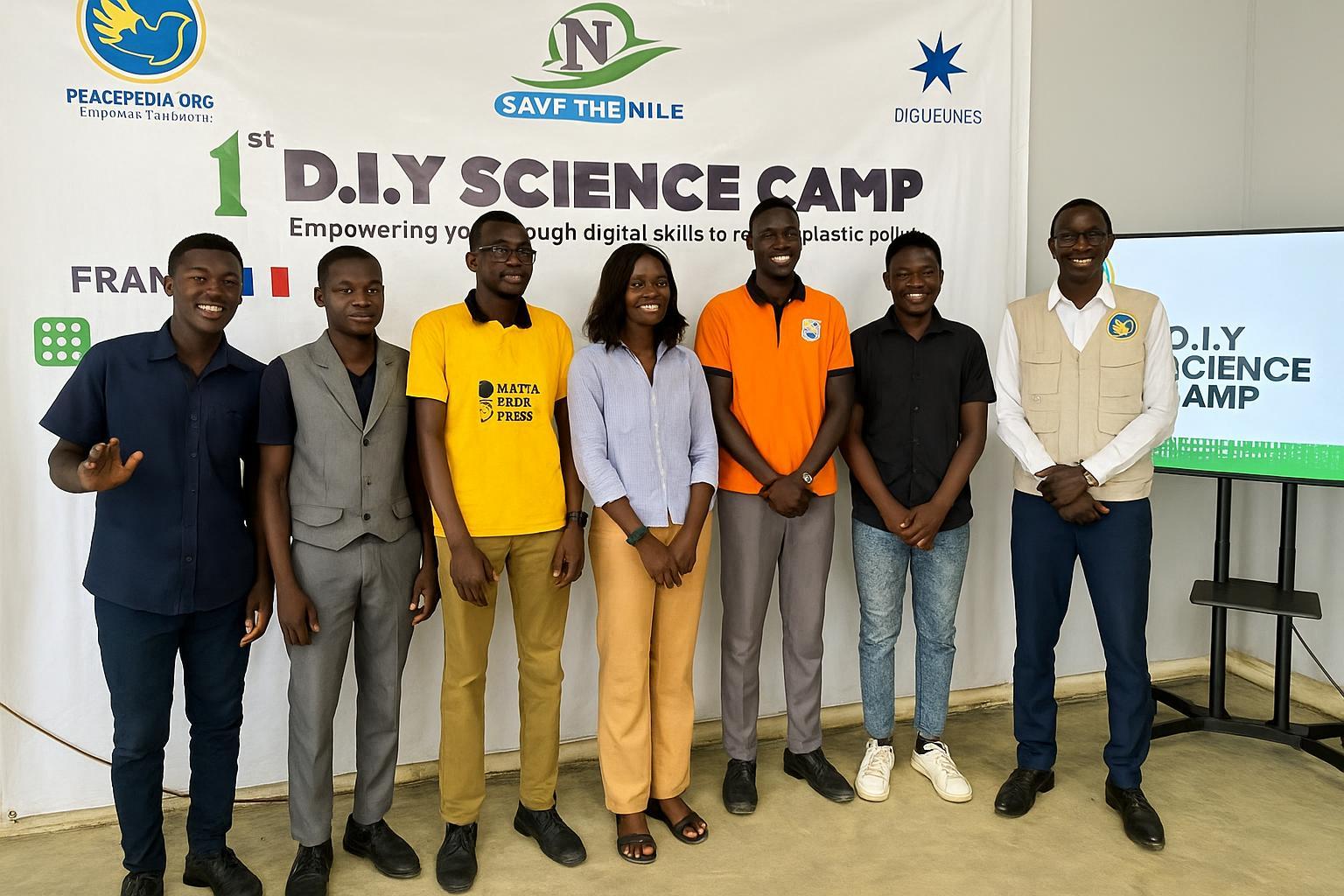
Young Innovators Target Plastic Pollution
In Juba, a three-day DIY Science Camp has introduced South Sudanese and French youths to the art of turning discarded plastic into marketable items, blending chemistry basics with digital modelling software (The Dawn, 28 November 2025).
Organisers note that 98 percent of plastic consumed in South Sudan is mismanaged, choking drainage channels and clouding the Nile, making youth-led solutions an environmental and public-health priority.
Skill-Building Through Practical Science
Participants sorted everyday waste, conducted density tests in salt water, oil and ethanol, and classified samples as PET, HDPE, LDPE, PVC or PP before melting them into prototypes.
The exercise, facilitators say, demystified laboratory science by using household materials and simple heat presses, proving that research skills are not the preserve of elite institutions.
Digital Tools Spark Creative Solutions
In parallel sessions, trainers from French social-tech group Digijeunes introduced Tinkercad, allowing teenagers to design replacement parts, jewellery and phone stands ready for 3-D printing.
Seventeen-year-old Marop Chawuoc described the platform as ‘a doorway to see plastic waste as raw material rather than trash’.
Community Partnerships Strengthen Momentum
The camp is a collaboration between local NGO Peacepedia, river-conservation outfit Save the Nile, and South Sudan’s Ministry of Environment, with logistical support from Juba City Council.
Save the Nile founder Makur Majeng argues that transforming refuse into revenue can reduce youth unemployment and ease municipal budgets strained by sweeping operations.
Peacepedia director Steady Ayuen frames the initiative as part of a broader peace-building agenda, noting that cleaner streets and waterways lower tensions over public health and land use.
Looking Ahead to Scaled-Up Impact
Organisers plan follow-up clubs in secondary schools, plus an online repository of open-source designs, to help graduates replicate experiments without expensive equipment.
A pilot exchange with Congolese students is also under discussion, signalling a regional appetite for grass-roots circular-economy initiatives that align with continental climate commitments.