

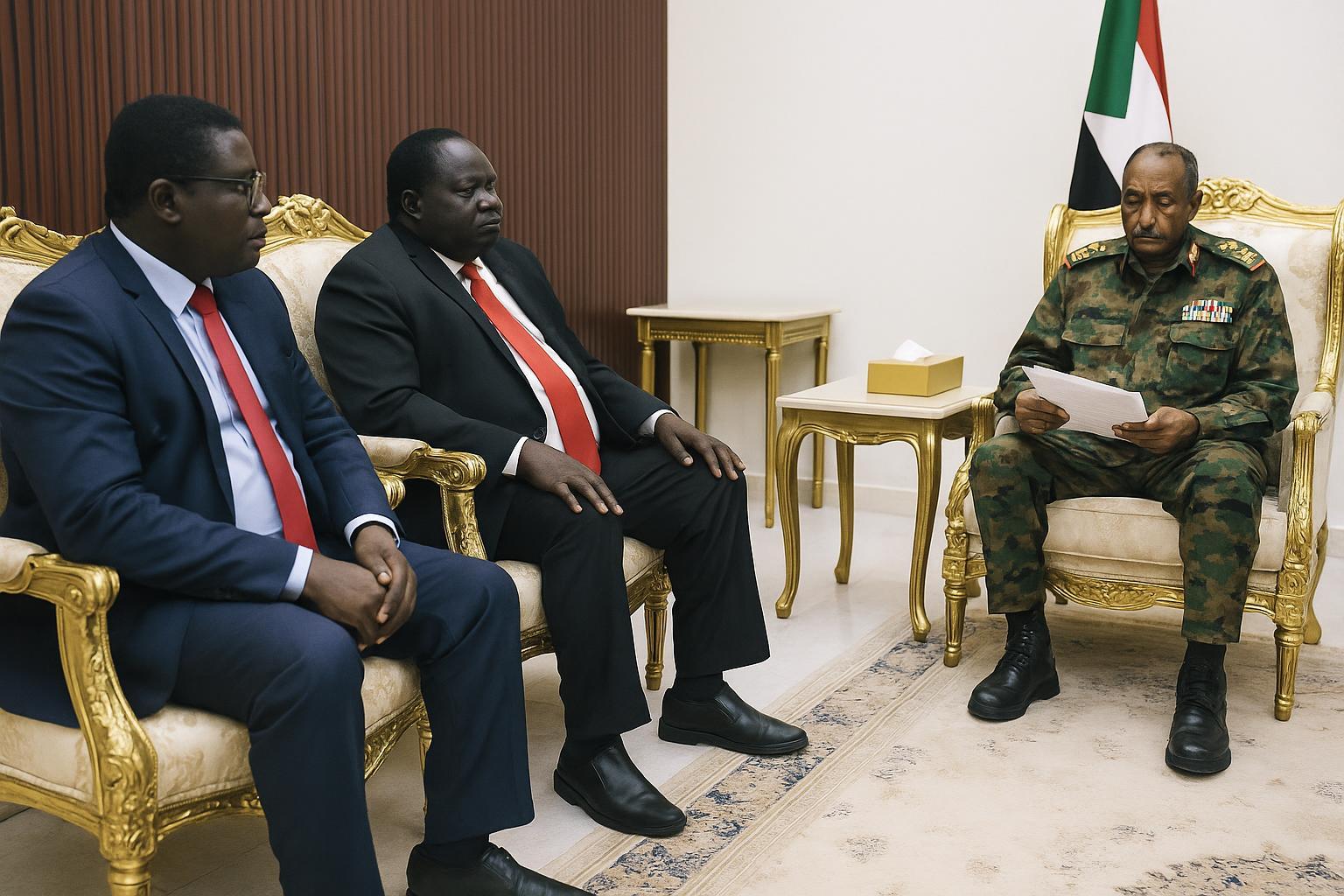
Juba-Khartoum Diplomacy Intensifies
A South Sudanese team led by presidential security advisor Tut Gatluak landed in Port Sudan for rare face-to-face talks with Gen. Abdel Fattah al-Burhan, seeking to calm tensions sparked by recent troop movements.
Sudan’s state agency reported that Gatluak carried a written message from President Salva Kiir, underscoring what officials described as “brotherly relations” centred on energy, trade and economic cooperation.
Heglig Oilfield at the Centre of Negotiations
The meeting follows a security arrangement that positioned South Sudanese forces inside Heglig, a contested oil hub in Sudan’s West Kordofan producing up to 100,000 barrels a day for export.
Under the deal, Rapid Support Forces and Sudanese Armed Forces must withdraw, leaving Juba’s troops to guard pipelines and wells against sabotage amid Sudan’s civil strife.
Economic Stakes Loom Large
Oil remains the main revenue lifeline for both countries; South Sudan depends on Sudanese pipelines, while Khartoum earns transit fees that finance essential imports.
Loss of control over Heglig threatens Port Sudan’s budget, yet the presence of South Sudanese troops also reassures markets that crude flows will not stop abruptly.
Security Ripple Across Region
Foreign-affairs undersecretary Maawiya Osman Khalid called the visit “one of the most important at this time”, hinting at hopes that joint technical meetings can stabilise border zones.
Analysts in Nairobi warn that any misstep could endanger fragile trade corridors linking Central and Eastern Africa, where fuel shortages already inflate food prices.
Diplomats Eye Next Moves
South Sudan’s foreign minister Monday Semaya Kumba judged the talks “very promising”, noting that experts will soon revisit pipeline fees, border crossings and suspended cargo insurance.
Observers say the rare convergence of interests offers a narrow window for confidence-building, provided field commanders respect the signed withdrawals and regional actors sustain diplomatic pressure.