

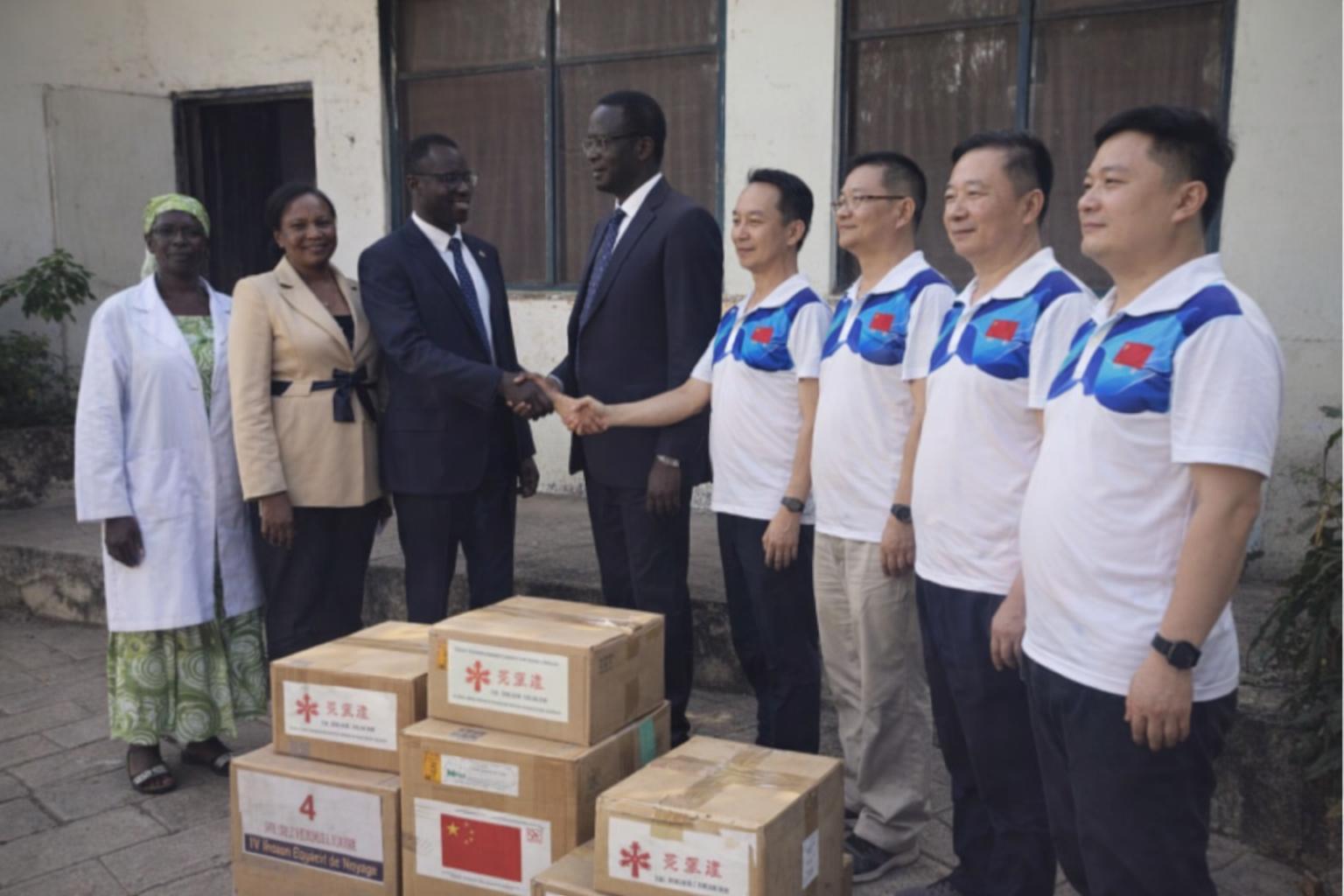
University of Juba Clinic receives targeted medical donation
A Chinese medical team has donated essential medical supplies to the University of Juba Clinic as the facility faces rising hepatitis B and C cases, university officials said. Around 200 patients are currently receiving care at the clinic, according to the same officials.
University representatives described the donation as part of an ongoing partnership designed to strengthen healthcare services for students, staff, and surrounding communities that rely on the campus facility for treatment.
Hepatitis caseload adds pressure as patient numbers grow
At a handover ceremony held on Tuesday, Dr. Chan Deng Malual, acting dean of the School of Medicine, said the clinic is under increasing strain. He linked the pressure to growing student enrollment, an expanding workforce, and rising demand from nearby communities.
“Because of economic hardships, many community members seek treatment at our clinic,” Malual said. He added that the result has been a sharp rise in patients and recurring shortages of consumables and laboratory reagents.
China–University of Juba health partnership expands clinical work
Malual said a memorandum of understanding signed with the Chinese medical team made the donation possible and supported continued joint clinical work. He said Chinese medical professionals now visit the clinic weekly to consult patients alongside university staff.
The collaboration is implemented in partnership with the Ministry of Health through Juba Teaching Hospital, according to officials speaking during the event.
New lab supplies and rapid test kits strengthen diagnostics
Officials said the donated items include syringes, blood collection tubes, probe-cleaning solutions, laboratory analyzer reagents, and diagnostic test kits. The kits cover malaria, hepatitis B, hepatitis C, HIV, and Helicobacter pylori, according to the clinic’s leadership.
Dr. Susan Peter Ladu, director of the University Clinic, said the donation is a significant step toward improving diagnostic capacity. “It represents an important first step,” Ladu said, after discussions on persistent shortages of medicines and reagents.
Free, non-discriminatory care and prevention focus at the clinic
Malual said malaria, typhoid fever, and hepatitis are among the most common diseases treated at the clinic. He described hepatitis as a major public health concern due to its association with severe liver disease and death.
He also stressed vaccination for hepatitis B among patients who test negative. Malual said the clinic provides free healthcare services on a non-discriminatory basis. “Whoever comes first is treated first — students, staff or community members,” he said.
Malaria elimination knowledge-sharing highlighted by both teams
The university welcomed the Chinese medical team’s commitment to share China’s experience in eliminating malaria. “China has achieved zero malaria, while malaria remains endemic in South Sudan,” Malual said, adding that the university hopes to learn from China’s strategies.
Dr. Zhang Erqing, head of the Chinese medical team, said the partnership aims to gradually transform the university clinic into a key medical service center in the area. “Through gradual improvements, we aim to enhance the medical environment,” Zhang said.
High patient volumes drive recurring shortages, clinic says
Ladu said supplies can be exhausted within a month because of high patient volumes. She noted that such shortages sometimes force the clinic to seek emergency support from the Ministry of Health or from university authorities.
“I sincerely thank the Chinese medical team for their continued cooperation — not only through donations but also through hands-on patient care,” Ladu said. She described the support as vital to improving the quality and continuity of services.