

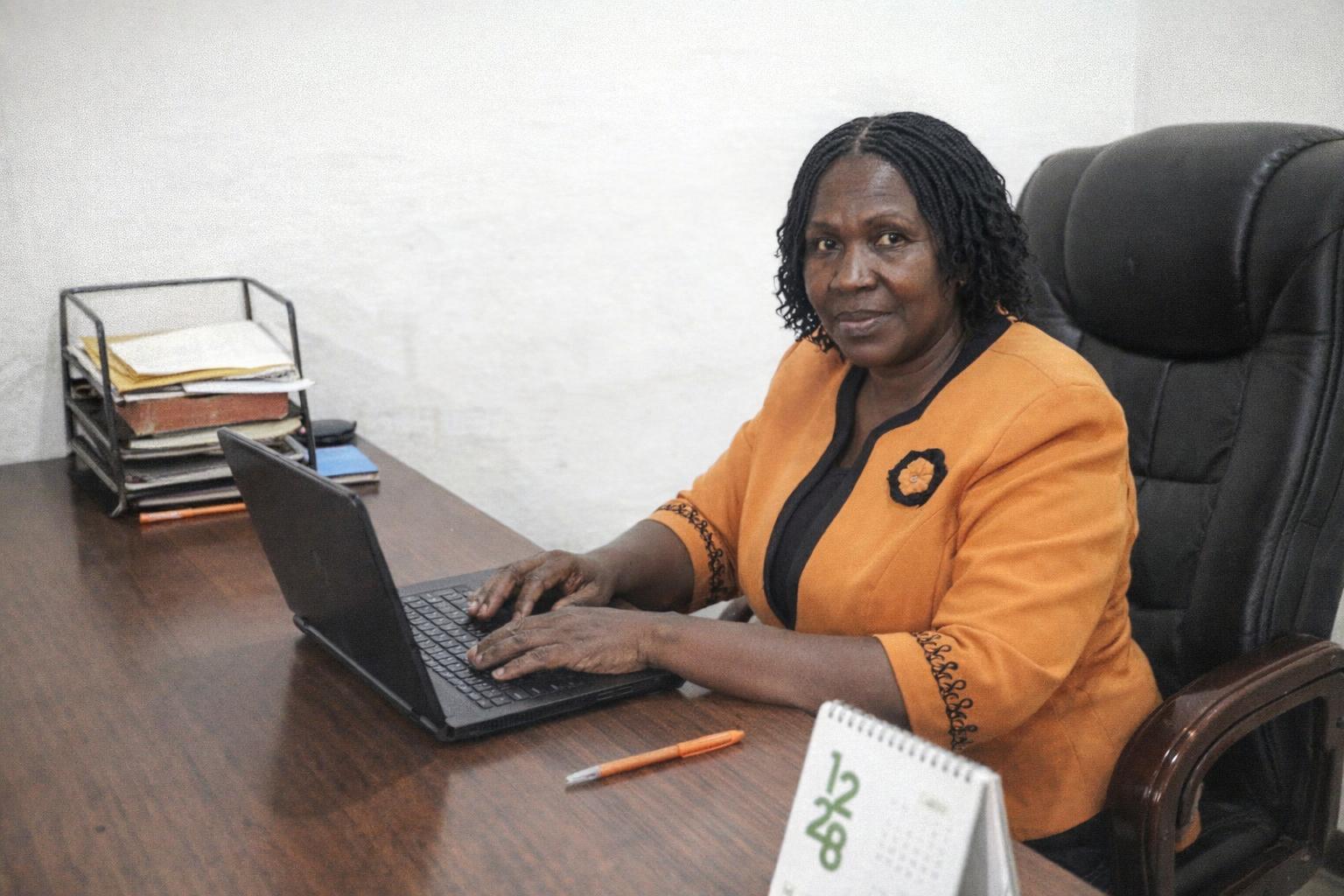
A Lawmaker Shaped by Health and Public Service
Hon. Betty Poni Christopher represents women from Kajo Keji County. Before entering politics, she worked as a nurse with Médecins Sans Frontières (MSF), then led Gender and Social Welfare at county level after the Comprehensive Peace Agreement.
Her legislative journey spans several phases. She served in Central Equatoria State Parliament from 2005 to 2009, supported commissions during the 2011 referendum, then headed the Civil Service Commission in Yei River State during the period of 32 states.
After the return to 10 states, she was appointed to parliament. She says she was later named Deputy Chairperson for Gender and Social Welfare, positioning her at the centre of social policy debates.
Grassroots Women’s Groups: Where Leadership Began
Christopher links her public ambitions to early community organising. She recalls forming and supporting women’s groups in her county, where resources allowed agricultural initiatives to take root.
For her, these experiences created a practical lesson in empowerment. The objective, she suggests, was not symbolism but livelihoods, coordination, and a shared voice for women in local decision-making.
Family, Social Norms, and the Everyday Politics of Respect
She describes family support as conditional on mutual understanding. She says her family advised her to consult her husband, who responded: “You are educated, and you can serve in any field you want… The most important thing is respect.”
Christopher frames the balance between public office and private life as deliberate. She says she continued house chores and childcare, and communicated openly about late meetings, portraying leadership as compatible with family responsibilities.
Rule-Based Leadership: Constitution, Conduct, and Humility
Christopher says her guiding principles are the constitution and the parliamentary code of conduct. In her account, legitimacy comes from staying close to constituents and avoiding hierarchy in grassroots engagements.
She also highlights interpersonal discipline as political capital. “When I go to the grassroots, I do not place myself above anyone,” she says, arguing that respect is reciprocated and reinforces trust.
Policy Footprint: The Police Act and Committee Work
In parliament, she recalls starting as a member of the Committee on Gender and Social Welfare before joining the Committee on Security. She says the security committee worked on the Police Act, with her presenting the legislation in parliament.
She cites the Police Act as a lasting achievement, noting it remains in use. The claim underscores a view of leadership that prioritises institutional frameworks over short-term visibility.
Youth Training and NGO Partnerships in Practice
Christopher says her office has worked with NGOs to sensitise youth, provide training, and organise workshops. She describes the political role as a connector, while ministries and partners such as the United Nations Development Program (UNDP) implement programmes.
The model she outlines places emphasis on coordination and delivery. It also reflects a pragmatic reading of capacity, where elected leaders mobilise networks to reach young people with skills and civic messaging.
Elections and Women Voters: Displacement as a Key Variable
With elections approaching, Christopher argues women’s participation is decisive because “women are the majority.” Yet she warns that economic crisis and displacement could limit voting, especially for those in camps or outside the country.
She links return and participation to stability, stating that if women come back, elections can be peaceful because, in her words, “women are naturally peacemakers.” Her argument blends demographics with a peacebuilding narrative.
The 35% Women’s Quota: Training, Credibility, and Competition
For Christopher, the 35% quota is not merely a number but a capacity question. She says women must be trained to take up the quota, and claims women are sometimes replaced by men under the argument that there are no educated women.
Her position is that training reduces this excuse and strengthens competitiveness beyond the quota. In her framing, the objective is representation with competence, enabling women to compete within the remaining 65% as well.
Barriers Women Face in Politics: Lobbying and Appointments
Christopher identifies lobbying practices as a structural disadvantage. She says men often lobby at night, and she cannot attend such meetings, which can limit access to influence and informal bargaining.
She also distinguishes elections from appointments. Women may participate in electoral contests, she says, but appointments “rarely favor women.” She notes that the women’s caucus planned to meet the governor on the issue, and says it remains on their agenda.
Accountability, Teamwork, and a Skepticism of Rumours
Christopher characterises her style as accountability and teamwork. She says that if assigned a task, she delivers it fully and provides a report, presenting administration as a measurable obligation.
She adds that she does not rely on rumours, preferring direct observation or firsthand accounts. She describes herself as friendly and egalitarian, avoiding showmanship and insisting that equal treatment strengthens public confidence.
Staying Connected Amid Displacement and Camp Life
Christopher says she remains connected through local officials, including the commissioner, and through women’s groups she formed. She reports having four groups focused on agriculture and tree planting, now operating in camps because of displacement.
Beyond organised groups, she mentions phone calls and visits during parliamentary recess. The picture she paints is of representation maintained through routine contact and periodic on-the-ground verification.
A Personal Routine That Mirrors Public Discipline
She describes time management as central to well-being. In her account, mornings begin with breakfast for her children, while those in different school schedules manage cooking responsibilities before classes.
She says older children help with chores, and her role is to provide money and necessities. The narrative presents leadership as structured, with domestic coordination reinforcing professional reliability.
Peace, Law Enforcement, and a Forward-Looking Message
Christopher’s vision centres on peace, with women and youth urged to “stand for peace” and advocate for empowerment. She portrays development as dependent on stability and civic responsibility.
She tells young women that politics may not bring immediate financial rewards, but insists they are “the future of tomorrow” and should not give up. She also says insecurity in her hometown remains a priority she wants addressed.
Her hope, she argues, lies in law enforcement and implementation. “South Sudan is not a bad country—it is the leaders who fail to implement the laws,” she says, calling the peace agreement “unique” and urging practical follow-through.