

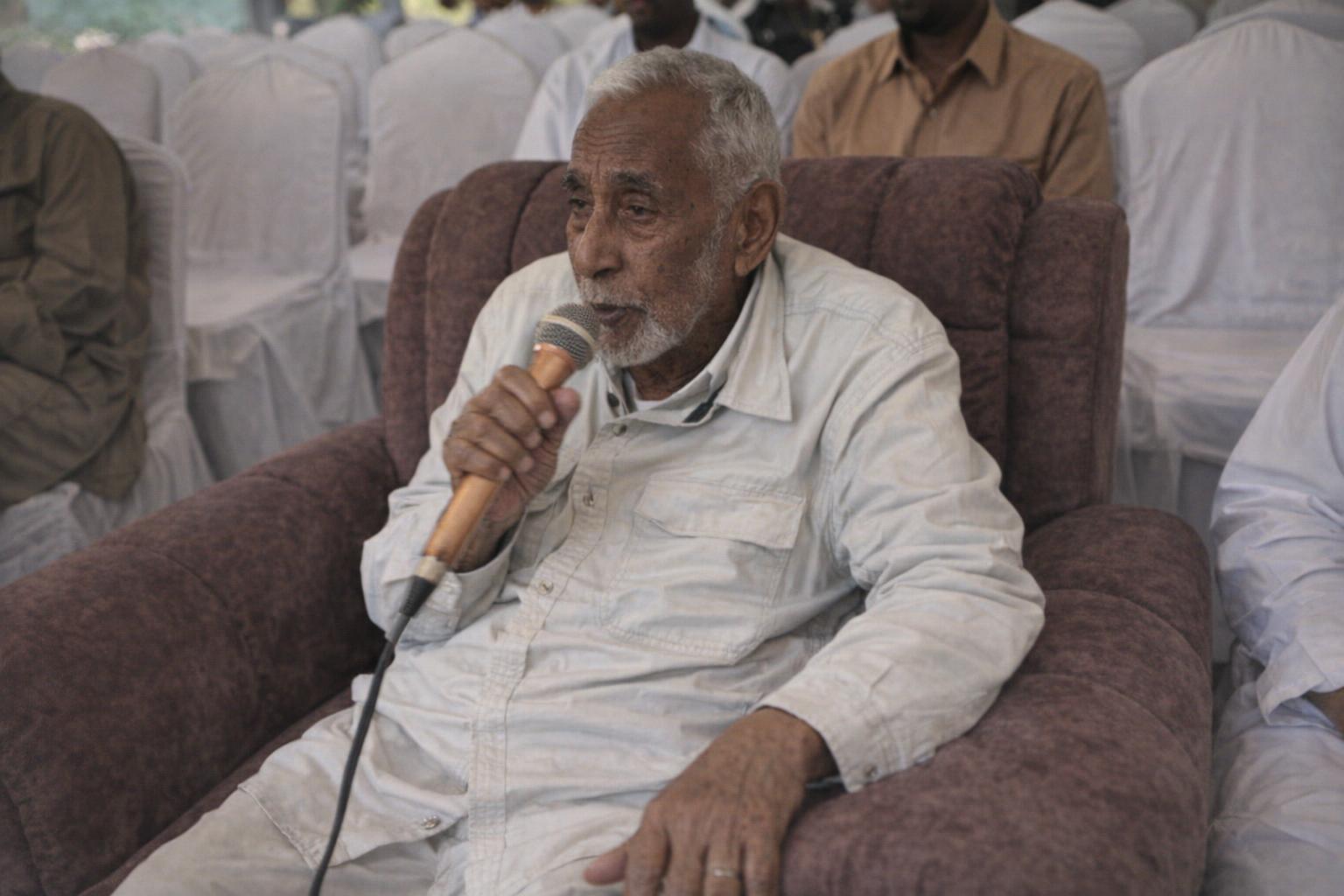
Cairo death confirmed by family sources
Prominent businessman Amin Akasha has died in Cairo, Egypt, after a long illness, family sources confirmed. A relative told Eye Radio that he passed away on Saturday morning in the Egyptian capital, surrounded by family members (Eye Radio).
He had been in and out of hospital in Juba last year for an undisclosed illness before travelling abroad for further treatment, according to the same account. He was in his late eighties at the time of his death (Eye Radio).
A business figure anchored in South Sudan’s economy
Akasha was widely regarded as one of South Sudan’s most prominent business figures, with roots in the country that predate Sudan’s independence in 1956 (Eye Radio).
His family’s presence in the South dates back to 1904, when his father moved to Mongalla, then the capital of Southern Sudan, and traded a wide range of goods, including agricultural tools, foodstuffs, and construction materials (Eye Radio).
Hotels in Juba and a commercial footprint
Over the decades, Amin Akasha built what Eye Radio described as a strong business empire in South Sudan, particularly in the hospitality sector. He reportedly owned several hotels in Juba, a city where commerce and public life often intersect (Eye Radio).
He was also described as a key supplier of goods to Juba’s Konyo Konyo market, positioning him as a significant actor in everyday trade networks that serve households and small businesses across the capital (Eye Radio).
Independence referendum and a public stance
Despite family origins in northern Sudan, Eye Radio reported that Mr. Akasha openly supported South Sudan’s independence. During the 2011 referendum on self-determination, he voted for separation, according to the report (Eye Radio).
In a separate 2011 exchange cited by Eye Radio, Al Jazeera asked him how he voted. He declined to answer and said: “In any case, I will remain in the South until the end of my life” (Eye Radio).
Education, political links, and contested national turns
Mr. Akasha said he studied in the South, the North, and Egypt, and married in Alexandria in 1955. He also voiced belief in the unity of the Nile Valley and was among the founders of the National Unionist Party, serving as its representative in Southern Sudan (Eye Radio).
He linked his life closely to the South after returning from Egypt, where he settled with his family and supported southern causes, according to his own account cited by Eye Radio (Eye Radio).
He cited opposition to the 1983 decision by former Sudanese President Jaafar Mohamed Nimeiri to abrogate the 1972 Addis Ababa Peace Agreement and divide the southern regional authority (Eye Radio).
Arrest, return, and memories of development in Juba
Akasha said he was arrested for his stance alongside several southern political figures. After his release in the early 1990s, he left Sudan and later returned upon a personal invitation from the late Sudan People’s Liberation Movement leader John Garang, according to Eye Radio (Eye Radio).
He said Dr. Garang and other SPLM leaders appreciated his contributions to development and urbanisation projects in the South, particularly in Juba. The recollection underscores how business figures can become part of a city’s long development narrative (Eye Radio).
Family life and survivors
Eye Radio reported that Amin Akasha married women from both southern and northern communities. He is survived by dozens of children, grandchildren, and great-grandchildren, as the family and associates mark the passing of a well-known public figure (Eye Radio).