

Juba electricity supply back on the policy agenda
South Sudan says it will intensify efforts to tackle chronic power shortages and expand electricity distribution in Juba and other urban centres, more than a decade after independence. Officials frame reliable power as a practical foundation for services, security lighting and economic activity.
Energy Minister’s first field inspection at Ezra Group
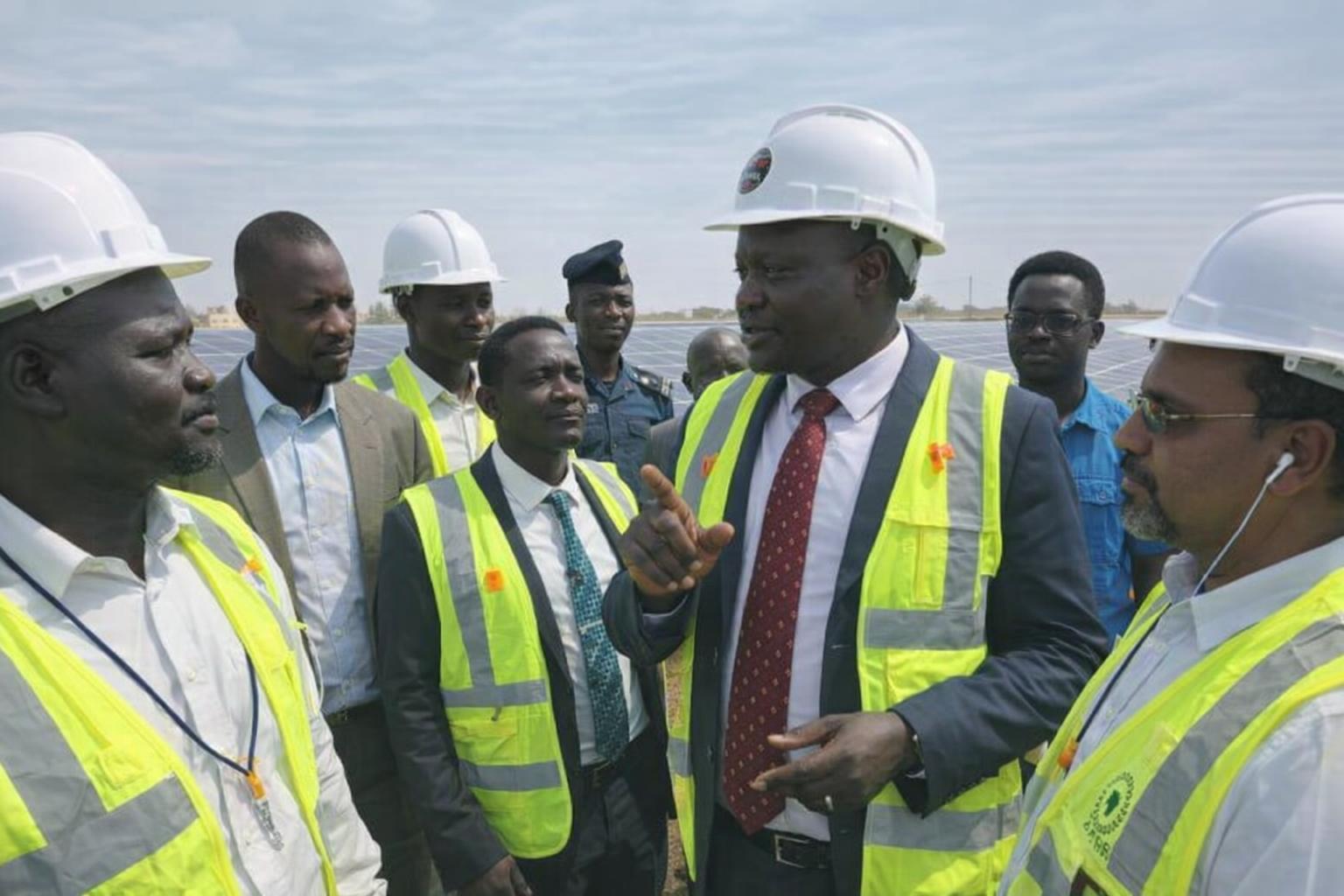
The renewed push follows the first official field inspection by the Minister of Energy and Dams, Agok Makur Kur, at Ezra Group’s facilities in Gondokoro, on the outskirts of Juba. The visit included senior ministry officials and engineers, according to accounts shared with journalists.
A system under strain: low access and costly alternatives
Despite the country’s oil production, less than two percent of South Sudan’s population is connected to the national grid, according to the same reporting. In Juba, frequent outages and limited coverage have left households, businesses and institutions relying heavily on expensive private generators.
Ezra Group’s central role in Juba power generation
Ezra Group began operating Juba’s thermal power plant along the River Nile in the years after independence, filling a gap left by the absence of a national electricity utility. The foreign-owned firm is described as the sole large-scale producer supplying Juba and surrounding areas.
Infrastructure, fuel costs and network limits
The company’s generation has struggled to match rising demand, amid aging infrastructure, high fuel costs and limited transmission networks. During the tour, Minister Makur held detailed discussions with management on operational constraints and areas where government policy or technical support could be relevant.
Inside the Gondokoro facilities: what officials inspected
Officials inspected the Generators Room, Control Room, Substation and Outgoing Feeders, Batteries and Energy Storage System, Workshop and Spare Parts Unit, Solar PV Plant, Refinery Yard, Pole Manufacturing Plant, plus the Barge Workshop and operational barges. The stated aim was to assess capacity and conditions, including renewable integration.
79 MW online, 21 MW still pending
After the inspection, Makur told journalists the plant is generating 79 megawatts, with an additional 21 megawatts yet to be brought online. “I received full clarification from the management, and I was informed that 79 megawatts are currently in use, while 21 megawatts remain pending,” he said (Pan African Visions).
“Ezra Group has assured me that this remaining capacity can be completed within the coming months or by next year,” Makur added (Pan African Visions).
Why electricity matters for urban services and security
Makur linked improved supply to economic recovery and urban security, arguing that dependable electricity underpins businesses, hospitals, water systems and street lighting. The reporting notes that demand in Juba still exceeds supply, leaving some neighbourhoods without power and affecting public services.
Regional power imports: Uganda-to-Nimule line and next steps
The minister also pointed to regional power import arrangements as part of short- and long-term solutions. He said electricity transmission from Uganda has reached Nimule and could be extended further inland. “Power transmission from Uganda has reached Nimule, and Nimule is already covered,” he said (Pan African Visions).
“We are prepared as a ministry to cooperate with Uganda so that this power can reach Juba and other towns,” Makur added (Pan African Visions).
Network expansion: concrete poles and coverage goals
Samson Ezra, Managing Director of Ezra Group, described the minister’s presence as significant for addressing persistent challenges in Juba’s electricity supply. “This visit is a cornerstone for addressing the immense challenges of supplying power to Juba,” Ezra said (Pan African Visions).
He added, “Together with the new minister, I am confident we will connect the rest of the city” (Pan African Visions). Ezra said the company has started manufacturing large numbers of concrete electricity poles to extend the network into underserved areas.
What officials say is needed for wider electrification
South Sudan remains among the least electrified countries globally, the article notes, despite being an oil-producing nation. Officials argue that sustained investment, regional cooperation and stronger oversight of the energy sector will be key to expanding access and supporting long-term growth (Pan African Visions).