

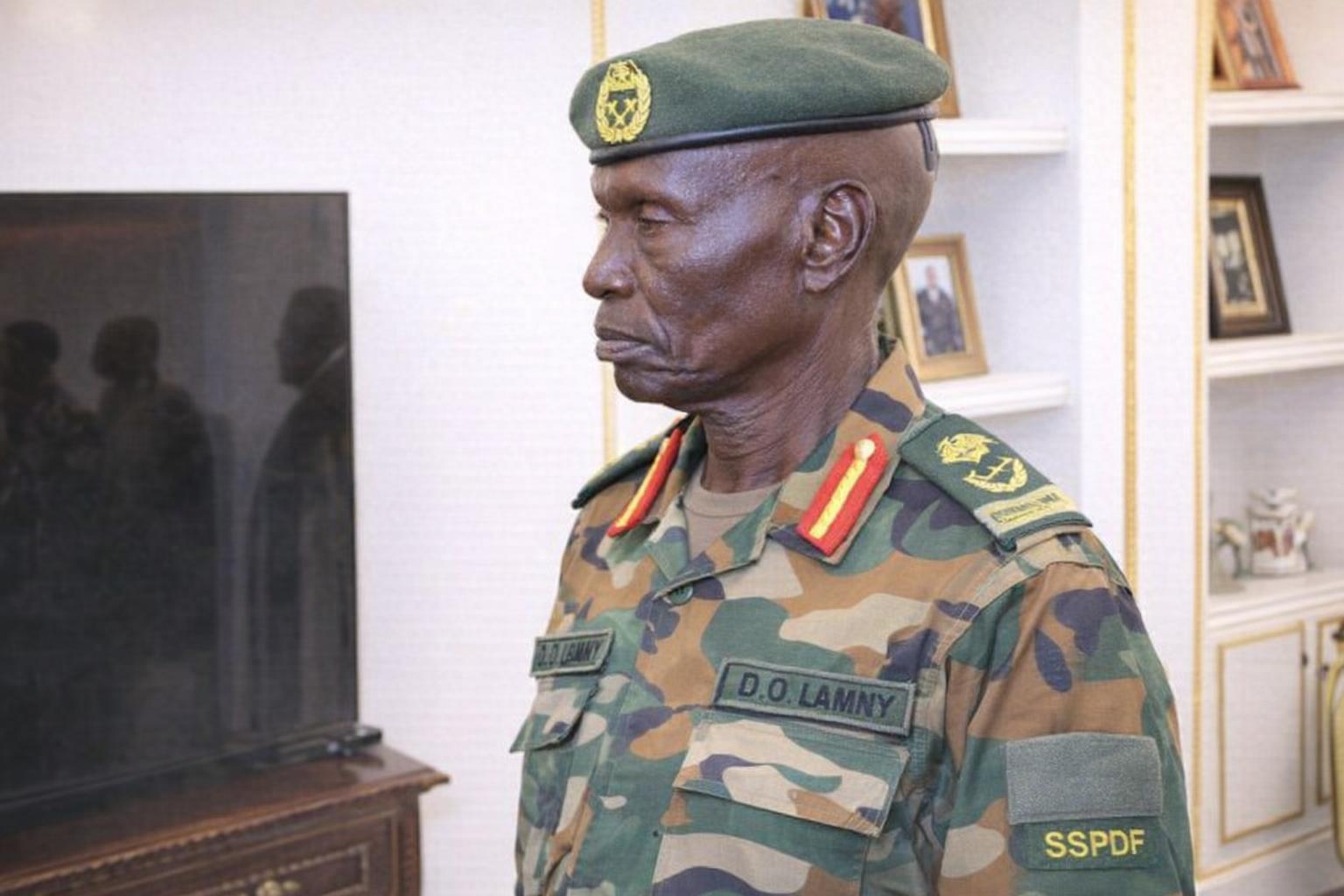
South Sudan Military Intelligence leadership reshuffle
President Salva Kiir Mayardit has enacted leadership changes in South Sudan’s Military Intelligence, moving senior officers through a presidential decree with limited public messaging. The shift was implemented without ceremony, reflecting a low-profile administrative style around sensitive security institutions.
Lt. Gen. David Ohucholi relieved as CMI
The decree states that Lt. Gen. David Ohucholi has been relieved of his duties as Chief of Military Intelligence (CMI). No official explanation accompanied the decision, leaving observers to interpret it as part of routine command management within the security establishment.
Lt. Gen. Abud Stephen Thiongkol returns to the role
Lt. Gen. Abud Stephen Thiongkol Ijong has been appointed to replace Lt. Gen. David Ohucholi, with immediate effect. Lt. Gen. Abud previously served as CMI, making his return a familiar reconfiguration rather than an abrupt departure from existing institutional practice.
Security coordination and continuity signals
The adjustment comes against the backdrop of ongoing security and political developments, where intelligence coordination is widely seen as central to stability. With no reasons provided, analysts often read such reshuffles as efforts to reinforce command efficiency and internal coordination within the South Sudan People’s Defence Forces (SSPDF).
The quiet execution of the change can also be interpreted as a signal of continuity. By limiting public commentary, the presidency appears to present the transition as orderly, maintaining the perception of steady command structures in the military intelligence chain.
Civil service changes in Energy and Water ministries
Separate decrees also introduced changes in the civil service. Madhieu Achuil Mawien was dismissed as Undersecretary of the Ministry of Energy and Dams, and Macham Macham Angui was appointed as his replacement.
In another appointment, Lam Tungwar became the new Undersecretary in the Ministry of Water Resources and Irrigation. He replaces Achier John Manyuat, who has been relieved of his duties, extending the reshuffle beyond the security sector into key administrative portfolios.
What the decrees indicate for governance
Taken together, the decrees underscore the president’s reliance on formal administrative instruments to recalibrate leadership across strategic offices. For young South Sudanese tracking governance, the moves highlight how staffing changes can be communicated through official channels, even when broader political context remains largely unspoken.