

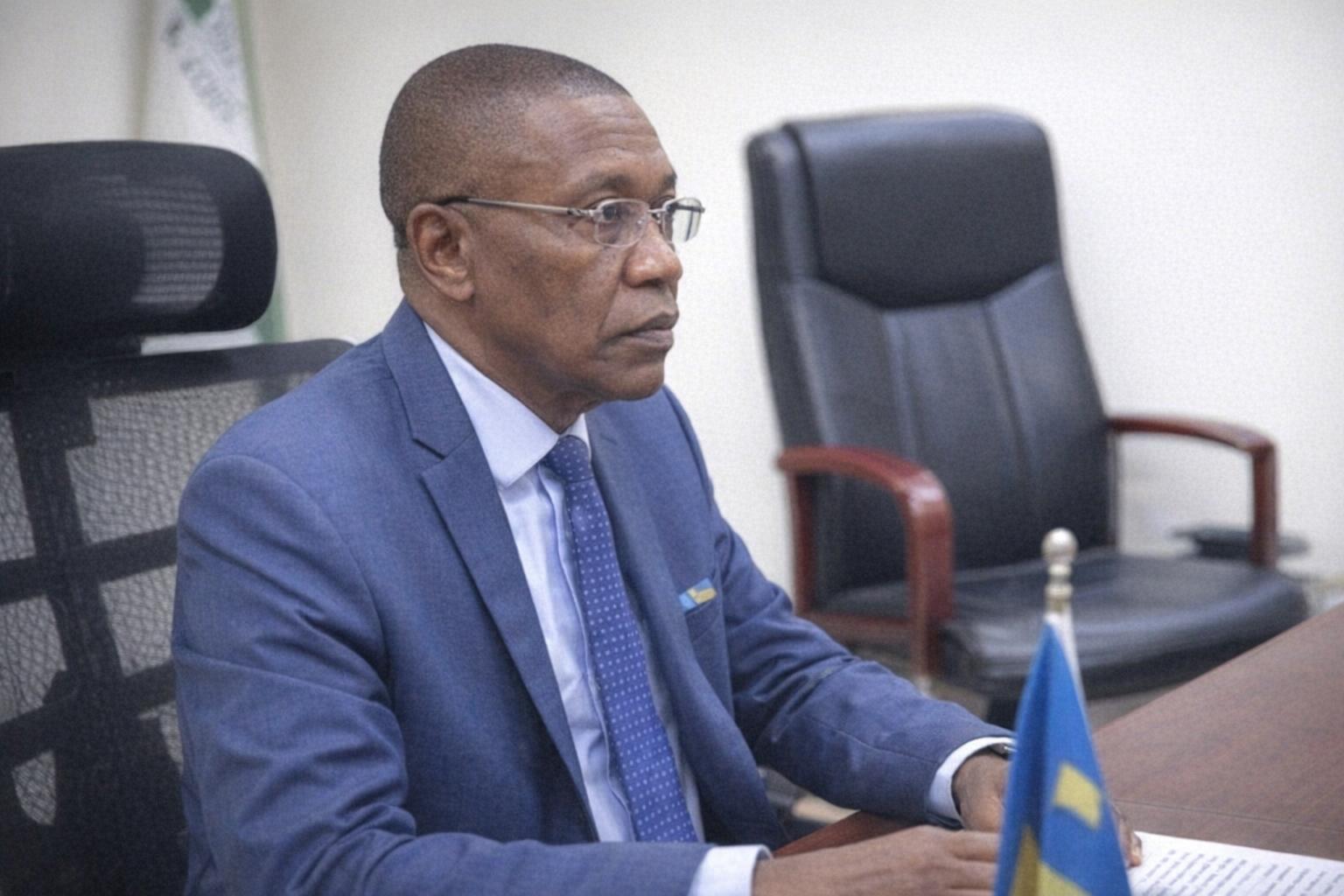
South Sudan Peace Process and the Case for Dialogue
“You cannot fight forever… The most important thing is to talk,” says Amb. Maj. Gen. George Aggrey Owino, interim chairperson of the Reconstituted Joint Monitoring and Evaluation Commission (RJMEC), describing dialogue as the practical exit from repeated conflict cycles.
In an exclusive interview with City Review, Amb. Owino frames South Sudan’s peace process as a test of endurance, where negotiation is not a symbolic gesture but a working method for restoring stability and protecting civilians.
RJMEC Leadership: Experience Shaped by Peacekeeping Missions
Born in Kenya, Amb. Owino has held senior roles in the Kenyan military and served in international missions, combining security planning with humanitarian and diplomatic engagement, according to his account in the interview.
He cites experiences in Liberia during the Ebola outbreak and in Somalia with the African Union Mission in Somalia (AMISOM), portraying peacekeeping as a field where commanders must adjust to crises that standard training does not fully anticipate.
Personal Ties and Regional Perspective on South Sudan
Amb. Owino says his approach is also informed by a personal connection to South Sudan. “I feel bound… part and parcel of South Sudan. I can trace my village to this country,” he says, pointing to family and clan links near the Lol River.
He argues that understanding South Sudan’s history and self-determination struggle matters for mediation, while describing regional partners, including Kenya, as stakeholders whose support can reinforce nationally led political choices.
Political Commitment to the 2018 Peace Agreement
Amb. Owino places primary responsibility on the political parties and signatories. “The parties are the key drivers of the whole peace process… Without their commitment, lasting peace cannot be achieved,” he says.
He adds that external actors can support implementation, but cannot substitute for leadership decisions taken in Juba. In his framing, the agreement’s credibility rises or falls with sustained compliance by those who signed it.
Reconciliation, Faith Actors and the ‘Peace Circle’
Reflecting on the social cost of conflict, Amb. Owino says violence leaves “scars and memories,” and that the first step is helping communities forgive. He links that process to rebuilding trust over time, rather than expecting rapid reconciliation.
He highlights faith organizations as practical partners for healing. “The best placed for healing are the faith organizations, the Christians and the Muslims,” he says, adding that RJMEC is engaging them through programmes anchored on what he calls a “peace circle” approach.
UNMISS Drawdown: Security Planning with Reduced Forces
Amb. Owino says reductions in personnel and funding force peace operations to rethink deployments. “If you have 100, you only now have 80,” he explains, describing how commanders must reassess vulnerabilities, redeploy assets, and increase patrolling to sustain coverage.
He draws parallels with AMISOM in Somalia, where troop levels were cut amid funding constraints. He also stresses that coordination and information-sharing with the UN remains important for monitoring and humanitarian-linked tasks.
Humanitarian Access and Civilian Protection Under Constraints
Amb. Owino warns that reduced resources can weaken humanitarian reach and protection, especially for communities facing barriers to food, medicine, and safe movement. He notes that UN structures are “very keen on humanitarian issues,” and sees such support as intertwined with the agreement’s commitments.
He argues that operational blind spots can emerge if information and cooperation diminish. In his view, maintaining basic access and safety is not a separate track, but a condition that enables political processes to proceed.
Elections, Constitution-Making and Unified Forces: Three Priorities
Amb. Owino identifies three pillars: elections, constitution-making, and the unification of forces. On security integration, he says fragmented command undermines stability. “You cannot have a country with a force that has five commanders-in-chief,” he argues.
On constitution-making, he calls the constitution “a living thing,” urging parties to agree on critical elements required for elections, including the structure of government and sequencing of votes, while allowing broader constitutional work to continue afterwards.
Judicial, Diplomatic and Funding Risks Around Implementation
Amb. Owino acknowledges that ongoing trials involving key leaders could affect implementation. He says that if a hybrid court were operational, “there would have been no judicial process locally,” and notes that risks arise if legal processes interfere with signatories’ roles.
He also points to funding dynamics in peacekeeping, describing UN budgets as contribution-based and citing a drop in the United States’ share from “almost 75%” to “about 25%,” which he links to personnel reductions and tighter operational choices.
Road Ahead: Dialogue as a Governance Discipline
Amb. Owino calls the 2018 agreement “the only viable tool” he sees for returning South Sudan to a peaceful path, arguing that leaders will be judged by whether they reduce suffering and move implementation forward (City Review).
He ends where he began, insisting that sustained communication is a discipline of governance rather than a slogan. “Dialogue, dialogue, dialogue… The most important thing is to talk,” he says, placing responsibility squarely on political leadership.