

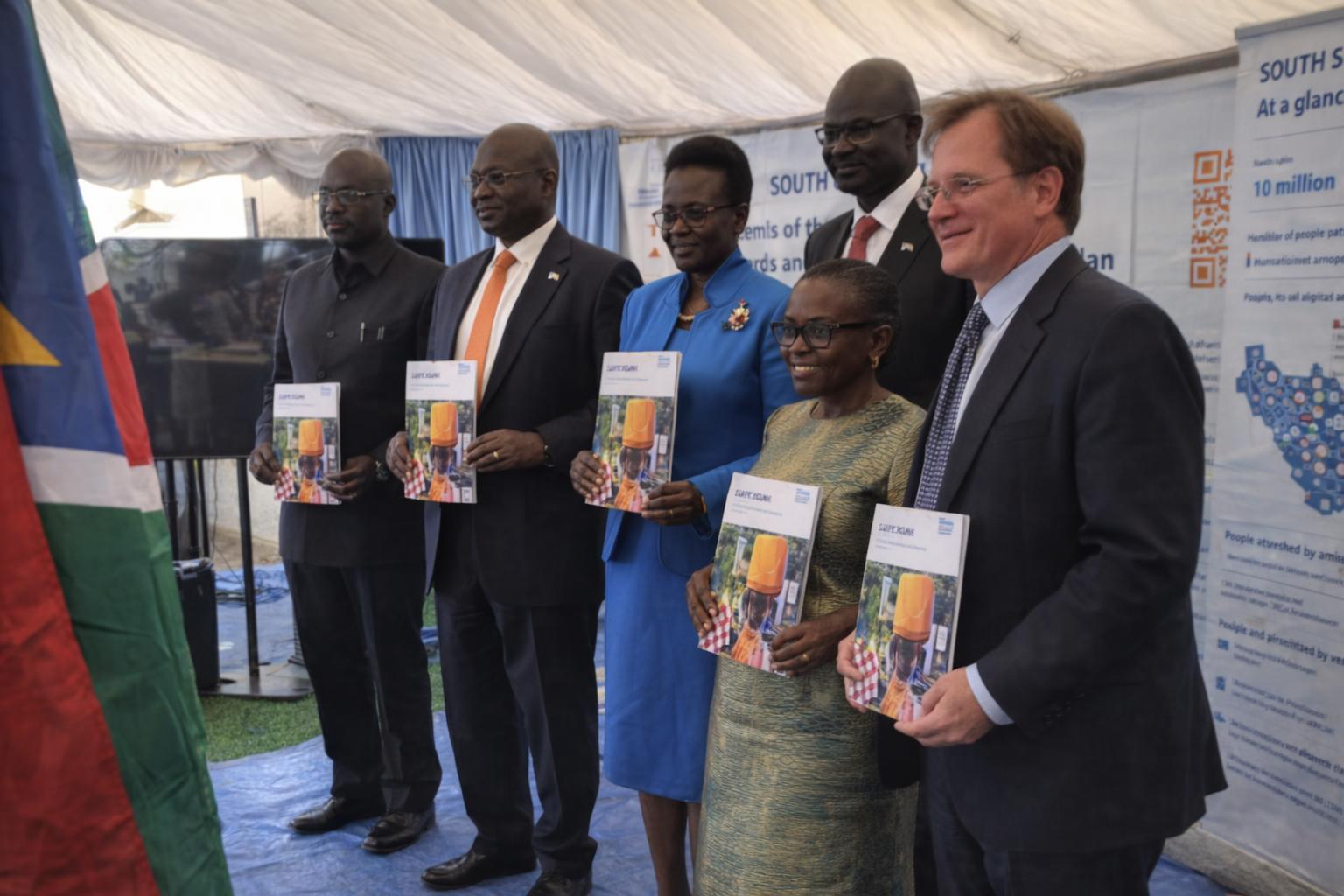
South Sudan 2026 Humanitarian Response Plan Unveiled
The United Nations has presented South Sudan’s 2026 Humanitarian Needs and Response Plan, warning that humanitarian conditions remain severe. More than 10 million people are expected to need some form of assistance this year, according to figures shared during the launch (OCHA).
The plan was presented Tuesday in Juba by the UN Office for the Coordination of Humanitarian Affairs. It seeks more than USD 1 billion for life-saving support, with a primary focus on four million people assessed to face the most urgent risks (OCHA).
UN OCHA Warns of Rising Needs and Multiple Shocks
UN Humanitarian Coordinator Anita Kiki Gbeho told participants that needs continue to increase, driven by conflict, economic hardship and climate-related shocks. She also pointed to the spillover effects of the war in neighbouring Sudan as an added pressure on communities and services.
Gbeho also referenced last year’s operating constraints, noting that renewed political tensions limited humanitarian access and contributed to deteriorating living conditions for millions. Her remarks framed the 2026 plan as both a response to immediate distress and a disciplined prioritisation exercise.
Funding Gap, Reach, and Cholera Response Cited
Gbeho said that despite receiving 43 percent of requested funding, humanitarian actors reached about four million people out of an initial target of 5.4 million with life-saving assistance. She cited support spanning food, health, water, sanitation, hygiene, education, livelihoods, nutrition and protection.
She added that partners helped stabilise what she described as the largest cholera outbreak on record, reporting over 96,000 cases. The figures were presented as evidence of operational impact even under financial constraints (OCHA).
Acute Food Insecurity Outlook for 2026 Highlighted
OCHA projections shared at the event indicated that about 7.5 million people could face acute food insecurity in 2026. The same outlook included at least 28,000 people already classified in catastrophic conditions, underscoring the urgency of targeted assistance (OCHA).
According to the plan’s priorities described at the launch, the response aims to reduce preventable deaths, address protection risks and strengthen community resilience. Speakers framed these goals as a practical way to concentrate resources where consequences are most severe.
South Sudan Government Calls for Better Coordination and Preparedness
Vice President Rebecca Nyandeng de-Mabior urged stronger coordination, preparedness and shared responsibility, arguing that the country cannot depend on emergency aid alone. She thanked the UN, humanitarian agencies and donors for sustained engagement under difficult circumstances.
Nyandeng called on government institutions to improve planning, coordination and service delivery so assistance reaches people faster and “with dignity,” echoing language used at the launch. She also said South Sudan’s natural resources, including fertile land and water, should be better utilised to reduce aid dependency.
Minister Pledges Targeted, Accountable Humanitarian Action
Minister for Humanitarian Affairs and Disaster Management Albino Akol Atak reaffirmed the government’s commitment to humanitarian action. He described the 2026 plan as a shift toward more targeted and accountable assistance, while acknowledging the combined effects of conflict and climate shocks.
Atak said the government would continue investing in basic services, work to improve humanitarian access by removing illegal checkpoints, ensure the safety of aid workers and strengthen coordination. He also referenced support for durable solutions for displaced people and returnees as part of the broader effort.
NGOs Urge Flexible Funding and Protection of Civilians
Rose Abuk, Executive Director of the Women Agency for Resilience Transformation, speaking for national and international NGOs, warned that conditions are worsening amid conflict, displacement, climate shocks and reduced access to basic services. She said women and children bear a disproportionate share of the impact.
Abuk called the plan a reflection of realities and a test of collective resolve, including whether government and international partners can meet escalating needs under constrained conditions. She urged donors to expand flexible, predictable, multi-year financing and stressed the importance of protecting civilians and safeguarding aid workers.
A High-Stakes Plan in a Constrained Environment
Across the launch, speakers converged on a central message: needs remain extensive, resources are tight, and operational access matters. The plan’s emphasis on prioritisation reflects an effort to align funding, coordination and delivery with the most acute risks.
Officials and humanitarian actors also signalled openness to collaboration, linking immediate relief with improved planning and resilience. In Juba, the 2026 framework was presented as both a life-saving appeal and a governance-focused call for better coordination across institutions (OCHA).