

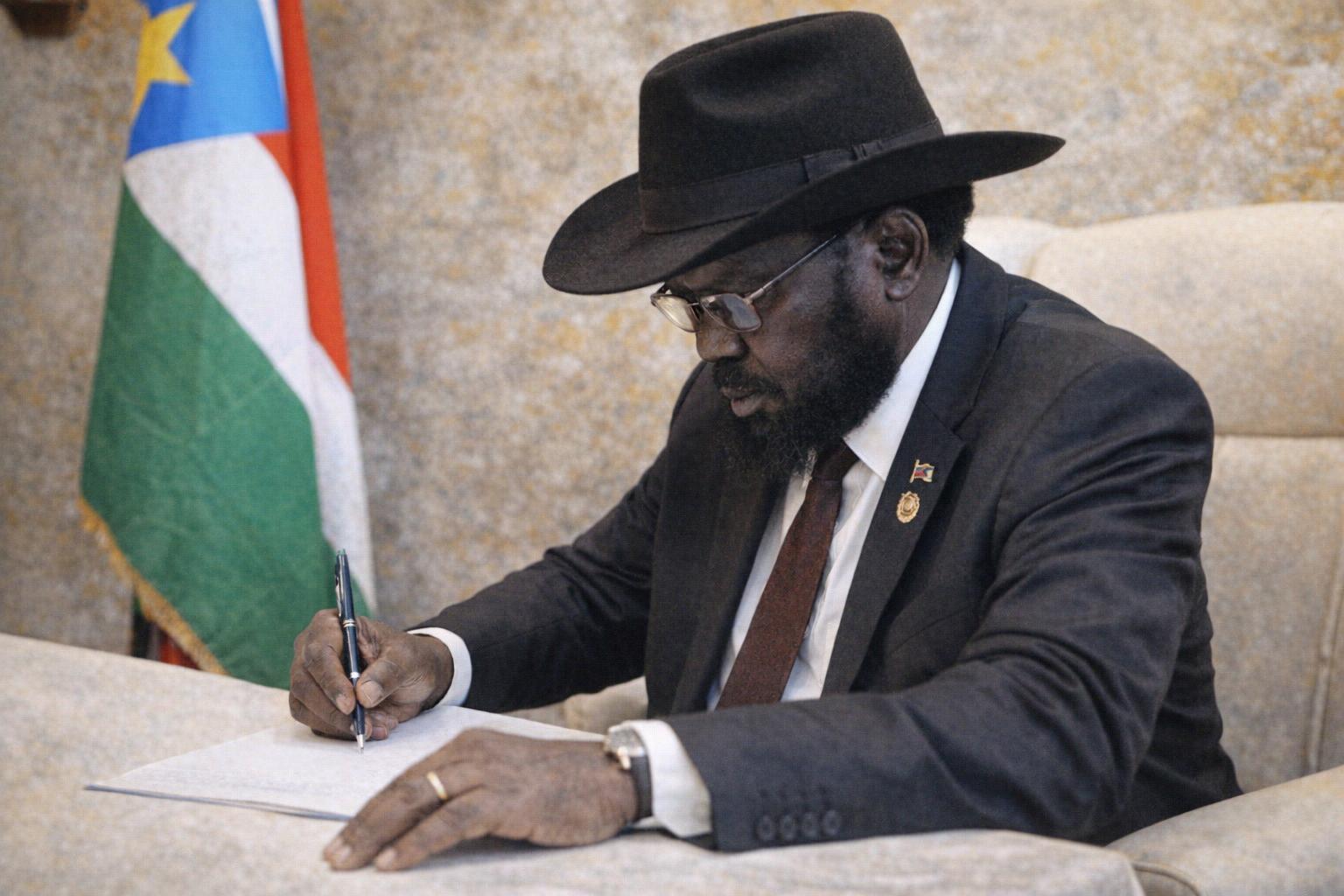
South Sudan Official Gazette: a formal publication system
President Salva Kiir has instructed the creation of a high-level technical committee to make the South Sudan Official Gazette operational and to upgrade the official website of the Office of the President. The announcement was carried by the state broadcaster on Monday, January 12.
According to the broadcast, the objective is to build a national mechanism for publishing key government documents in a way framed as secure and transparent. The move positions the Gazette as a central reference point for official state communication.
High-level technical committee: leadership and expertise
The committee is chaired by the Secretary-General of the Government, with the Undersecretary at the Ministry of Justice serving as deputy. Technical specialists from the Ministry of Information and the National Communication Authority are also part of the team.
A government legal expert, speaking in a professional capacity, said the structure suggests an attempt to blend policy authority with implementation capacity, especially on document management and digital integrity.
Digital portal with encrypted verification for official acts
The committee’s core task is to produce both a printed volume and a digital portal for the Official Gazette. The system is designed to rely on encrypted digital verification, intended to prevent Presidential signatures and Acts of Parliament from being forged or altered.
Public access is expected to be read-only through a redesigned, more secure Office of the President website. The Presidency site is set to become the main host for the electronic Gazette, concentrating publication in a single official channel.
Backlog of laws since 2011: restoring legal certainty
A central part of the mandate is administrative clean-up. The committee is tasked with identifying and preparing for publication important laws, decrees, and resolutions adopted since South Sudan’s independence in 2011.
The stated goal is to strengthen legal certainty after periods described as inconsistent record-keeping. In practical terms, publication would allow institutions and citizens to rely on a more complete public archive of governing texts.
Government communication shift: fewer TV announcements
The reform follows a recent policy adjustment in which the government stopped announcing most minor appointments on evening news broadcasts. Instead, such job changes are now to be handled through official documentation treated as privileged executive communication.
A media analyst noted that, in many countries, formal gazettes are used to reduce confusion and standardise how executive decisions are recorded, even if public attention tends to focus on major appointments and headline policies.
14-day deadline and expected launch of the e-gazette
President Kiir has given the committee 14 days to submit a plan and deliver the first volume of the Gazette. The timeline indicates a push for rapid operational readiness rather than a purely conceptual reform.
Once the plan is approved, the President is expected to formally launch the digital portal. The initiative signals a shift toward a more formalised, document-based and security-focused approach to government-to-citizen communication, according to the state broadcaster.