

Young Leaders Missing in Action
Juba’s streets buzz with under-35 energy, yet the cabinet table remains dominated by senior figures, according to new advocacy data.
The report, compiled by Markaz Al Salam and the South Sudan National Youth Union with Norwegian People’s Aid support, paints a striking picture of generational imbalance.
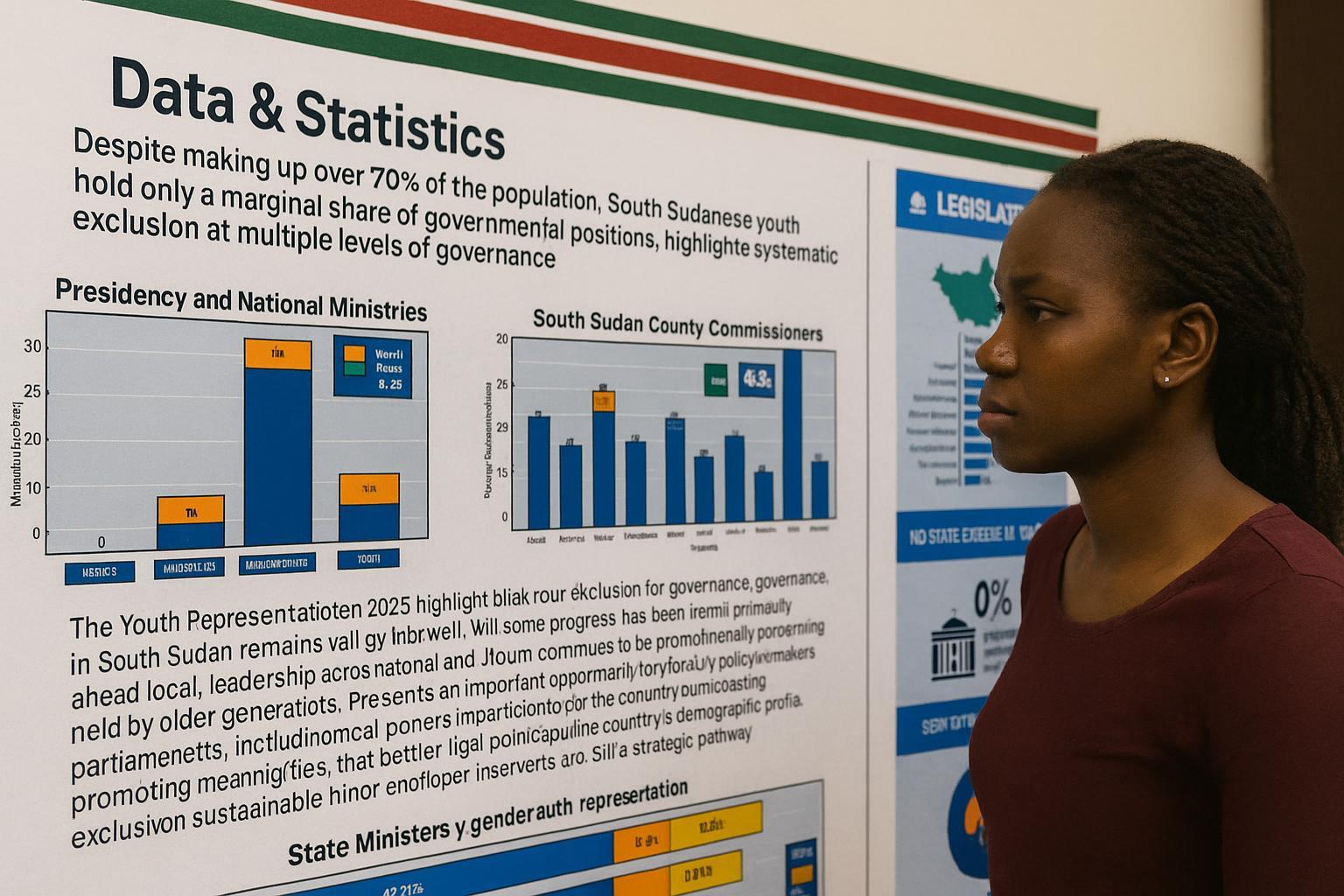
Statistical Snapshot of Exclusion
Every one of South Sudan’s top executives—the president, five vice presidents and thirty-six state governors—is older than 36, leaving youth entirely absent from the nation’s highest decision-making rooms.
In the Transitional National Legislative Assembly only 23 of 550 lawmakers are under 35, a representation rate of just 4.18 percent, one of the continent’s lowest recorded proportions.
At county level the landscape swings sharply: Jonglei appoints almost half of its commissioners from the youth bracket, while four other states report none at all.
Structural Hurdles to Youth Entry
Researchers cite absent legal quotas, age thresholds embedded in party constitutions and discretionary appointment habits that favour elders, arguing that inclusion remains ad-hoc rather than systemic.
Frequent reshuffles and patchy record-keeping further obscure who sits where, making accountability and trend analysis difficult.
Female Youth Face Double Barriers
Among the few young officials identified, women are scarcer still, a pattern the study labels ‘critically low’ female youth participation, reinforcing double layers of exclusion.
Roadmap Toward Inclusive Governance
The brief urges enforcement of a dormant 20 percent youth quota, mandatory age disclosure for all appointees and creation of a national digital database to monitor progress.
It also asks the Political Parties Council to police inclusion standards and recommends targeted pathways for young women to enter leadership.
Regional bodies, including IGAD and the African Union, are encouraged to align their support with the demographic reality shaping South Sudan’s future.
Advocates maintain that investing in youth voice now could transform the peace dividends of the 2018 accord into durable development.