

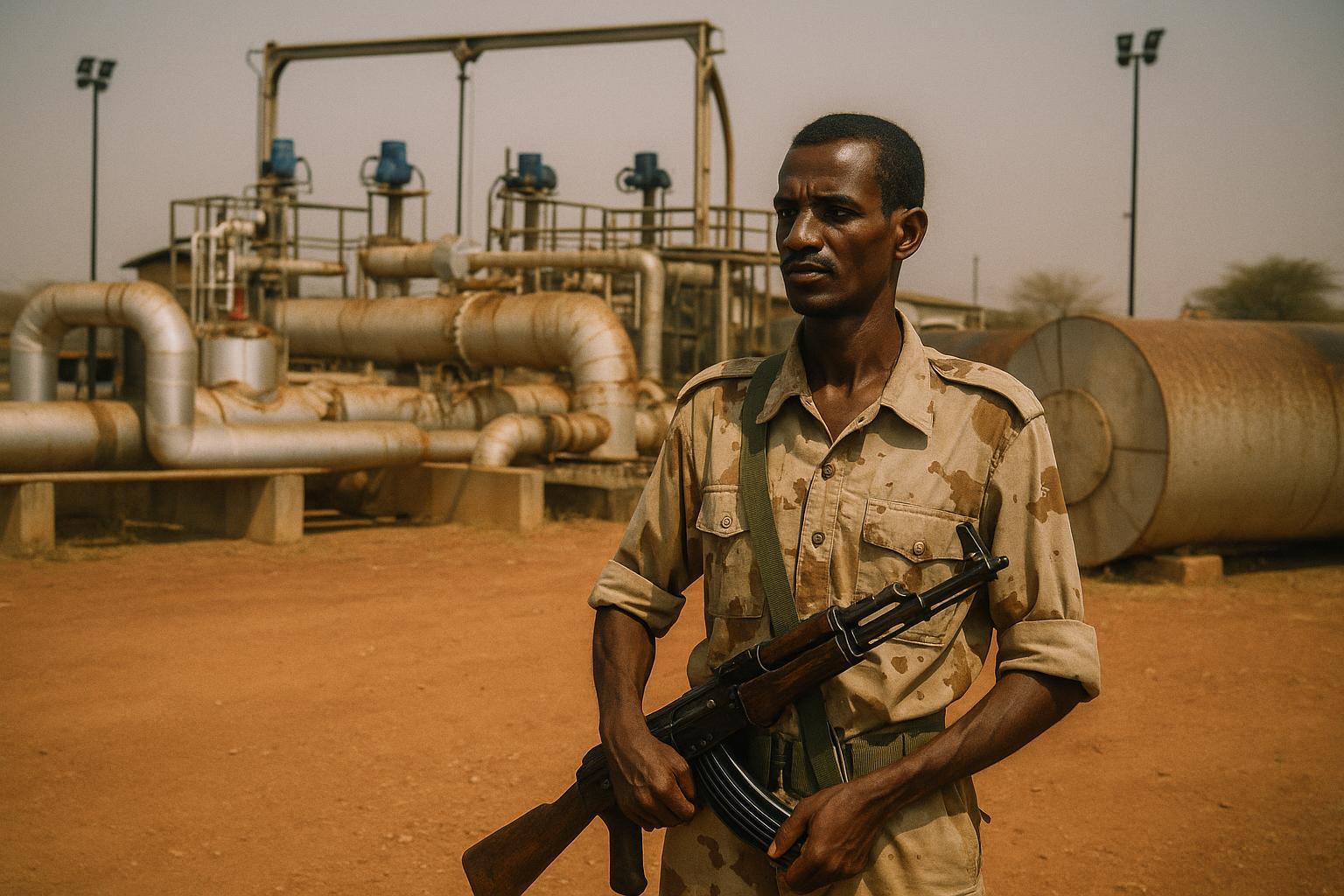
Calm Returns After Tense Standoff
South Sudanese engineers trickled back into Heglig this week, signaling the first concrete step toward restarting the border oilfield that briefly fell to Sudan’s Rapid Support Forces earlier this month (Radio Tamazuj).
Production stopped after Sudanese Armed Forces withdrew, but a three-party accord now tasks South Sudan’s military with safeguarding installations while rival Sudanese factions stand down.
Heglig Oilfield’s Regional Importance
Heglig straddles the Sudan–South Sudan frontier and feeds a 1,600-kilometre pipeline that channels crude from Unity fields to Port Sudan, making the site a lifeline for both governments’ budgets and a barometer of wider cross-border stability.
Tripartite Security Pact in Action
Under the December 10 arrangement, South Sudan deployed contingents of the People’s Defense Forces to Heglig after the RSF’s brief capture, an unprecedented cooperation endorsed by both Sudanese belligerents to keep fighting away from critical energy assets.
Engineers on site report a sizable South Sudanese presence and describe the atmosphere as ‘generally calm,’ even though RSF detachments still hold limited positions inside the oilfield perimeter.
Engineers Reignite Essential Systems
Technicians restarted the power station on Saturday, the first domino in a meticulous process that includes testing wells, flushing lines and verifying export pumps before any hydrocarbons flow again.
A Juba-based engineer said a committee now coordinates the restart timetable, while workers insist on a full RSF pull-back to minimise insurance costs and reassure international shippers.
Shared Revenue Hangs in the Balance
South Sudan relies on transit fees and its own crude sales for most public spending, whereas cash-strapped Khartoum views Heglig as a stabilising income stream; observers note the current deal stays silent on whether the RSF could claim a slice of future proceeds.
Eyes on a Phased Restart
If repairs advance smoothly, field managers hope to resume limited pumping within weeks, restoring thousands of barrels per day and providing a rare confidence boost amid Sudan’s wider turmoil.
For now, the spotlight rests on disciplined security cooperation and the resilience of engineers determined to transform a fragile cease-fire into tangible economic relief for communities on both sides of the border.