

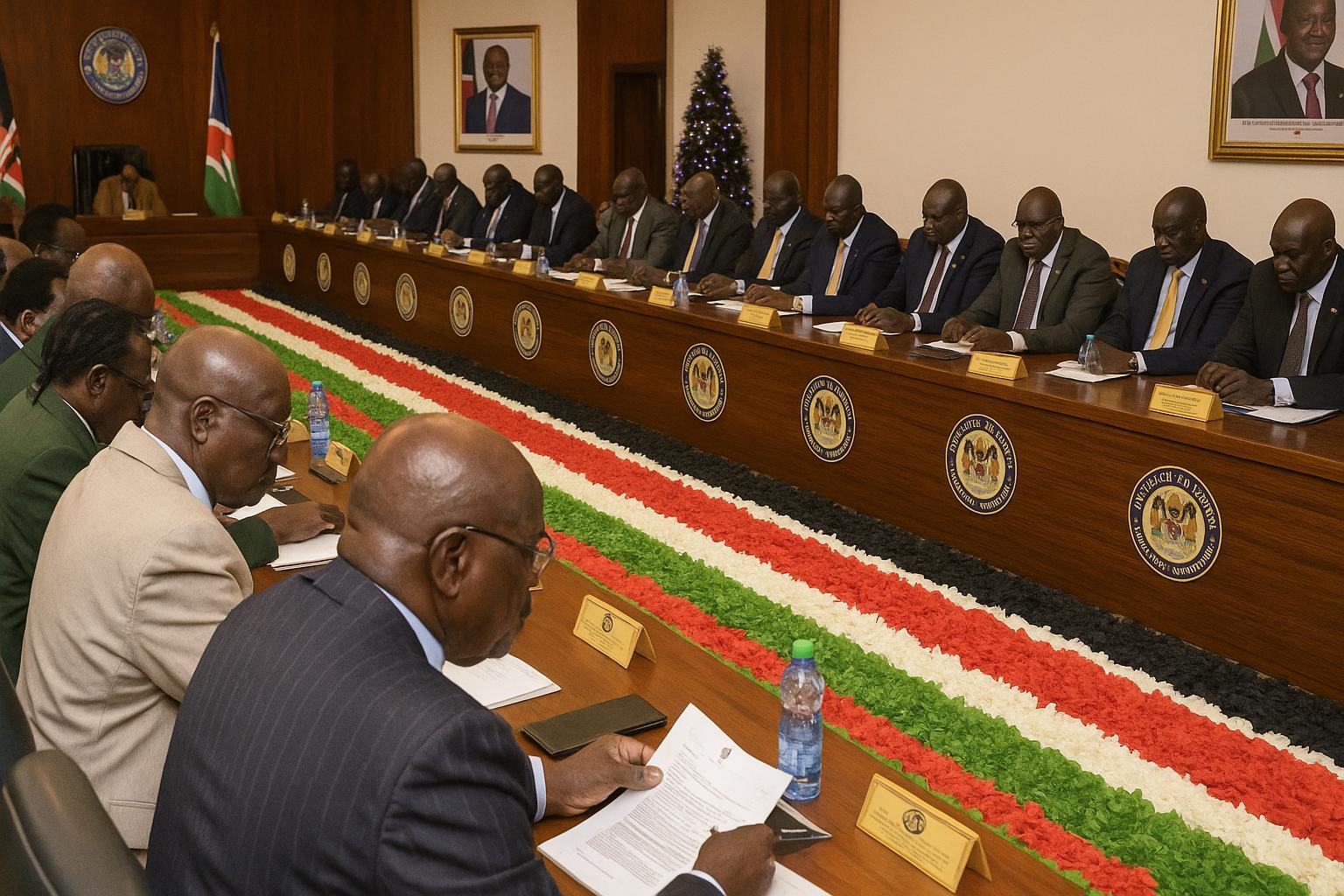
Cabinet Endorses Continued Transitional Constitution
Juba’s Council of Ministers has approved amendments allowing South Sudan to rely on the 2011 Transitional Constitution, as revised, during preparations for the 2026 general elections.
The resolution separates the constitution-making process, national census and housing data from the 2018 Revitalized Peace Agreement, a move officials say prevents fresh delays.
Political Motivation and Administrative Continuity
Minister of Cabinet Affairs Dr Martin Elia Lomuro called the adjustment “a necessary political and administrative step” designed to keep government machinery running smoothly toward the polls.
According to Lomuro, tying census and constitution tasks to the peace deal had stalled progress for years and clouded the electoral calendar.
Legal Hierarchy and Peace Agreement
The 2018 accord states that its clauses override conflicting constitutional articles, raising questions about how supremacy will be handled while the 2011 charter guides daily governance.
Government lawyers are expected to draft clarifying amendments before parliament reconvenes, though no timeline has been announced.
Reform Benchmarks Decoupled
The peace deal lists a permanent constitution, a national population count and unified security forces as prerequisites for credible elections.
By decoupling those milestones, Juba signals that respecting the 2026 date now outweighs completing every reform in advance.
Strained Health Budget Signals Wider Challenges
At the same sitting, ministers heard reports of funding shortfalls forcing hospitals in Wau, Malakal and Rumbek to scale back services after reductions from external partners.
Dr Lomuro said domestic co-financing might be required and ordered the Health Ministry to table a detailed budget gap analysis.
Observers contend that stabilising essential services will be critical for public confidence as the electoral calendar accelerates.