

Drone Strike Triggers UN Evacuation
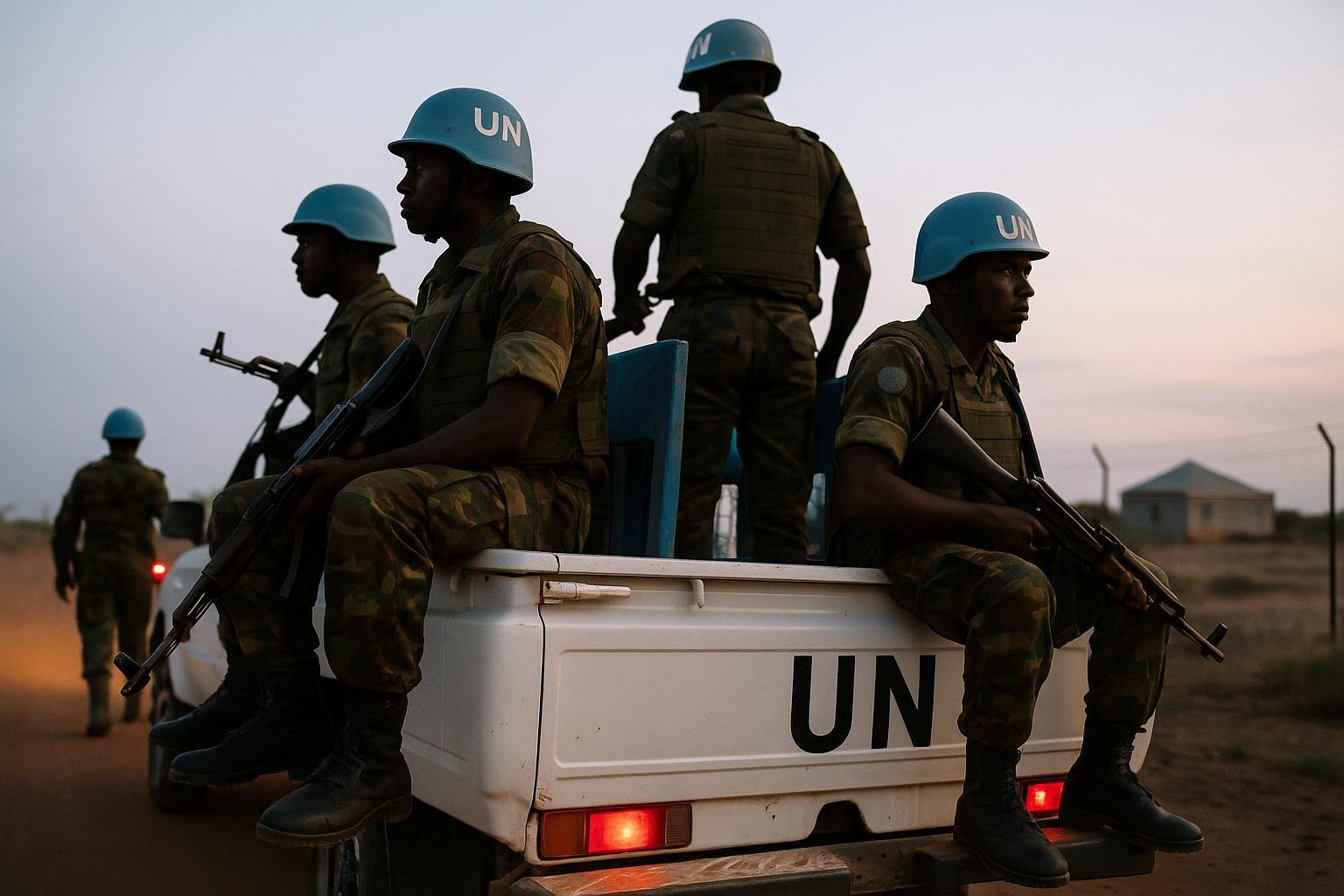
United Nations trucks rolled out of Kadugli this week, sealing the gates of the mission’s main logistics hub after a deadly weekend assault. UN officials said the pull-out aims to shield staff and equipment from an increasingly volatile security environment.
Saturday’s drone strike killed six Bangladeshi peacekeepers and wounded nine more, marking one of the heaviest single-day losses for the United Nations Interim Security Force for Abyei since its creation in 2011.
Rapid Security Review and Decision
After an emergency security assessment, mission leaders notified Sudanese authorities of an immediate evacuation, stating the attack had ‘disabled the capacity for the UN to function in the area’ (UNISFA statement). Heavy equipment was repositioned toward the safer Abyei box.
Blame Game Between Army and RSF
Sudan’s Sovereign Council, led by Gen. Abdel Fattah al-Burhan, blamed the rival Rapid Support Forces for the strike, calling it a ‘dangerous escalation’. The RSF rejected what it labelled ‘false accusations’, insisting it had no drones in Kadugli that day.
Civilian Impact of Prolonged Conflict
The clash between the army and RSF, underway since April 2023, has already killed tens of thousands, uprooted millions and strained relief pipelines. Analysts warn that any vacuum around Kadugli could squeeze aid corridors linking South Kordofan, Darfur and neighbouring South Sudan.
UNISFA’s Ongoing Role and Future Prospects
Despite the withdrawal, UNISFA says its core task of monitoring the disputed border between Sudan and South Sudan continues unabated. Patrols in the Abyei administrative area remain active, supported by liaison teams and early-warning networks among local communities.
A senior UN officer hinted the mission could resume operations in Kadugli ‘once the security calculus shifts in favour of stability’. For now, diplomats urge warring parties to halt aerial attacks and enable humanitarian corridors, fearing further regional spill-over.