

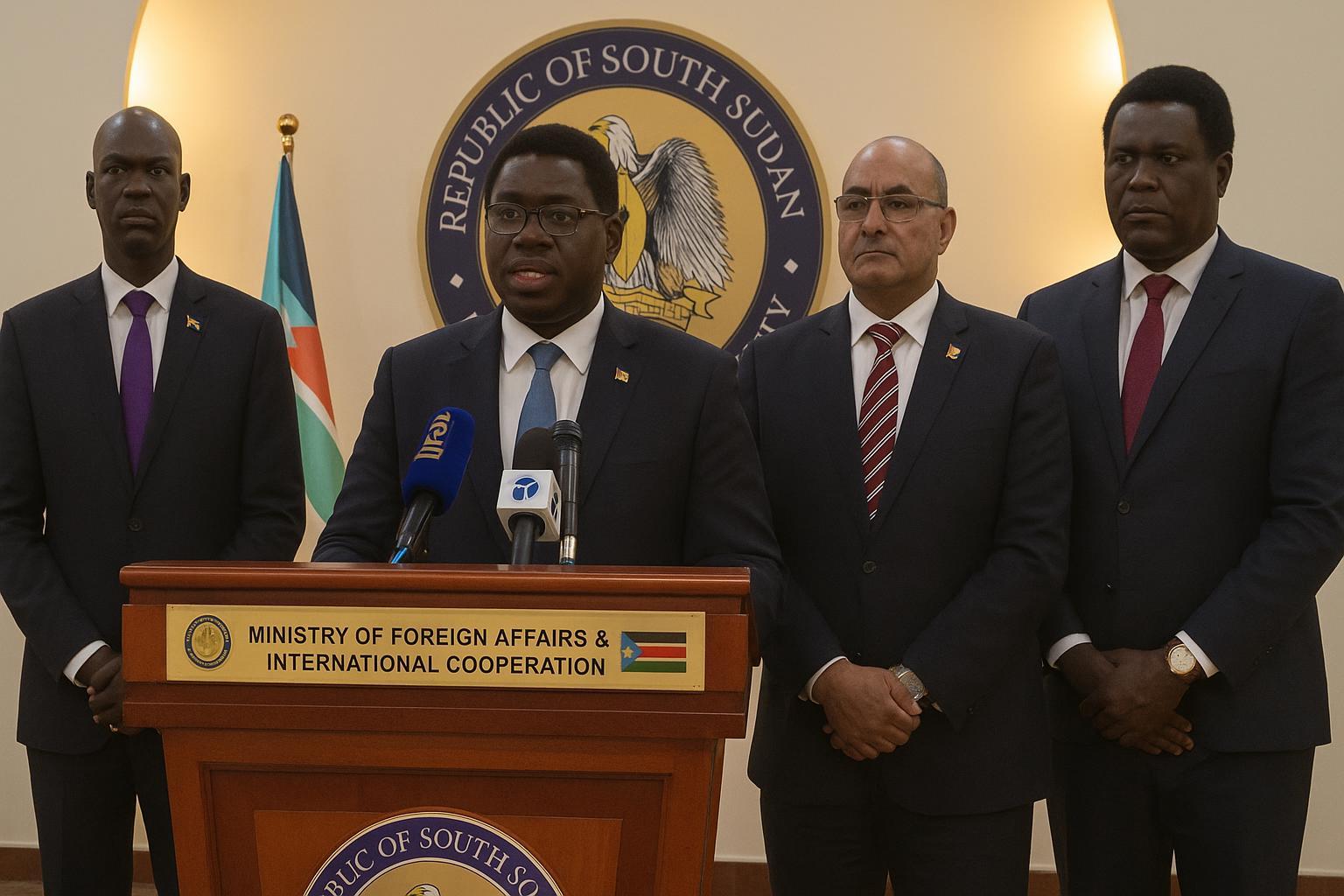
High-Level Mission Reconnects Neighbours
A South Sudanese delegation led by presidential adviser Tut Gatluak Manime flew into Port Sudan this week, carrying a letter from President Salva Kiir to General Abdel Fattah al-Burhan. Officials described the visit as a reset for two states buffeted by separate internal conflicts.
Foreign Minister Monday Semaya Kumba said the mission aimed to “reinforce ties that guarantee mutual survival.” Meetings with Sudan’s vice-president, prime minister and senior generals unfolded over two days, culminating in a joint communiqué.
Oil Infrastructure at Heglig Returns to Spotlight
Fighting between the Rapid Support Forces and the Sudanese Armed Forces had halted pumping at Heglig, a field processing up to 100,000 barrels daily. The shutdown choked South Sudan’s only export route and deprived Sudan of vital transit fees.
Technical teams led by Undersecretary Chol Thon agreed with Sudan’s petroleum ministry to restart Heglig and neighbouring Bamboo wells. “Oil must flow for both peoples,” Thon noted, confirming signed minutes that set an immediate timeline for reactivation.
Economic and Trade Corridors under Discussion
Sudan offered South Sudan a free economic zone at Port Sudan, signalling plans to diversify commerce beyond crude. Reviving joint ministerial committees, officials pledged to streamline tariffs and ease paperwork for traders criss-crossing the 2,000-kilometre frontier.
Analysts in Juba argue that a functioning trade corridor could cushion both economies against conflict shocks, yet warn that infrastructure remains vulnerable to militia incursions.
Security Dialogue Targets Border Stability
Delegates examined joint patrols, intelligence sharing and the status of displaced civilians. Interior ministers agreed to craft a mechanism enabling police cooperation and humane border management, mindful of cattle-raiding and arms smuggling hotspots along Unity and West Kordofan.
Next Steps and Regional Implications
The parties endorsed continued consultation and reciprocal visits. Observers see the accord as a rare diplomatic bright spot in the Horn of Africa, where oil revenues underpin budgets and, increasingly, peace efforts.
International mediators cautiously welcomed the move, noting that sustained production could fund humanitarian programmes in both Khartoum and Juba, provided fighting around the fields subsides.