

Diplomatic Friction Over UNMISS Rotation
Last week’s exchange between Juba and Washington exposed simmering mistrust surrounding the United Nations Mission in South Sudan, known as UNMISS. Accusations of obstruction met swift denials, underscoring how sensitive peacekeeper rotations remain four years after the Revitalised Agreement.
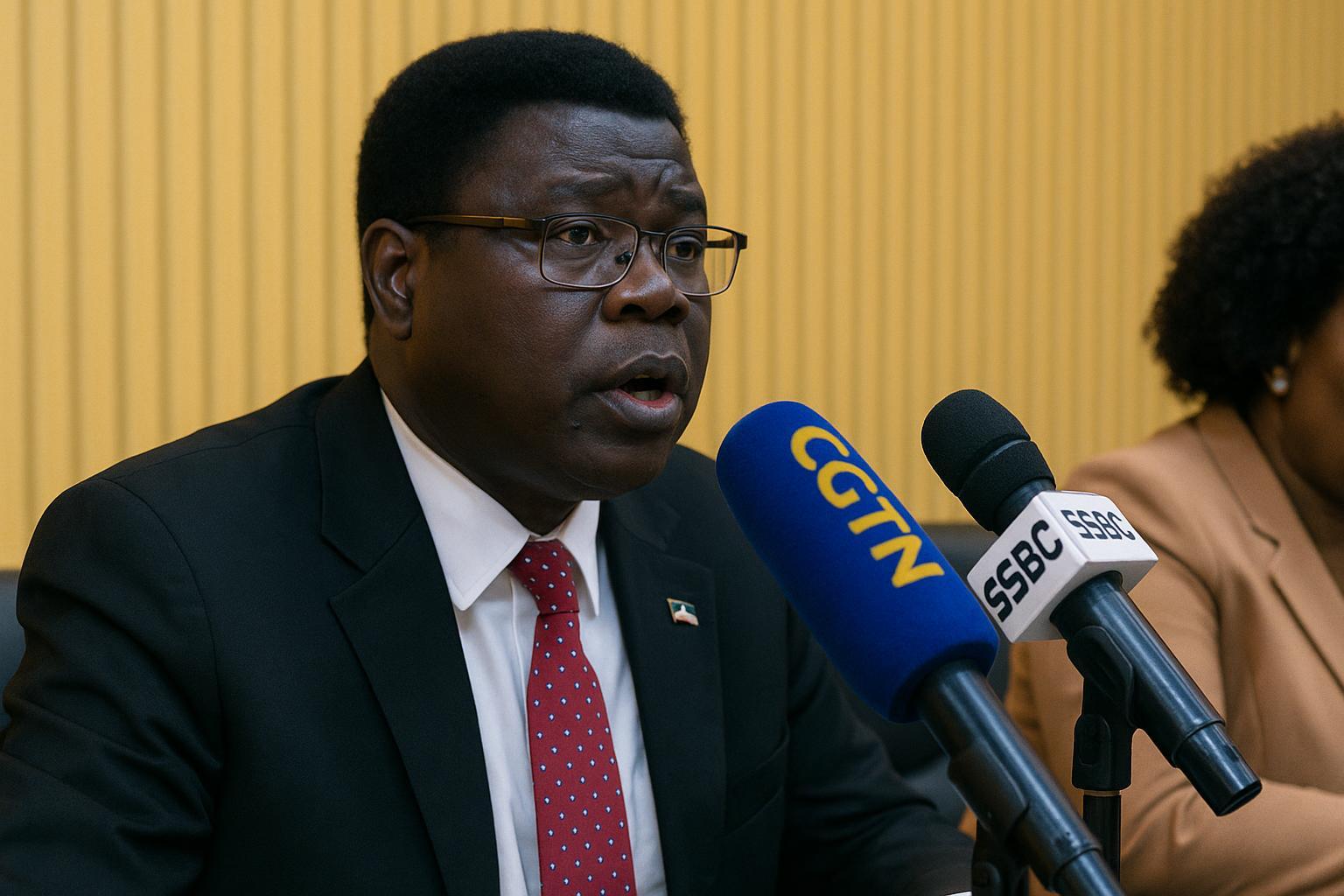
Foreign Minister Monday Semaya Kumba insisted that a list of seventeen points was never meant as a barricade. “They reflect our concerns, not conditions,” he told reporters in Juba, signalling that the government wants procedure, not paralysis.
Technical Talks Keep Troop Movements on Track
According to the Foreign Ministry’s ledger, 1,143 peacekeepers from Ghana, Nepal, Bangladesh, and India have already left Juba under an agreed contingency plan. Another 2,497 are scheduled to swap out between 15 December 2025 and 7 January 2026.
Kumba said he briefed UN Under-Secretary-General Jane Perry-Lafoye and that “we agreed to move forward in an orderly manner.” Both sides now rely on joint technical committees, a mechanism designed to defuse disputes before they disrupt flights.
The Empty Aircraft Episode Explained
Much of the controversy centres on a Nepalese rotation flight that returned without passengers. Officials report that 205 soldiers arrived at Juba International Airport, although only 150 had been cleared. When the manifest mismatched, UNMISS suspended boarding, and the plane departed empty.
“Where did we go wrong?” Kumba asked, arguing that Juba offered to send the authorised 150 while rescheduling the rest. He maintains that labelling the incident deliberate obstruction is “unfair” because the mission itself halted the flight.
U.S. Assistance Under the Microscope
The United States, South Sudan’s largest bilateral donor, warned that continued interference or extra fees on humanitarian cargo could prompt “significant reductions” in aid. Since independence, Washington has channelled more than $9.5 billion, contrasting sharply with Juba’s oil revenues.
U.S. officials accuse unnamed elites of treating relief pipelines as rent-seeking opportunities. Analysts in Nairobi observe that the threat of a comprehensive funding review adds leverage but also risks shrinking health and education programmes for ordinary citizens.
Regional Implications and Hopes for Dialogue
Peacekeeping rotations matter beyond South Sudan. A delayed deployment can leave gaps along volatile borders shared with the Central African Republic and Sudan, diplomats say. Neighbours therefore watch the Juba-UNMISS relationship closely, aware of its impact on cross-border security.
For now, both sides publicly endorse continued cooperation. Joint committees meet again this month, and officials hint at revising passenger manifests in real time. Whether Washington’s warning accelerates compromise or deepens suspicion will become clearer over the coming weeks.