

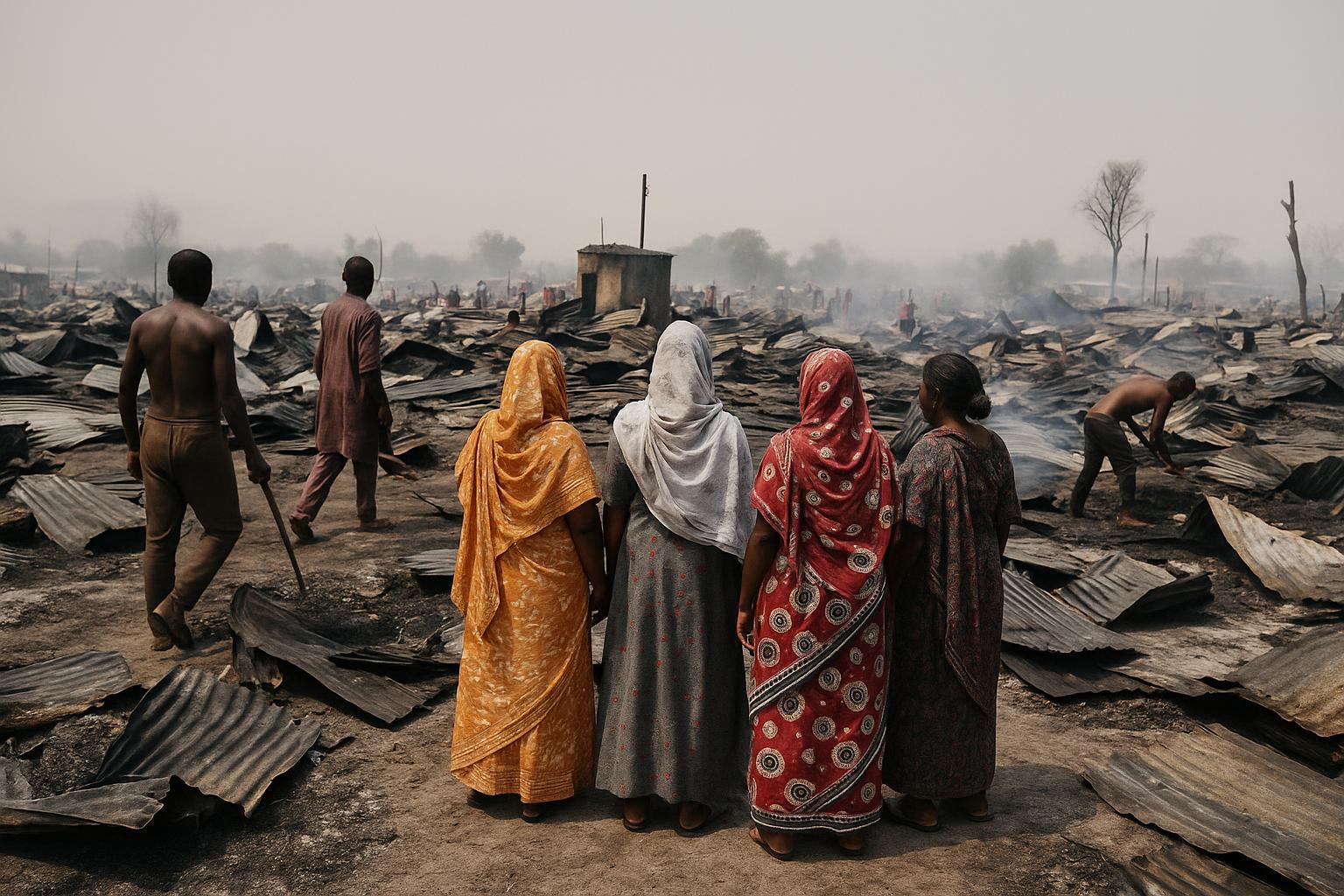
Blaze Engulfs Custom Market at Peak Season
Flames tore through Juba’s busiest marketplace on Monday, spreading in minutes across zinc-roofed stalls crammed for Christmas sales. Witnesses say narrow alleys and flammable materials turned a spark into an unstoppable inferno, destroying entire blocks before firefighters could arrive.
Thousands of Shops, Billions in Goods Lost
The Chamber of Commerce counts more than 3,000 stalls reduced to ashes. Traders estimate aggregate losses in the trillions of South Sudanese pounds, noting that seasonal inventories of clothing, electronics and food had just been purchased, magnifying the financial shock.
Women Bear the Heaviest Economic Burden
Women make up most vendors and family breadwinners. “We have nothing to support our children,” said Mary Keji John, head of the market’s businesswomen. Widows like Sartin Keji and Jane Kiden fear school dropouts and hunger unless assistance arrives quickly.
Structural Hazards Exposed by the Fire
Blocked access roads, temporary huts and wheelbarrows impeded emergency vehicles, admits market chamber chair Charles Laku Joseph. He urges city officials to clear pathways and introduce firebreaks. Recurrent blazes since 2004 reveal systemic weaknesses in urban planning across South Sudan.
Calls for Rapid Support and Long-Term Reform
State and national commerce chambers pledged to register victims and lobby for aid. Chair Robert Pitia appealed to humanitarian organisations to prioritise widows and vulnerable traders, while veteran dealer James Hakim recalled earlier government compensation as a precedent for decisive intervention.
Hope Amid Ashes for Juba’s Traders
Despite sleepless nights, younger entrepreneurs like Neema Knight look to restart with basic tools such as a sewing machine. Traders insist coordinated relief, stronger regulation and market redesign can transform tragedy into an opportunity for safer, more resilient commerce in Juba.