

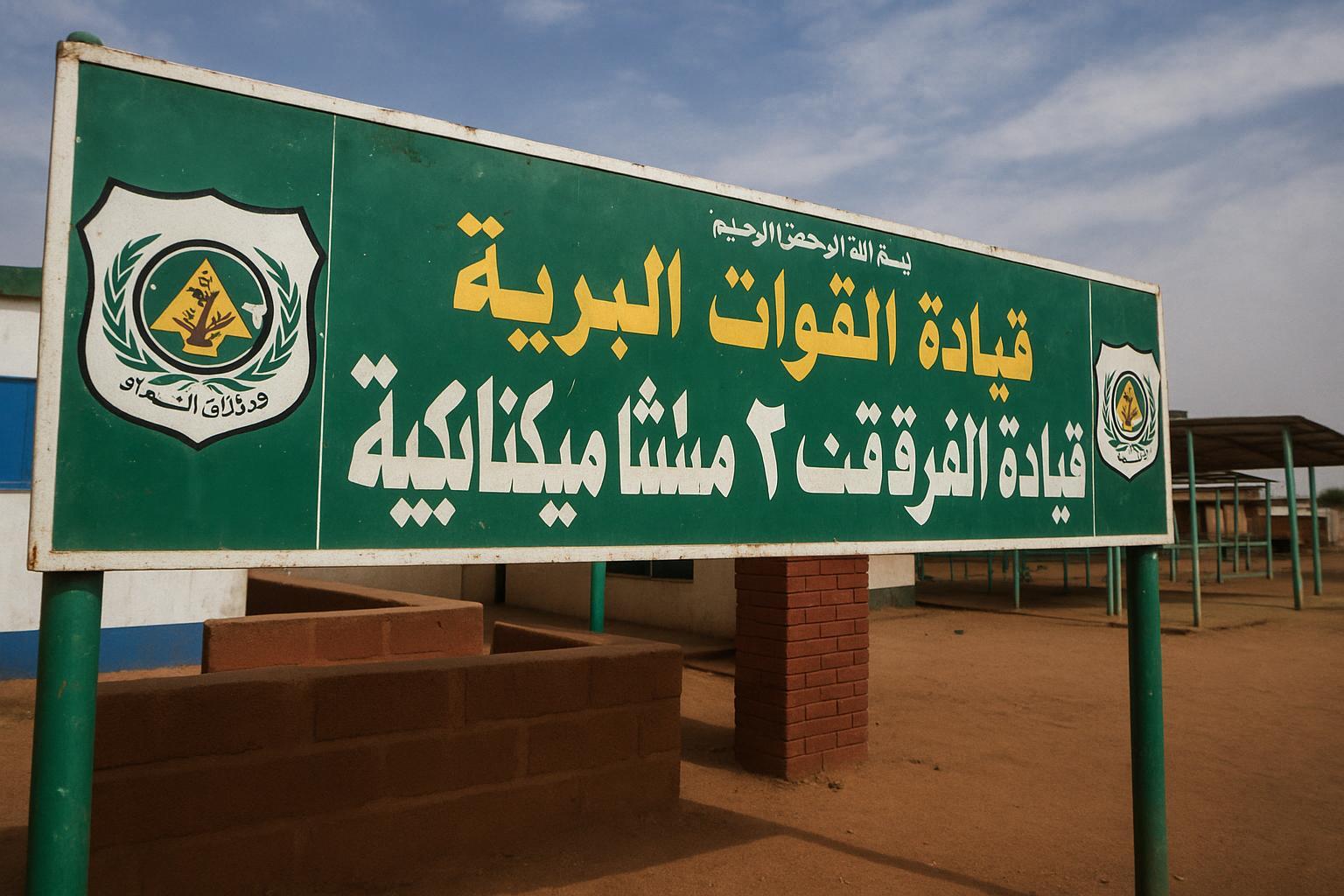
Strategic Importance of Babanusa
The 22nd Infantry Division headquarters in Babanusa has long anchored Sudanese Armed Forces control over West Kordofan, a corridor linking Darfur to oil fields near South Sudan. Its loss gives the Rapid Support Forces near-total sway in the state, narrowing SAF supply routes.
Timeline of the Assault
Fighting escalated after the RSF captured El Fasher, freeing combat units for the Kordofan front. Daily raids culminated in two coordinated strikes on Sunday and two more on Monday, overwhelming depleted garrison defenses that had endured a two-year siege, military sources said.
Inside the Fallen Garrison
Videos geolocated to the facility show RSF fighters roaming deserted barracks. Witnesses report SAF troops abandoning positions once outer defenses collapsed; their retreat path remains unclear, with Heglig cited as the nearest government-held town. Chronic shortages had already eroded the division’s combat strength.
Human Impact on a Drained Town
Babanusa, West Kordofan’s second-largest settlement, was largely emptied early in the war. Local activists say waves of civilians fled to El Fula or across the border, leaving a shell of a transport hub now punctuated by sporadic artillery echoes and shuttered market stalls.
Divergent Narratives from the Battlefield
In English, the RSF framed Monday’s fighting as “legitimate self-defense” against a “treacherous attack” by SAF. An Arabic statement went further, hailing the “liberation” of both the division and the city, claiming retaliation for repeated truce violations. SAF has not issued a detailed rebuttal.
Regional and Diplomatic Reverberations
The capture follows General Abdel Fattah al-Burhan’s rejection of a U.S.-brokered ceasefire, citing mediator bias. RSF replied with a unilateral truce yet continued offensive operations. Analysts warn that Babanusa’s fall could complicate humanitarian corridors and widen fault lines in already fragile negotiations.