

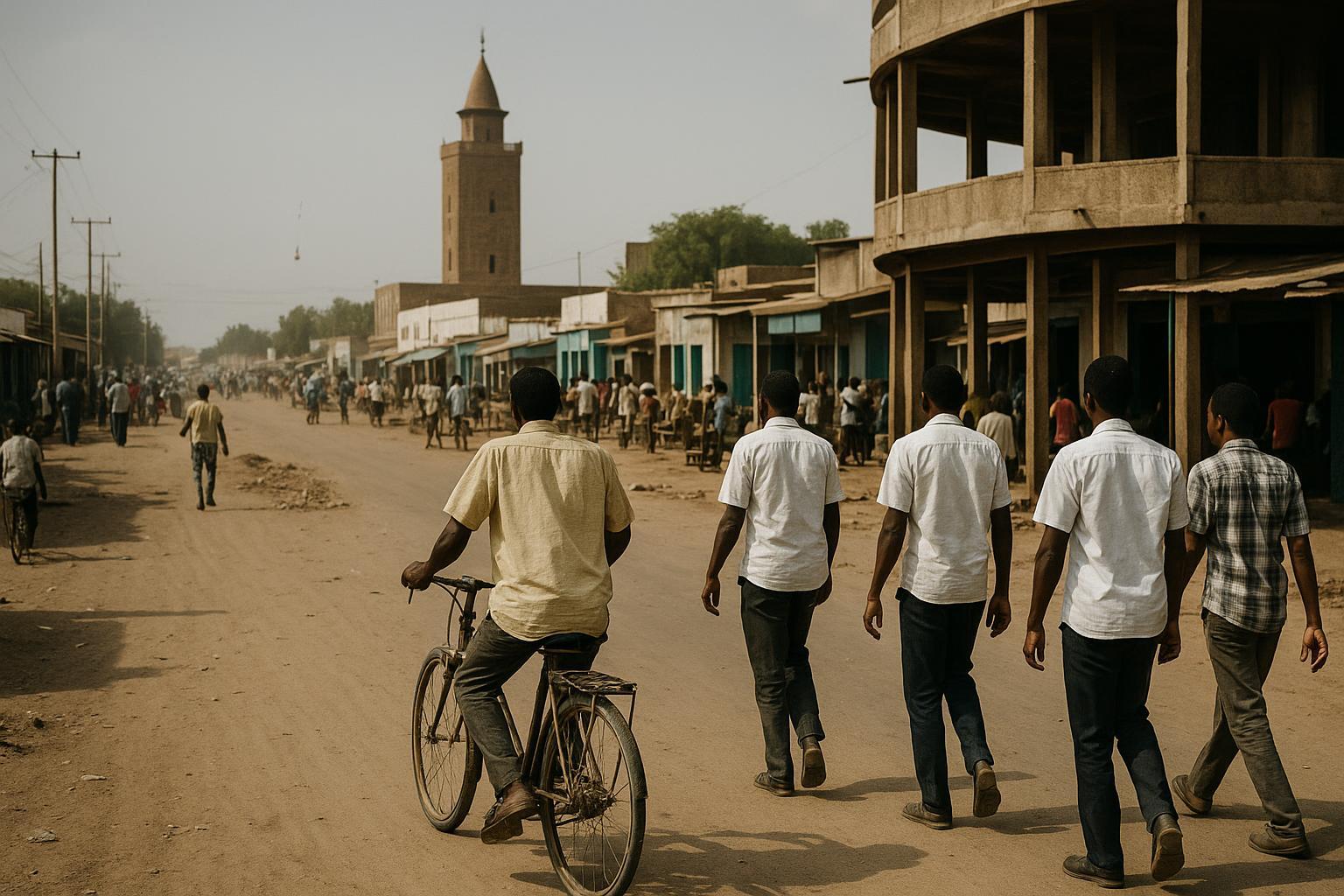
Malakal market shooting leaves shoppers shaken
Shoppers scattered as bursts of gunfire shattered the Friday bustle in Malakal’s central market. Witnesses recall a uniformed man swaying, shouting, then raising his rifle. In seconds, two bystanders bled on the dusty ground, victims of what officials call drug-fuelled recklessness.
Identifying the gunman and the tramadol link
Officials identified the gunman as a member of Division Two of the South Sudan People’s Defence Forces. Information Minister Peter Ngwojo told Eye Radio the soldier was “under the influence of tramadol, a drug he often uses,” before the dispute erupted.
Tramadol, an opioid painkiller, has quietly become a street stimulant in several Nile towns. Health workers warn that its easy access among low-paid troops blends volatility with firepower, creating what one doctor in Juba described as “a public-health fuse waiting for a spark.”
Government arrests suspect and tightens rules
The soldier was promptly arrested and, according to Ngwojo, will face both military and civilian courts. While a trial date remains unspecified, authorities say the dual process signals zero tolerance toward indiscipline in uniform.
The Upper Nile cabinet has also banned the open carrying of weapons in markets and busy streets. “Randomly walking with guns will no longer be allowed,” Ngwojo stressed, arguing the measure will calm traders and rebuild outside confidence in Malakal.
Hospital updates and public sentiment
At Malakal Teaching Hospital, nurses said the two wounded civilians underwent surgery and are stable. “They were lucky, the bullets missed vital organs,” a senior medic confirmed, requesting anonymity because he is not authorized to brief press.
Relatives milling in the corridor voiced relief but demanded enduring safeguards. A sister of one victim murmured, “We need protection, not apologies,” capturing a sentiment echoed across social media threads.
Regional echoes and preventive lessons
Security analysts note that similar alcohol or drug-linked shootings have occurred in Bentiu and Wau during the last year. The pattern, they argue, reflects broader challenges of demobilization delays, salary arrears and limited counseling services.
Neighbouring governments, including Congo-Brazzaville, have recently expanded programs against substance abuse in barracks. Observers see room for cross-border learning as Juba crafts its own preventative agenda without undermining troop morale.