

Lake Victoria Crisis Draws EAC Warning
Deputy Secretary General for Infrastructure, Productive, Social and Political Sectors Andrea Ariik cautioned delegates at a COP30 side forum that Lake Victoria risks irreversible damage unless partner states adopt urgent, coordinated remedies.
Stark Environmental Data Unveiled
The newly launched State of the Basin Report cites untreated wastewater, industrial effluent, agricultural runoff, sedimentation and climate shocks as converging threats that have driven water quality downward and fish stocks to historic lows across the 68,800-square-kilometre lake.
Human Cost of Declining Waters
More than 45 million residents rely on the basin for drinking water, transport, energy and income. Shrinking wetlands and biodiversity loss now jeopardise food security and public health, with experts linking algal blooms to respiratory illnesses and higher treatment costs.
Climate Change Accelerates Pressures
Scientists note that extreme rainfall, prolonged droughts and rising temperatures accelerate erosion and nutrient loading, further stressing the lake’s ecosystems. Ariik warned that unchecked warming could alter regional rainfall patterns, undermining hydropower generation and disrupting cross-border trade corridors.
Blueprint for Recovery and Investment
The report recommends scaling wastewater treatment plants, promoting climate-smart agriculture, restoring wetlands and empowering the Lake Victoria Basin Commission with stronger legal and financial tools to harmonise regulations among Kenya, Tanzania, Uganda, Rwanda, Burundi and South Sudan.
International Partnership Spurs Action
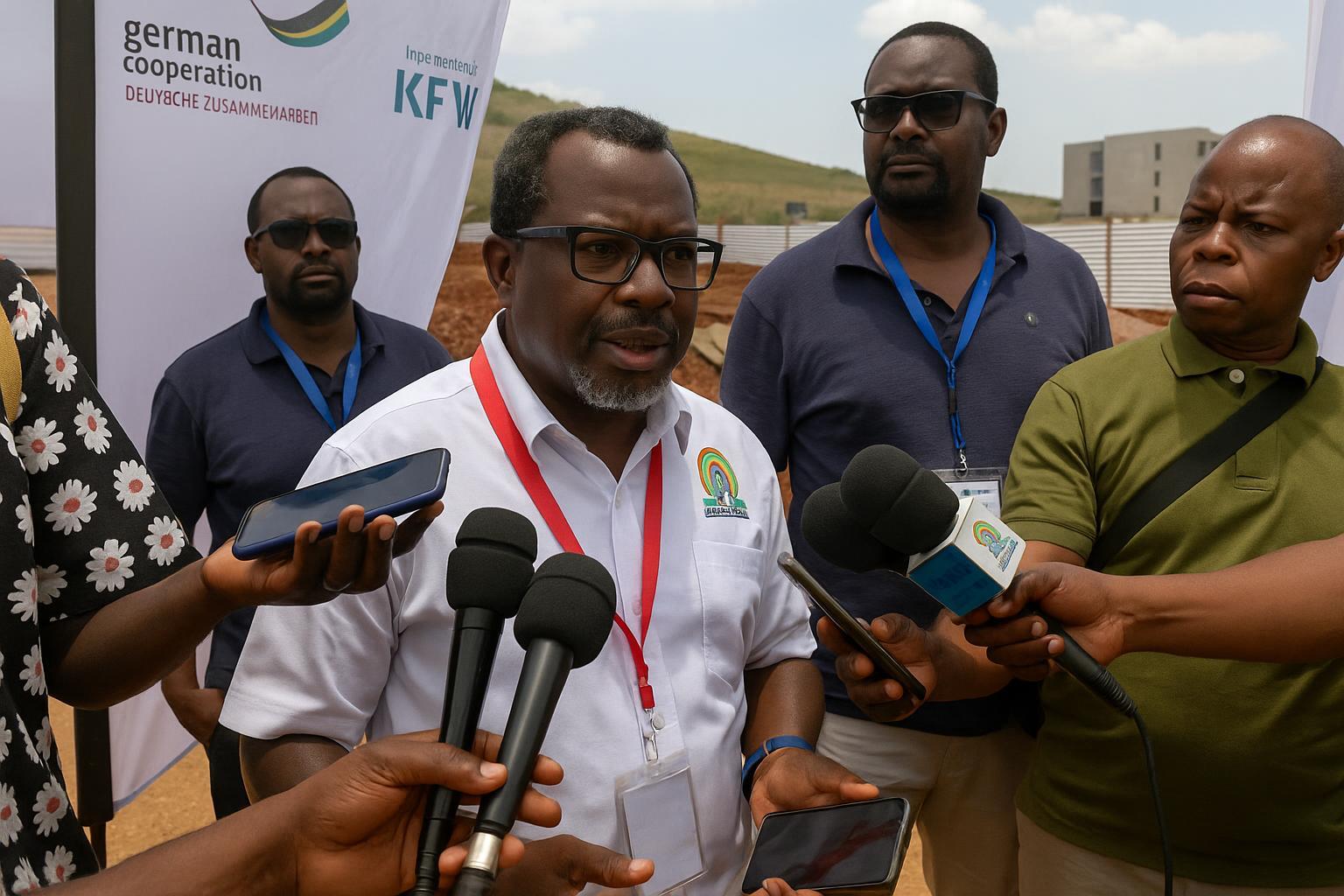
Supported by 60 million euro German funding through GIZ and KfW, the Water Information System underpins evidence-based decisions. Julia Kronberg of BMZ said Germany seeks to catalyse green infrastructure finance and adaptive water-management schemes tailored to East African priorities.
A Crossroads for Regional Solidarity
Ariik framed the moment as decisive: continued complacency will hasten ecological decline, yet collective resolve can revive the lake for future generations. Civil society, private investors and governments are urged to translate the report’s guidance into swift, measurable action.