

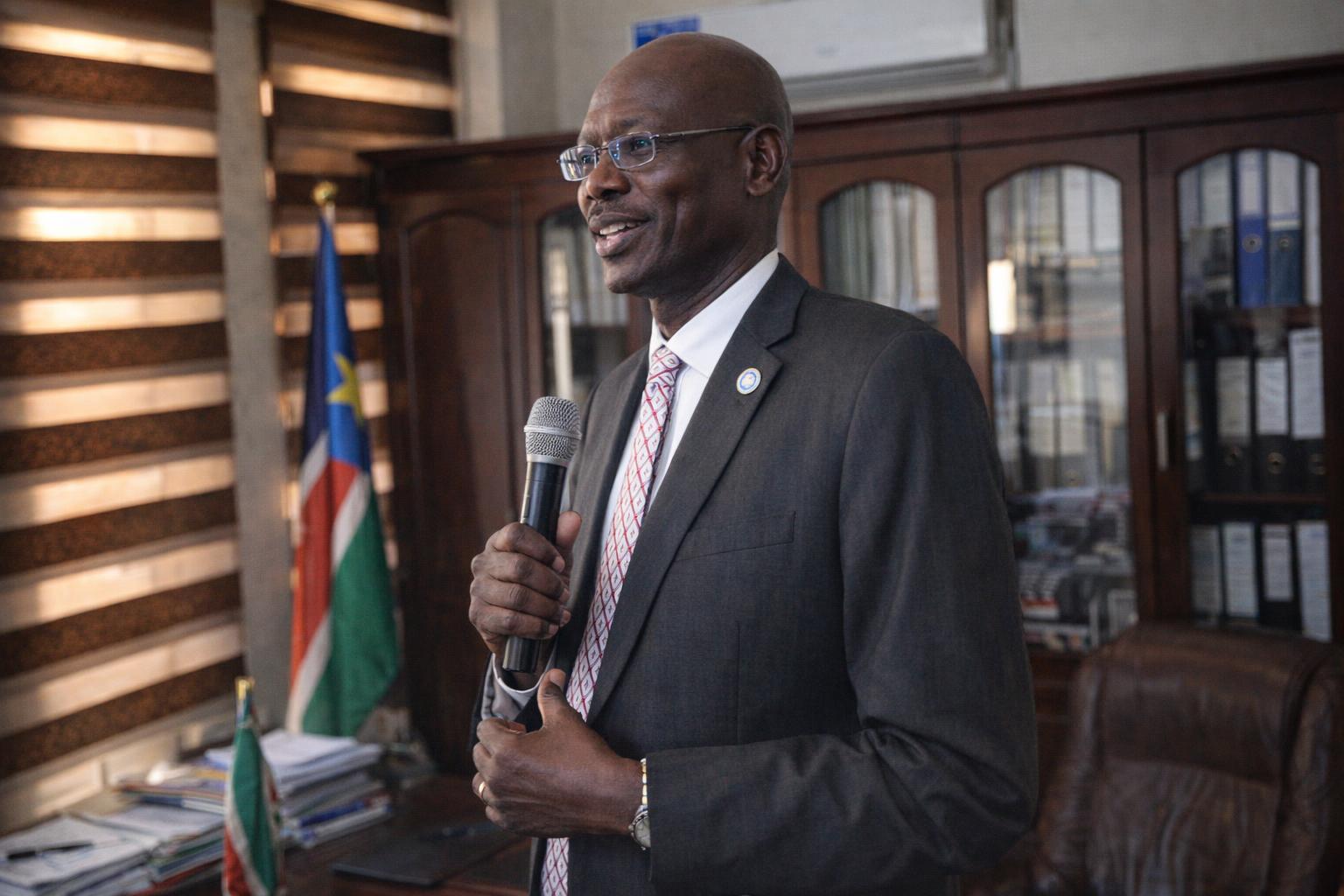
South Sudan road infrastructure target: 12,000km
South Sudan’s National Ministry of Roads and Bridges says it faces the sizeable task of constructing 12,000 kilometres of roads nationwide. The ambition comes as several national road projects and the oil-for-roads programme are described by officials as having stalled.
Open road tenders approved by Council of Ministers
Minister of Roads and Bridges Peter Lam Both said the ministry has secured approval from the Council of Ministers for a policy shift on contracting. He said road contracts will now be openly advertised, with the stated aim of attracting competent construction companies and improving delivery standards.
Minister Peter Lam Both on funding and contractor capacity
Lam Both argued that the ministry will avoid awarding contracts to parties without adequate financing. “We can’t give you, if we don’t have the money and you don’t have the money, why do we do business? So you do business with somebody with money,” he said.
Accountability, timelines and balanced national connectivity
According to the minister, the approach is designed to strengthen professionalism, accountability and timely completion of works. He also stressed the need for balanced connectivity, saying road development should extend to places that have long remained outside reliable transport networks.
Priority routes: Bahr el Ghazal and Terkeka–Rumbek
Lam Both said the ministry’s priority areas include roads in Bahr el Ghazal, the Terkeka–Rumbek corridor, and other locations. He framed the selection as part of widening access and improving national linkages rather than concentrating upgrades in a few areas.
Pre-financed construction model and delayed repayment plan
The minister said the ministry has engaged professional companies prepared to begin using their own resources, with government compensation expected later. “This year is the year for roads for us to start. Before the rainy season comes, let us show that something starts,” he said.
Long-term payments and the politics of delivery
Lam Both said the companies under discussion have financial and technical capacity and do not require immediate payment. “They will construct the roads, and by the end of the day, after five, ten, seven years, they will ask for their payments,” he said.
New undersecretary Gabriel Makur Amour: corridors first
New undersecretary Gabriel Makur Amour said national trunk roads are central to his agenda. He said his leadership will be guided by three priorities, focusing on economic corridors over isolated interests and programming investment to support cross-border trade routes.
Experience returns to the ministry amid confidence reset
Amour previously served as Director of Roads and Bridges from 2006 to 2010, Director General from 2011 to 2014, and Undersecretary from 2015 to 2017. Officials said his return adds institutional experience as the ministry pushes competitive and transparent contracting.
What the 12,000km goal could mean for mobility and trade
Officials presented the plan as a way to strengthen national development, connectivity and commerce, while restoring credibility around road delivery. The ministry’s message is that clear tendering rules and capable contractors could make road building more predictable across the country.